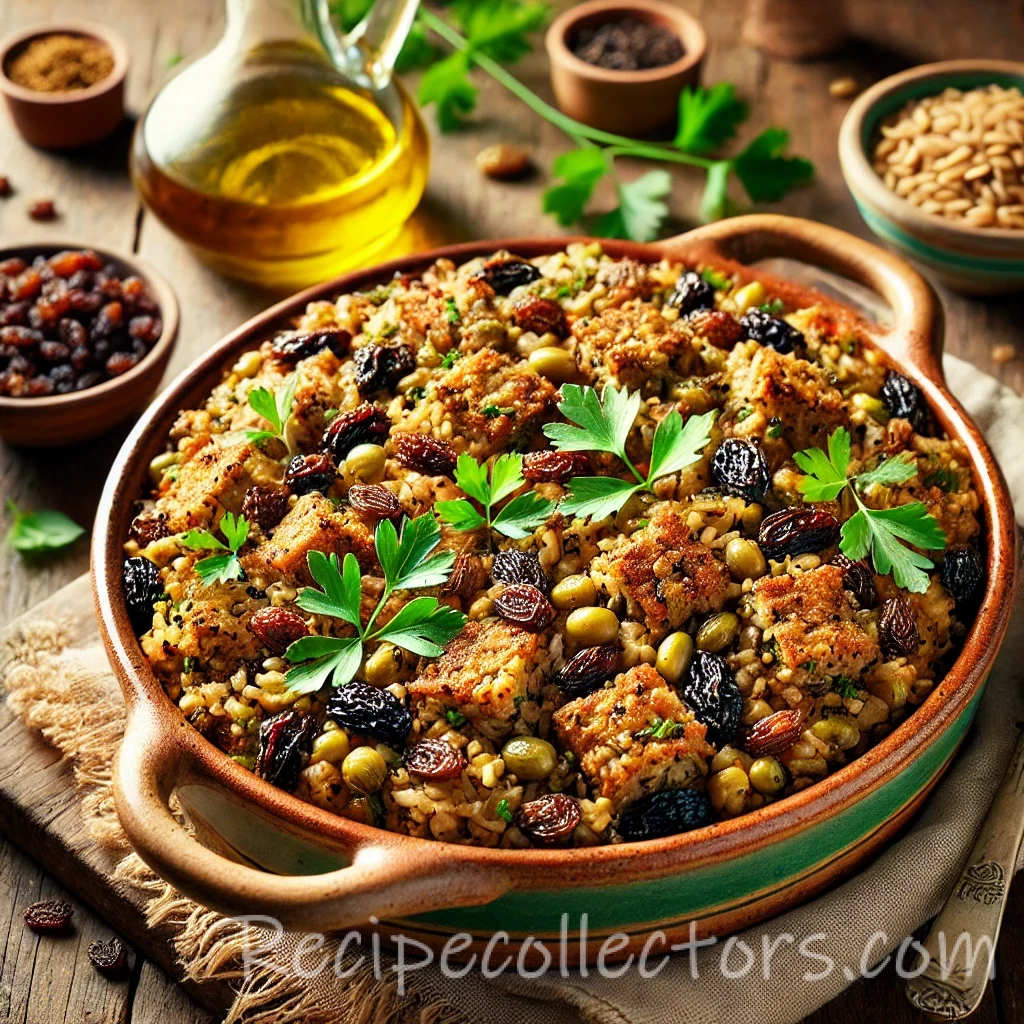
Greek Stuffing
Equipment
- Large pan or wok
- medium-size saucepan
- Cooking spoon
Ingredients
- 2½ cups 400 g uncooked wild rice blend
- 2 cubes 9 g each vegetable bouillon or 1 tablespoon (6 g) powdered
- ¼ cup 60 ml extra-virgin olive oil, divided
- 1½ pounds 680 g seitan, diced or 1 recipe Basic Seitan Crumbles (page 210)
- 2 cups 320 g diced yellow onion
- 6 cloves garlic minced
- 4 teaspoons 9 g ground cinnamon
- 1 cup 120 g golden raisins
- ¼ cup 66 g tomato paste
- 1 cup 120 g toasted pine nuts
- 2 teaspoons fine sea salt
- 1 teaspoon freshly cracked black pepper

Instructions
- Prepare the rice according to the package directions, adding the bouillon cubes to the water.
- In a separate pan, heat 1 tablespoon (15 ml) of the olive oil and cook the seitan over medium-high heat for 5 to 7 minutes, or until browned and beginning to crisp.
- Add 2 more tablespoons (30 ml) of olive oil to a large-size pan or wok and sauté the onion and garlic over medium-high heat for 5 to 7 minutes, or until the onions are translucent and the garlic is fragrant.
- Reduce the heat, add the seitan, cinnamon, raisins, tomato paste, pine nuts, salt, and pepper, mix well, and remove from the heat.
- After the rice is fully cooked, add it to the sautéed ingredients along with the remaining 1 tablespoon (15 ml) olive oil and combine.
Notes & Wine Advice
Nutrition values
————————————————————————————————–
Greek Stuffing
Equipment
- Large pan or wok
- medium-size saucepan
- Cooking spoon
Ingredients
- 2½ cups 400 g uncooked wild rice blend
- 2 cubes 9 g each vegetable bouillon or 1 tablespoon (6 g) powdered
- ¼ cup 60 ml extra-virgin olive oil, divided
- 1½ pounds 680 g seitan, diced or 1 recipe Basic Seitan Crumbles (page 210)
- 2 cups 320 g diced yellow onion
- 6 cloves garlic minced
- 4 teaspoons 9 g ground cinnamon
- 1 cup 120 g golden raisins
- ¼ cup 66 g tomato paste
- 1 cup 120 g toasted pine nuts
- 2 teaspoons fine sea salt
- 1 teaspoon freshly cracked black pepper
Instructions
- Prepare the rice according to the package directions, adding the bouillon cubes to the water.
- In a separate pan, heat 1 tablespoon (15 ml) of the olive oil and cook the seitan over medium-high heat for 5 to 7 minutes, or until browned and beginning to crisp.
- Add 2 more tablespoons (30 ml) of olive oil to a large-size pan or wok and sauté the onion and garlic over medium-high heat for 5 to 7 minutes, or until the onions are translucent and the garlic is fragrant.
- Reduce the heat, add the seitan, cinnamon, raisins, tomato paste, pine nuts, salt, and pepper, mix well, and remove from the heat.
- After the rice is fully cooked, add it to the sautéed ingredients along with the remaining 1 tablespoon (15 ml) olive oil and combine.
Notes & Wine Advice
Nutrition values
--------------------------------------------------------------------------------------------------
Understanding the Ingredients of Greek Stuffing
This Greek Stuffing recipe combines a variety of ingredients that contribute to its rich texture and vibrant flavor. At its base is a wild rice blend, which provides a hearty and nutty foundation typical of many Mediterranean dishes. Wild rice not only adds a pleasing chew but also offers a visually appealing mix of colors in the finished dish. The wild rice is cooked using vegetable bouillon, which enhances its flavor with a savory depth without overpowering the subtle elements of the stuffing. Olive oil plays a central role, divided into three portions throughout the cooking process to ensure the ingredients are well-coated and that the flavors develop harmoniously. Seitan, a protein-rich wheat-based meat substitute, is diced and browned to bring a satisfying chew and subtle umami note, making it a suitable stand-in for meat in this vegetarian stuffing.
Onion and garlic are sautéed until soft and fragrant, forming an aromatic base that is essential to the dish’s complex flavor profile. One distinctive feature is the generous use of ground cinnamon, which adds warmth and a hint of sweetness that balances the savory components perfectly. Golden raisins introduce a burst of natural sweetness, contrasting beautifully with the earthy pine nuts. These toasted pine nuts add crunch and a buttery flavor, further enriching the stuffing's texture. Tomato paste adds a subtle tang and depth, integrating all the ingredients for a cohesive taste. Finally, fine sea salt and freshly cracked black pepper season the mixture, enhancing the natural flavors of each component without masking them. Together, these ingredients create a well-balanced, flavorful stuffing that harks to Greek culinary traditions.
Cooking Techniques to Maximize Flavor
This recipe’s preparation techniques are designed to develop layers of flavor that make the Greek Stuffing stand out. Starting with the wild rice, the inclusion of vegetable bouillon in the cooking water infuses the grain with a savory backbone, ensuring every bite carries more than just a neutral starch taste. The rice must be cooked fully but not overdone — there should be a slight firm bite that complements the other textures in the stuffing.
The seitan is cooked separately in olive oil over medium-high heat to achieve browning and a slight crispness. This step is crucial because it builds a rich, caramelized flavor on the seitan's surface, adding depth and a pleasing contrast to the softer ingredients. Afterward, the larger portion of olive oil is used to sauté the onions and garlic to a tender, translucent state where the garlic’s fragrance is fully released without becoming bitter. This gentle cooking brings out the natural sweetness of the onions, enhancing the stuffing’s complexity.
Once the onions and garlic are ready, the heat is reduced before mixing in the browned seitan, cinnamon, raisins, tomato paste, pine nuts, salt, and pepper. Lowering the heat prevents overcooking or burning the aromatic spices and delicate fruits, allowing them to meld perfectly. Finally, the cooked rice and the last tablespoon of olive oil are combined with the sautéed mixture off the heat. Adding the rice last maintains its individual grains, preventing mushiness and ensuring a pleasant textural contrast throughout the dish. These stages demonstrate how mindful cooking methods elevate simple ingredients into a sophisticated, cohesive stuffing.
Serving Suggestions and Culinary Context
Greek Stuffing, as prepared in this recipe, is a versatile and hearty dish that works well in a variety of culinary contexts. Its balance of savory, sweet, and nutty notes makes it an excellent companion to Mediterranean-style main courses. Traditionally, such stuffing might be used inside vegetables, poultry, or baked dishes, but this version can stand on its own as a robust side dish or even as a main for vegetarian celebrations given the protein content provided by seitan.
This stuffing could be gently packed into vegetables like bell peppers, zucchini, or tomatoes, then baked to allow the flavors to deepen and the exterior to caramelize slightly. Alternatively, it can be served alongside grilled or roasted vegetables and a crisp green salad for a lighter meal. The inclusion of pine nuts and raisins introduces Mediterranean flair, making it complementary to courses featuring flavors such as lemon, oregano, olives, or feta. For added freshness, consider a drizzle of lemon juice or a sprinkle of fresh herbs like parsley or mint to brighten the dish right before serving.
This stuffing is flavorful enough to be plated simply, but it also pairs wonderfully with dips or yogurts flavored with herbs or cucumber. Its texture—combining the chew of rice and seitan with the crunch of pine nuts and bursts of sweet raisins—provides a pleasing mouthfeel that elevates the dining experience. Whether served in a casual family meal or as part of a festive holiday menu, this Greek Stuffing recipe offers an authentic taste of Mediterranean cuisine that is both nutritious and satisfying.