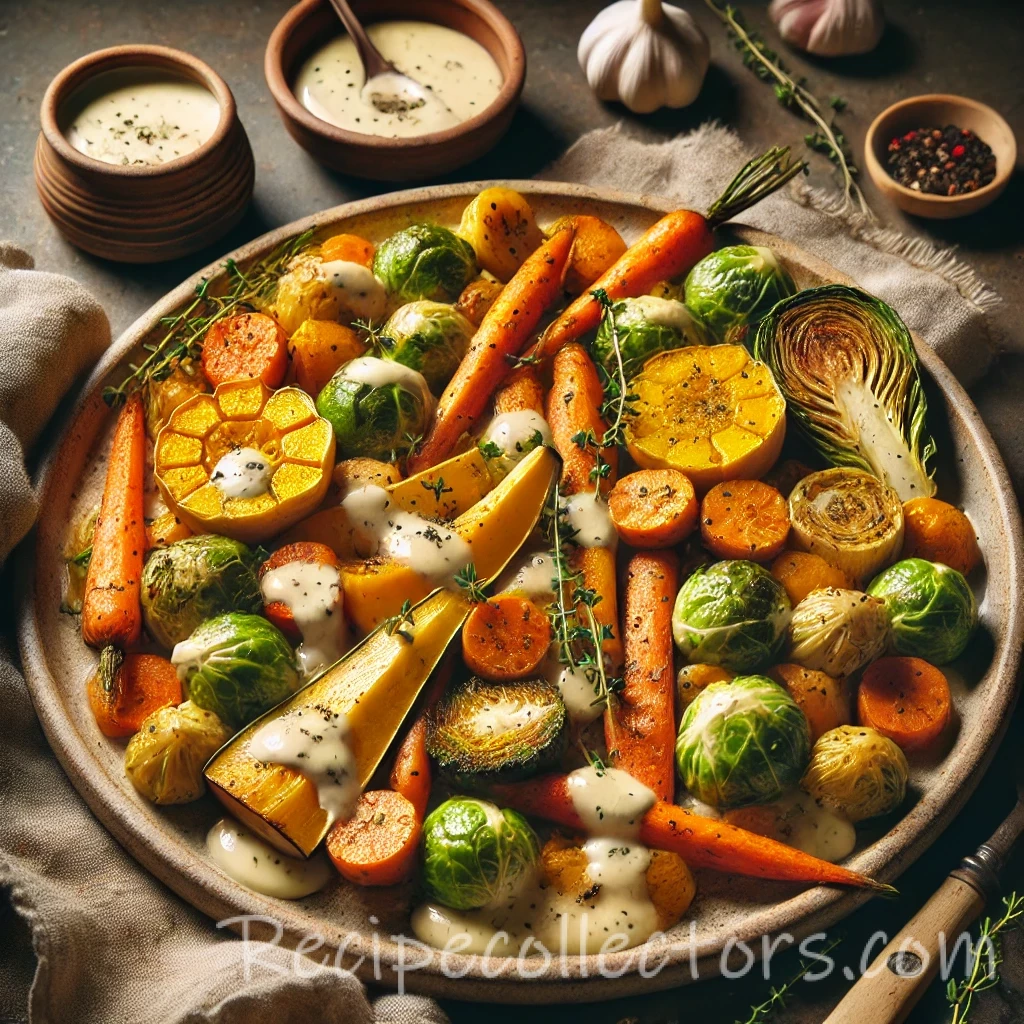
Garlic Roasted Autumn Vegetables
Equipment
- aluminum foil
- Mixing bowl
- Parchment paper
- Rimmed baking sheet
Ingredients
- 8 ounces Baby Red Potatoes halved
- 1 Butternut Squash medium, peeled, seeded and chopped
- 2 Carrots medium, sliced into coins
- 1/4 cup Extra-Virgin Olive Oil
- 1 teaspoon Garlic Powder
- 1/4 teaspoon Ground Black Pepper
- 1/2 teaspoon Ground Sage
- 1 Red Onion medium, chopped
- Salt to taste

Instructions
- Preheat the oven to 350°F (180°C).
- Line a rimmed baking sheet with parchment paper.
- Place the chopped medium red onion, sliced into coins medium carrots, peeled, seeded and chopped medium butternut squash, and halved 8 ounces baby red potatoes in a mixing bowl.
- Add 1/4 cup extra-virgin olive oil, 1 teaspoon garlic powder, 1/2 teaspoon ground sage, 1/4 teaspoon ground black pepper, and salt to taste.
- Toss until all the vegetables are evenly coated.
- Spread the vegetables in a single layer over the prepared baking sheet.
- Cover the baking sheet with aluminum foil.
- Roast for 1 hour until the vegetables are fork-tender.
- Remove the foil and serve the vegetables warm.
Notes & Wine Advice
Serving Advice
Serve these garlic roasted autumn vegetables warm as a colorful and nutritious side dish. They pair wonderfully with plant-based roasts, casseroles, or grilled main courses. For a complete plant-based meal, consider serving alongside rice, quinoa, lentils, or a fresh green salad. The natural sweetness of the butternut squash and carrots complements savory dishes, making this a versatile addition to any autumn or holiday table.Variations
To vary this dish, try adding other harvest vegetables such as Brussels sprouts, parsnips, pumpkin, or sweet potatoes for different flavors and textures. Fresh herbs like rosemary or thyme can replace the ground sage to provide a different aromatic profile. For a deeper savory flavor, smoked paprika can be added. Adjust the seasoning to your taste and experiment with different vegetable combinations to suit seasonal availability and personal preference.Wine Advice
Sauvignon Blanc: A crisp Sauvignon Blanc offers a fresh contrast to the earthy flavors of the roasted vegetables, enhancing the herbal notes of sage and the natural sweetness of the butternut squash. Chardonnay: A lightly oaked Chardonnay complements the sweet butternut squash and sage with its subtle creaminess and balanced acidity, making it a good alternative wine pairing. Try a sparkling water with a splash of fresh lemon or a crisp apple cider to complement the roasted autumn flavors without alcohol. Estimated ingredient cost: USD 2.50 per serving, excluding optional sides and drinks. Local prices vary. Missing nutrition values have been estimated per serving; existing values were retained. Assumptions: Nutrition estimates are based on four servings using the specified ingredient amounts, assuming standard edible portions and typical nutrient values for fresh vegetables and olive oil. Sodium is estimated from added salt and natural vegetable content. Fiber and sugar values reflect the natural carbohydrate composition of the vegetables. Optional sides and drinks are excluded.Nutrition values
————————————————————————————————–
Ingredient Functions and Texture Contributions
This recipe highlights classic autumn vegetables such as butternut squash, baby red potatoes, carrots, and red onion, each contributing unique flavors and textures. Butternut squash offers a sweet, nutty flavor and creamy texture when roasted, making it a star ingredient in many fall dishes. Baby red potatoes provide a tender, slightly earthy base that holds up well to roasting. Carrots add natural sweetness and a slight crunch if not overcooked, while red onions bring a mild sharpness that mellows and caramelizes during roasting. The use of garlic powder and ground sage enhances the savory and herbal notes, complementing the natural sweetness of the vegetables. Extra-virgin olive oil not only helps in roasting but also adds a fruity richness and helps the seasonings adhere to the vegetables. The combination of these ingredients creates a harmonious balance of flavors typical of autumn harvest dishes. Each vegetable in this recipe plays a specific role in texture and flavor development during roasting. The butternut squash, with its dense flesh, softens to a creamy consistency that contrasts nicely with the firmer baby red potatoes, which retain a slight bite when cooked properly. Carrots, sliced into coins, offer a tender yet slightly crisp texture that adds variety to each bite. Red onions, when roasted, become sweet and tender, their layers separating slightly to create a delicate mouthfeel. The garlic powder infuses a subtle pungency without overpowering, while ground sage introduces an earthy, slightly peppery note that complements the natural sweetness of the vegetables. Olive oil acts as a heat conductor, promoting even roasting and helping to develop a golden, caramelized exterior on the vegetables. Salt and black pepper enhance the overall flavor profile by balancing sweetness and adding mild heat. Together, these ingredients create a complex interplay of textures and tastes that define the dish's comforting character.
Workflow and Technique Enhancements
Preparing this dish involves peeling, chopping, and slicing the vegetables into similar-sized pieces to ensure even cooking. The recipe recommends peeling and seeding the butternut squash, halving the baby potatoes, slicing carrots into coins, and chopping the red onion. Tossing the vegetables with olive oil and seasonings ensures an even coating for optimal roasting. Covering the baking sheet with aluminum foil during roasting helps trap steam, allowing the vegetables to soften thoroughly without drying out. Roasting at 350°F (180°C) for one hour is a gentle method that cooks the vegetables evenly and develops their natural sweetness. Removing the foil at the end allows any excess moisture to evaporate, slightly caramelizing the vegetables for enhanced flavor. Using parchment paper on the baking sheet prevents sticking and makes cleanup easier. These practical steps ensure a tender, flavorful dish with minimal fuss. To optimize workflow, prepare all vegetables before preheating the oven to ensure a smooth transition to roasting. Uniform chopping is essential; aim for pieces roughly the same size to promote even cooking and prevent some vegetables from becoming mushy while others remain undercooked. When tossing the vegetables with olive oil and seasonings, use your hands or a large spoon to ensure every piece is coated thoroughly, which aids in flavor absorption and browning. Covering the baking sheet with foil traps steam, softening the vegetables gently, but be sure to remove the foil during the last 10-15 minutes to allow moisture to escape and encourage caramelization. Using parchment paper not only prevents sticking but also helps distribute heat evenly across the baking surface. For easier cleanup, consider using a rimmed baking sheet to catch any oil or juices that may drip during roasting. These techniques streamline preparation and improve the final texture and flavor of the dish.
Serving Ideas and Meal Planning Options
This garlic roasted autumn vegetable dish is versatile and pairs well with a variety of meals. It can be served alongside plant-based roasts, casseroles, or grilled main courses, making it ideal for family dinners and holiday celebrations like Thanksgiving and Christmas. For a complete plant-based meal, consider pairing it with grains such as rice or quinoa, or protein-rich lentils. The recipe also invites variations by incorporating other seasonal vegetables like Brussels sprouts, parsnips, pumpkin, or sweet potatoes to diversify flavors and textures. Fresh herbs such as rosemary or thyme can replace sage for a different aromatic profile, while smoked paprika adds a smoky depth. Leftovers can be stored in an airtight container in the refrigerator for up to four days and reheated in a hot oven or air fryer to restore texture. These serving and variation tips make the dish adaptable to different tastes and occasions. This roasted vegetable medley works well as a side dish or a main component in a plant-based meal. Serve it warm alongside grains like farro or barley for a hearty, fiber-rich plate. For added protein, toss the vegetables with cooked chickpeas or white beans before serving. To introduce a fresh element, garnish with chopped parsley or a squeeze of lemon juice to brighten the flavors. For meal planning, prepare a larger batch and refrigerate leftovers for up to four days; reheat in a hot oven or air fryer to maintain texture. This dish also freezes well; portion into airtight containers and thaw overnight before reheating. Consider varying the seasoning by adding a pinch of red pepper flakes for heat or a drizzle of balsamic glaze for sweetness. These serving and planning suggestions make the recipe adaptable for weeknight dinners or festive occasions. Browse our dinner recipes for more ideas. General kitchen guidance is available from the FDA.