
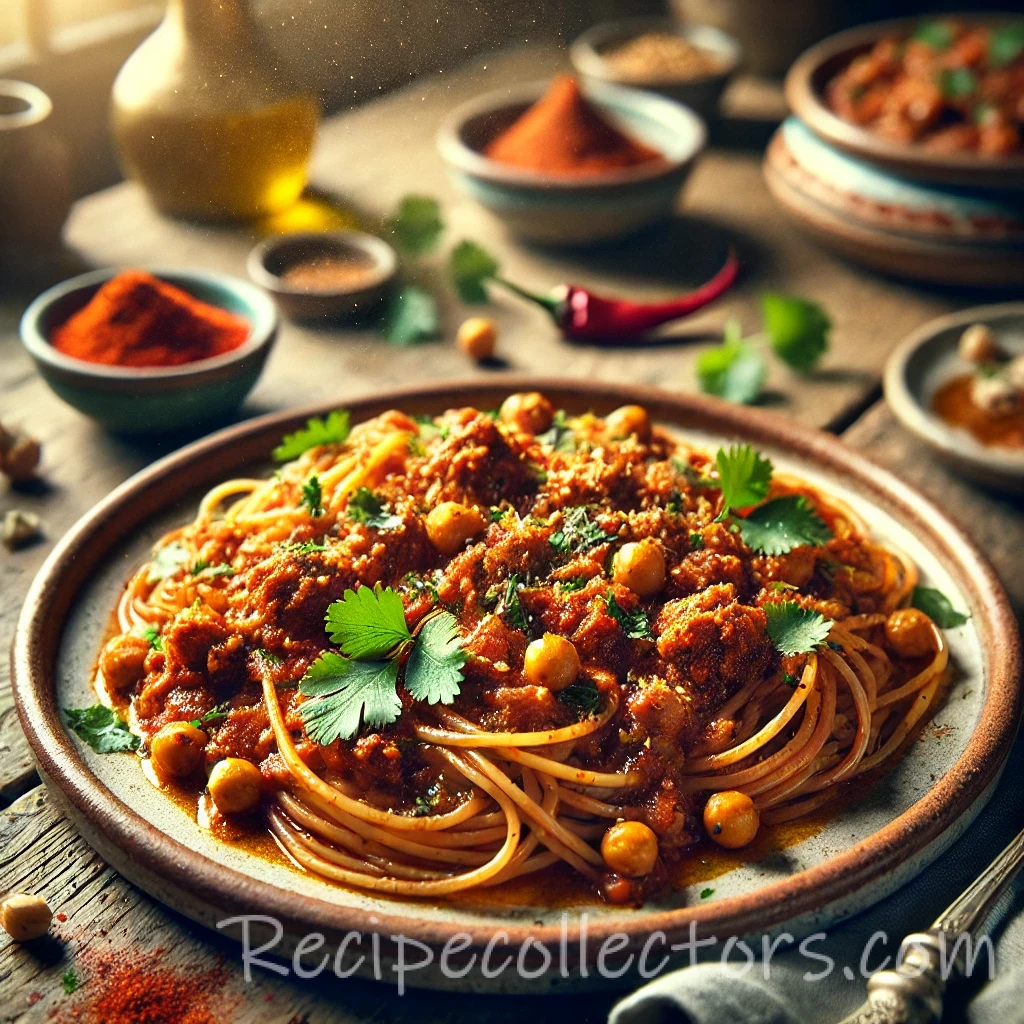
Moroccan Spaghetti
Equipment
- grater
- Knife
- Large pot
- Measuring cups
- spoon
Ingredients
- 425 g cooked garbanzo beans drained and rinsed
- 80 g diced red onion
- ½ tsp fine sea salt to taste
- 2 cloves garlic grated
- 1 tsp ground cinnamon
- 2 tsp ground cumin
- 1 tsp ground ginger
- 2 tsp paprika
- 15 ml peanut oil
- 40 g raisins
- 1 red bell pepper diced
- Handful roasted peanuts for garnish (optional)
- 425 g tomato sauce
- 235 ml water
- 130 g whole wheat spaghetti broken into 3 pieces
- 1 zucchini quartered and chopped

Instructions
- In a large pot, heat 15 ml of peanut oil over medium heat.
- Add 80 g diced red onion, 2 grated garlic cloves, 1 quartered and chopped zucchini, 1 diced red bell pepper, and 40 g raisins.
- Cook for 4 minutes, stirring occasionally.
- Add 2 tsp ground cumin, 2 tsp paprika, 1 tsp ground ginger, and 1 tsp ground cinnamon, stirring for 1 minute until fragrant.
- Pour in 425 g tomato sauce and 425 g drained and rinsed cooked garbanzo beans, then stir in 130 g whole wheat spaghetti broken into 3 pieces.
- Add 235 ml water to cover the pasta.
- Sprinkle with ½ tsp fine sea salt to taste.
- Stir well, cover, and simmer over medium-high heat for 10 minutes, stirring occasionally to prevent sticking and ensure there is enough liquid.
- Remove the lid and cook for another 5 minutes until the pasta is al dente and the liquid is absorbed. Add more water or broth if needed.
- Serve with a garnish of roasted peanuts, if desired.
Notes & Wine Advice
Serving Advice
Serve this Moroccan Spaghetti hot, garnished with roasted peanuts for a delightful crunch. For added freshness and depth, consider topping with chopped fresh cilantro or a drizzle of olive oil. Pair it with a light side salad to balance the warm spices and hearty texture. This dish works well as a satisfying main course for lunch or dinner and is perfect for those seeking a nutritious, flavorful vegetarian meal.Variations
To vary this recipe, you can substitute the whole wheat spaghetti with gluten-free pasta to accommodate dietary needs. Adding chopped fresh tomatoes or roasted eggplant can enhance the vegetable content and add more texture. For a spicier version, include a pinch of cayenne pepper or chopped fresh chili. You can also swap the peanut oil for olive oil or another neutral oil if preferred. For a vegan option, ensure the tomato sauce contains no animal products and omit the optional peanuts if nut allergies are a concern.Wine Advice
Pinot Noir: A light Pinot Noir, especially from Oregon, complements the aromatic and savory-sweet flavors of this dish with its earthy and fruity notes, enhancing the Moroccan spices without overpowering them. Rose: A fruity Rosé from France offers crispness and subtle berry flavors that cut through the richness of the spices, providing a refreshing contrast to the hearty pasta and beans. For an alcohol-free pairing, try a sparkling water with a splash of fresh lemon or a lightly brewed hibiscus tea. These options provide refreshing acidity and subtle fruitiness that complement the warm spices without adding sweetness. Estimated ingredient cost: USD 3.50 per serving, excluding optional sides and drinks. Local prices vary. Missing nutrition values have been estimated per serving; existing values were retained. Assumptions: Nutrition estimates are based on the edible portions of all ingredients as listed, assuming the whole wheat spaghetti is cooked within the dish and the tomato sauce contains no added sugars or fats beyond those specified. Serving size is one of four equal portions. Sodium content includes the ½ tsp fine sea salt added and naturally occurring sodium in canned tomato sauce and garbanzo beans. Optional sides and drinks are excluded.Nutrition values
————————————————————————————————–
Ingredients and Flavor Profile
This Moroccan Spaghetti recipe combines a unique blend of spices such as ground cinnamon, cumin, paprika, and ginger, which are staples in Moroccan cuisine. These spices create a warm, earthy, and aromatic flavor profile that transforms a simple pasta dish into an exotic experience. The inclusion of cooked garbanzo beans adds protein and texture, making the dish hearty and satisfying. Vegetables like zucchini, red bell pepper, and red onion contribute freshness and color, while raisins introduce a subtle sweetness that balances the spices. The use of whole wheat spaghetti adds a nutty flavor and increases the fiber content, making the dish more nutritious. Peanut oil is chosen for its mild flavor and high smoke point, suitable for sautéing the vegetables and spices. Optional roasted peanuts garnish the dish with a crunchy texture and additional nutty notes, enhancing the overall eating experience. The combination of spices in this Moroccan Spaghetti not only adds depth but also layers of complexity to the dish. Ground cinnamon imparts a subtle sweetness and warmth that complements the earthiness of cumin and the smoky notes of paprika. Ground ginger introduces a mild pungency and zest, balancing the sweetness of raisins and the natural sugars in the vegetables. The garbanzo beans contribute a creamy texture and mild nutty flavor, which contrasts nicely with the tender-crisp vegetables. Using whole wheat spaghetti enhances the dish's texture with a slightly chewy bite and a wholesome, grainy undertone that pairs well with the robust spices. The diced red onion and red bell pepper provide a natural sweetness and slight crunch, which brighten the overall flavor profile. Zucchini adds moisture and a delicate vegetal note, helping to mellow the intensity of the spices. Raisins are a clever addition, offering bursts of sweetness that harmonize with the savory and spicy elements. Peanut oil is an excellent choice for sautéing because it withstands the medium heat needed to soften the vegetables without burning the spices, preserving their aromatic qualities. The optional roasted peanuts garnish introduces a contrasting crunch and reinforces the nutty theme present in the beans and whole wheat pasta. The balance of flavors in this recipe is carefully crafted to evoke Moroccan culinary traditions while remaining accessible. The interplay between sweet, savory, and spicy components creates a dynamic taste experience. The texture contrasts—from tender pasta and soft beans to crisp vegetables and crunchy peanuts—make each bite interesting. This thoughtful combination ensures the dish is satisfying and nutritionally balanced, with fiber from the whole wheat pasta and beans, vitamins from the vegetables, and healthy fats from the peanut oil and nuts. The result is a flavorful, hearty meal that is both comforting and exotic.
Practical Preparation Tips
Preparing Moroccan Spaghetti in one pot makes this recipe convenient and minimizes cleanup. Start by heating peanut oil in a large pot to sauté the diced onion, grated garlic, zucchini, bell pepper, and raisins, which softens the vegetables and releases their flavors. Adding the spices after the vegetables have cooked for a few minutes allows the spices to bloom and become fragrant, intensifying the dish's aroma. Pouring in tomato sauce and garbanzo beans provides a rich base, while adding broken whole wheat spaghetti directly into the pot simplifies the cooking process. Covering the pot and simmering ensures the pasta absorbs the flavorful liquid evenly. Stirring occasionally prevents sticking and ensures even cooking. Adjusting the water or broth quantity during cooking helps achieve the perfect pasta texture. This method is efficient and ideal for busy cooks seeking a flavorful, wholesome meal with minimal fuss. To optimize the cooking process, it is important to prepare all ingredients before starting, as the recipe requires adding components in quick succession. Grating the garlic finely ensures it infuses the oil and vegetables evenly without overpowering the dish. Breaking the whole wheat spaghetti into three pieces helps it fit into the pot and cook uniformly alongside the sauce and vegetables. Stirring occasionally during simmering prevents the pasta from sticking to the bottom and allows the flavors to meld. Covering the pot traps steam, which helps the pasta cook through while absorbing the tomato and spice-infused liquid. When adding the spices, stirring them into the hot oil and vegetables for about a minute is crucial to release their essential oils and maximize flavor. This step, known as 'blooming' the spices, intensifies their aroma and taste. Monitoring the liquid level during cooking is also important; if the pasta absorbs too much liquid too quickly, adding a little more water or broth will prevent burning and ensure the pasta finishes cooking properly. Using a medium-high heat setting balances the need for a steady simmer without boiling over or drying out the sauce. Timing is key to achieving the perfect al dente texture for the pasta. After the initial covered simmer, removing the lid allows excess moisture to evaporate, thickening the sauce and concentrating flavors. This final uncovered cooking stage also helps the pasta firm up without becoming mushy. If desired, the dish can be prepared slightly ahead and gently reheated, as the flavors tend to deepen over time. However, stirring during reheating is recommended to prevent sticking and maintain the ideal consistency.
Serving Suggestions and Variations
Moroccan Spaghetti is versatile and can be served as a main course for lunch or dinner. Garnishing with roasted peanuts adds a delightful crunch and nutty flavor, but fresh herbs like cilantro or a drizzle of olive oil can also enhance the dish's freshness and complexity. Pairing it with a light side salad balances the warm spices and hearty beans, creating a well-rounded meal. For dietary variations, gluten-free pasta can replace whole wheat spaghetti, and the recipe can be made vegan by ensuring the tomato sauce is free from animal products. Adding extra vegetables such as roasted eggplant or fresh tomatoes can increase the nutritional value and add texture. For those who enjoy heat, a pinch of cayenne pepper or fresh chili can be included. This dish is a great introduction to Moroccan flavors and can be adapted to suit various tastes and dietary preferences. This Moroccan Spaghetti can be served as a standalone vegetarian main dish or accompanied by complementary sides. A crisp green salad with lemon vinaigrette provides a refreshing contrast to the warm spices and hearty beans. For added protein, a dollop of plain yogurt or a sprinkle of crumbled feta cheese can be served alongside, offering a cooling element that balances the dish’s warmth. The optional roasted peanuts garnish adds texture and visual appeal, but toasted sesame seeds or chopped fresh herbs like parsley or mint can also be used to enhance flavor and presentation. To customize the dish, consider incorporating additional vegetables such as roasted eggplant or sautéed mushrooms, which add earthiness and complexity. For a spicier version, a pinch of cayenne pepper or a few slices of fresh chili can be added during the spice blooming step. Those following gluten-free diets can substitute the whole wheat spaghetti with gluten-free pasta varieties, ensuring the dish remains accessible without compromising flavor. The recipe’s flexibility allows it to fit various dietary needs and preferences while maintaining its distinctive Moroccan-inspired character. For meal planning, Moroccan Spaghetti is ideal for batch cooking and reheats well, making it suitable for lunches or quick dinners throughout the week. Leftovers can be stored in an airtight container in the refrigerator for up to three days. To refresh the dish, gently reheat with a splash of water or broth to restore moisture. This recipe’s balance of protein, fiber, and vegetables makes it a nutritious option for meal prep, and its bold flavors keep it interesting even after multiple servings. It pairs well with simple sides or can be enjoyed on its own for a satisfying, wholesome meal. Browse our dinner recipes for more ideas. General kitchen guidance is available from the FDA.