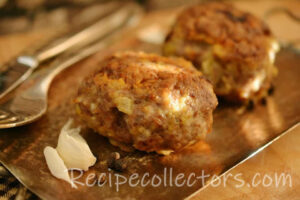
Gorgonzola- and Mushroom-Stuffed Beef Tenderloin with Merlot Sauce
Ingredients
STUFFED TENDERLOIN
- 1/2 beef tenderloin 2½ lb
- 1/2 tablespoon butter
- 1/8 cup chopped fresh parsley
- 1/8 teaspoon coarse kosher or sea salt
- 1/4 cup crumbled Gorgonzola or Roquefort cheese 2 oz
- 1/2 tablespoon olive or vegetable oil
- 1/2 cup sliced fresh mushrooms 3 oz
- 1/2 cup soft bread crumbs about 1½ slices bread
MERLOT SAUCE
- 1/8 cup beef broth
- 1/2 tablespoon butter
- 1/4 cup currant jelly
- 1/4 cup Merlot Zinfandel or nonalcoholic red wine

Instructions
- Heat oven to 425°F.
- Place 1/2 beef tenderloin (2½ lb) on cutting board.
- With a long knife, cut horizontally through the long side of the tenderloin, halfway up the side of the meat, stopping approximately ½ inch from the other side.
- Open beef as if opening a book.
- Cover with plastic wrap or waxed paper.
- Pound beef with the flat side of a meat mallet or rolling pin until uniformly ¼ inch thick.
- In a 10-inch skillet, melt 1/2 tablespoon butter over medium-high heat.
- Cook 1/2 cup sliced fresh mushrooms (3 oz) in butter, stirring occasionally, until tender and liquid has evaporated.
- Cool mushroom mixture for 5 minutes.
- Add 1/2 cup soft bread crumbs (about 1½ slices bread), 1/4 cup crumbled Gorgonzola or Roquefort cheese (2 oz), and 1/8 cup chopped fresh parsley; toss to combine.
- Sprinkle bread crumb mixture over beef to within 1 inch of edges.
- Tightly roll up beef, beginning with the long side.
- Turn small end of beef under about 6 inches so it cooks evenly.
- Tie with kitchen string at 1½-inch intervals.
- Place beef, seam side down, on rack in shallow roasting pan.
- Brush with 1/2 tablespoon olive or vegetable oil; sprinkle with 1/8 teaspoon coarse kosher or sea salt.
- Insert ovenproof meat thermometer so tip is in center of thickest part of beef.
- Bake uncovered 30 to 40 minutes or until thermometer reads at least 140°F.
- Cover loosely with foil; let stand about 15 minutes or until thermometer reads 145°F.
- Meanwhile, in 1-quart saucepan, heat 1/4 cup currant jelly, 1/4 cup Merlot (or Zinfandel or nonalcoholic red wine), and 1/8 cup beef broth to boiling, stirring occasionally; reduce heat to low.
- Simmer uncovered 35 to 40 minutes, stirring occasionally, until sauce is slightly reduced and syrupy.
- Remove string from beef before slicing.
- Serve beef slices with Merlot sauce.
Notes & Wine Advice
Serving Advice
Serve the sliced stuffed beef tenderloin warm, accompanied by the rich Merlot sauce spooned generously over each portion. This dish pairs beautifully with roasted or steamed vegetables such as asparagus, green beans, or glazed carrots. For a complete meal, consider serving alongside creamy mashed potatoes or a wild rice pilaf. Garnish the platter with fresh rosemary sprigs for an elegant and seasonal touch. A crisp green salad with a light vinaigrette can provide a refreshing contrast to the richness of the beef and sauce.Variations
For a different flavor profile, try substituting the Gorgonzola cheese with Roquefort or another blue cheese of your choice. You can also experiment with the mushrooms by using a mix of wild mushrooms like shiitake, cremini, or porcini for added depth. If you prefer a milder cheese, a soft goat cheese can be used instead. For a vegetarian alternative, consider stuffing a large portobello mushroom cap with the bread crumb and cheese mixture and baking it similarly. Additionally, the Merlot sauce can be enhanced by adding a splash of balsamic vinegar or a pinch of fresh thyme during simmering to complement the beef's richness.Wine Advice
Merlot: Merlot's soft tannins and fruity character complement the rich, savory flavors of the stuffed beef tenderloin and the mushroom and cheese stuffing, enhancing the overall dining experience. Cabernet Sauvignon: Cabernet Sauvignon offers bold tannins and dark fruit notes that stand up well to the robust flavors of beef and blue cheese, providing a balanced and satisfying pairing. For an alcohol-free option, substitute the Merlot with a high-quality nonalcoholic red wine or a rich grape juice. You can also add a splash of beef broth and a dash of balsamic vinegar to mimic the depth of flavor in the sauce. Estimated ingredient cost: USD 12.50 per serving, excluding optional sides and drinks. Local prices vary. Missing nutrition values have been estimated per serving; existing values were retained. Assumptions: Nutrition estimates are based on the edible portions of the beef tenderloin, mushrooms, bread crumbs, Gorgonzola cheese, butter, oil, and sauce ingredients as listed. Serving size is one-quarter of the prepared stuffed tenderloin with sauce. Unknown variables such as exact moisture content and brand variations are approximated using standard food composition data. Optional sides and drinks are excluded.Nutrition values
————————————————————————————————–
Ingredients and Flavor Profile
This recipe combines the luxurious texture of beef tenderloin with the bold flavors of Gorgonzola cheese and fresh mushrooms, creating a rich and savory dish. The beef tenderloin is carefully butterflied and pounded thin to allow for an even stuffing and rolling, ensuring each bite contains a harmonious blend of meat and filling. The stuffing mixture includes soft bread crumbs to provide structure, crumbled Gorgonzola or Roquefort cheese for a sharp, tangy contrast, and fresh parsley to add a hint of brightness. The mushrooms are sautéed in butter to develop their earthy flavor and to remove excess moisture, which helps prevent the stuffing from becoming soggy. The Merlot sauce, made from currant jelly, Merlot wine, and beef broth, adds a sweet and fruity dimension that balances the savory richness of the beef and cheese. This combination of ingredients results in a sophisticated dish that is both comforting and elegant, suitable for special occasions or gourmet dinners. The choice of Gorgonzola or Roquefort cheese in the stuffing introduces a creamy yet crumbly texture that contrasts beautifully with the tender beef. These cheeses bring a distinctive pungency and saltiness that enhances the overall flavor complexity. The soft bread crumbs act as a binder, absorbing the moisture released by the mushrooms and cheese during cooking, which helps maintain the stuffing's integrity without becoming mushy. Fresh parsley not only adds a pop of green color but also contributes a subtle herbal freshness that cuts through the richness of the cheese and meat. The mushrooms, carefully sautéed to remove excess water, provide an earthy umami depth that complements the beef’s natural flavors. Olive or vegetable oil brushed on the beef before roasting helps to create a slight crust on the surface, locking in juices and adding a subtle richness. The coarse kosher or sea salt sprinkled on top enhances the natural flavors of the beef and the stuffing, while also aiding in forming a flavorful crust. The Merlot sauce’s currant jelly adds a fruity sweetness and a glossy finish, balancing the savory and tangy elements of the dish. The beef broth in the sauce contributes a savory backbone, enriching the sauce’s mouthfeel and depth. The combination of these ingredients results in a multi-layered flavor profile where the tender, juicy beef is complemented by the sharpness of blue cheese, the earthiness of mushrooms, and the sweet acidity of the Merlot sauce. Each component plays a specific role in texture and taste, creating a harmonious dish that is both indulgent and well-balanced. This thoughtful ingredient interplay makes the recipe suitable for those who appreciate complex flavors and refined textures in their meals.
Preparation Techniques and Tips
The key to this recipe's success lies in the precise preparation of the beef tenderloin and the stuffing. Butterflying the tenderloin requires a sharp knife and careful attention to avoid cutting all the way through the meat. Pounding the beef to a uniform thickness ensures even cooking and makes rolling easier. When cooking the mushrooms, it is important to sauté them until their liquid evaporates to concentrate their flavor and prevent the stuffing from becoming watery. The bread crumbs should be soft but not overly moist, as they help bind the stuffing ingredients together. Rolling the beef tightly and tying it with kitchen string at regular intervals helps maintain its shape during roasting and promotes even cooking. Using an ovenproof meat thermometer inserted into the thickest part of the beef ensures the meat is cooked to the desired doneness, avoiding undercooking or overcooking. Resting the meat after roasting allows the juices to redistribute, resulting in a tender and juicy final product. The Merlot sauce benefits from a slow simmer to reduce and thicken, intensifying its flavor and creating a syrupy consistency that complements the beef. When butterflying the beef tenderloin, it is helpful to chill the meat slightly beforehand to firm it up, making it easier to slice evenly without tearing. Using a long, sharp knife and steady hands ensures a clean cut and uniform thickness. Pounding the meat with a mallet or rolling pin to about ¼ inch thickness not only facilitates rolling but also tenderizes the beef, resulting in a more delicate texture after cooking. During the mushroom sauté, stirring occasionally and cooking over medium-high heat allows the mushrooms to brown slightly, enhancing their flavor through caramelization. It is important to let the mixture cool before combining with the bread crumbs and cheese to prevent melting the cheese prematurely and to maintain the stuffing’s texture. Tossing the stuffing ingredients gently ensures even distribution without breaking down the bread crumbs too much. Tying the rolled beef at 1½-inch intervals with kitchen string is crucial for maintaining its cylindrical shape and ensuring even cooking. The small end of the beef is tucked under to create a uniform thickness, which helps the meat cook evenly and prevents thinner sections from drying out. Using an ovenproof meat thermometer inserted into the thickest part of the roll is the most reliable way to monitor doneness, avoiding guesswork and ensuring food safety. Resting the meat after roasting allows the juices to redistribute, making the slices moist and tender when served.
Serving Suggestions and Variations
This stuffed beef tenderloin is an impressive centerpiece for a dinner party or special occasion. Serving it sliced reveals the beautiful spiral of stuffing inside, making for an attractive presentation. Pairing the dish with seasonal vegetables such as roasted root vegetables, sautéed greens, or a fresh salad provides balance and variety on the plate. For starch, creamy mashed potatoes, polenta, or a wild rice pilaf work well to soak up the flavorful Merlot sauce. Garnishing the serving platter with fresh rosemary sprigs adds a festive and aromatic touch. Variations of this recipe can include using different types of cheese, such as Roquefort or a milder blue cheese, or experimenting with the mushroom variety for different textures and flavors. The sauce can be adapted by incorporating herbs like thyme or rosemary or by substituting the Merlot with other red wines such as Zinfandel or Cabernet Sauvignon. For those avoiding alcohol, nonalcoholic red wine or grape juice can be used to maintain the sauce's sweetness and depth. These options allow for customization while preserving the dish's elegant character. For an elegant presentation, slice the stuffed beef tenderloin into medallions about 1 inch thick, showcasing the spiral of mushroom and cheese filling. Arrange the slices on a warm platter and drizzle with the Merlot sauce for a glossy, appetizing finish. Accompany the dish with roasted asparagus or green beans tossed in garlic butter to add a crisp, fresh contrast to the rich meat. To complement the flavors, consider serving a side of creamy polenta or garlic mashed potatoes, which absorb the Merlot sauce beautifully. A simple mixed green salad with a light vinaigrette can provide a refreshing counterpoint to the richness of the beef and cheese. For a festive touch, garnish the plate with fresh herbs such as thyme or rosemary sprigs, which echo the herbal notes in the stuffing and sauce. If desired, the recipe can be adapted by substituting the Gorgonzola with a milder blue cheese or even a sharp aged cheddar for a different flavor profile. The mushroom variety can be varied as well, using shiitake or cremini mushrooms for a more robust taste. The Merlot sauce can be enhanced by adding a splash of balsamic vinegar or a pinch of fresh thyme during simmering to introduce additional layers of flavor. These variations allow for personalization while maintaining the dish’s sophisticated character. Browse our beef recipes for more ideas. General kitchen guidance is available from the FDA.