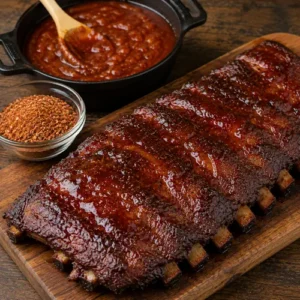
Roast Pork Loin with Crumb Crust
Ingredients
- 1/4 boneless pork loin roast 4 lb
- 1/2 tablespoons coarse-grained mustard
- 1/2 tablespoons finely chopped fresh parsley
- 1/2 tablespoons finely chopped garlic
- 1/16 cup olive oil
- 1/4 teaspoon pepper
- 1/2 teaspoons salt
- 1/4 cup unseasoned dry bread crumbs

Instructions
- Heat oven to 425°F.
- Line a roasting pan with foil.
- Sprinkle 1/4 boneless pork loin roast (4 lb) with 1/2 teaspoon salt and 1/4 teaspoon pepper.
- Place pork, fat side up, in the prepared pan.
- In a small bowl, stir together 1/4 cup unseasoned dry bread crumbs, 1/16 cup olive oil, 1/2 tablespoon finely chopped fresh parsley, 1/2 tablespoon finely chopped garlic, and 1/2 tablespoon coarse-grained mustard; press this mixture onto the top of the pork.
- Roast uncovered for 15 minutes.
- Cover loosely with foil and roast 1 hour longer or until a meat thermometer inserted into the center of the pork reads 145°F.
- Remove from oven and let stand 3 minutes before slicing.
Notes & Wine Advice
Serving Advice
Serve this roast pork loin with classic sides such as mashed potatoes and steamed carrots for a comforting meal. For a festive touch, pair it with creamy Italian oven polenta and a vegetable dish like holiday aloo gobi. A simple green salad or roasted seasonal vegetables also complement the savory crumb crust well. Allow the pork to rest before slicing to retain its juices and serve warm for best flavor and texture.Variations
To vary this roast pork loin, consider adding different herbs to the crumb crust such as thyme or rosemary for a fragrant twist. You can substitute the coarse-grained mustard with Dijon or whole grain mustard depending on your preference. For a spicier crust, add a pinch of cayenne pepper or smoked paprika to the breadcrumb mixture. If you prefer a gluten-free option, use gluten-free bread crumbs. Additionally, roasting smaller pork loin pieces or pork tenderloin can reduce cooking time while maintaining the delicious crust.Wine Advice
Pinot Noir: Pinot Noir's light to medium body and bright acidity complement the savory flavors of the pork and the herbaceous crumb crust without overpowering the dish. Chardonnay: A lightly oaked Chardonnay pairs well with the richness of the pork and the buttery texture of the crumb crust, enhancing the overall flavor experience. Try a sparkling apple cider or a non-alcoholic pear cider to complement the savory and herbaceous notes of the roast pork without alcohol. Estimated ingredient cost: USD 4.50 per serving, excluding optional sides and drinks. Local prices vary. Missing nutrition values have been estimated per serving; existing values were retained. Assumptions: Nutrition estimates are based on a 4 lb boneless pork loin roast divided into four servings, including the crumb crust ingredients. Assumptions include edible portions only, with no additional sides or sauces. Sodium content accounts for added salt and mustard. Caloric values are approximate and may vary with specific ingredient brands and preparation methods. Optional sides and drinks are excluded.Nutrition values
————————————————————————————————–
Ingredients and Flavor Profile Enhancements
This roast pork loin recipe features a boneless pork loin roast as the centerpiece, seasoned simply with salt and pepper to enhance its natural flavor. The crumb crust is made from unseasoned dry bread crumbs combined with olive oil, fresh parsley, garlic, and coarse-grained mustard. This mixture adds texture and a savory, aromatic layer that crisps up beautifully during roasting. The parsley and garlic provide fresh herbal and pungent notes, while the mustard contributes a subtle tang and depth. Olive oil binds the crumbs and helps achieve a golden crust. The simplicity of the ingredients allows the pork's flavor to shine while adding a delightful contrast in texture. The choice of a boneless pork loin roast ensures even cooking and ease of slicing, while its lean nature benefits from the added moisture and flavor of the crumb crust. The olive oil not only helps bind the crumbs but also promotes browning, contributing to the crust's appealing golden color. Fresh parsley and garlic are finely chopped to release their essential oils, which infuse the crust with vibrant herbal and pungent aromas during roasting. The coarse-grained mustard adds texture and a mild heat that complements the pork's natural sweetness. The dry bread crumbs provide a crunchy contrast to the tender pork, creating a pleasing mouthfeel. Using unseasoned crumbs allows control over the seasoning balance, ensuring the salt and pepper on the pork are the primary seasoning agents. The mustard's acidity cuts through the richness of the pork, balancing the overall flavor profile. This combination of ingredients creates a harmonious blend of savory, tangy, and fresh notes that enhance the roast without overpowering it. The simplicity of the seasoning highlights the pork's natural flavor, making it suitable for a wide range of palates. The fresh parsley adds a subtle green freshness that brightens the dish visually and flavor-wise. Garlic's pungency is mellowed by roasting, contributing depth without overwhelming the palate. Together, these ingredients create a crust that is both flavorful and texturally interesting, elevating a classic roast pork loin into a memorable main course.
Practical Preparation Tips for Success
Preparing this roast pork loin is straightforward and suitable for cooks of all skill levels. Starting with a hot oven at 425°F helps to develop a crust quickly, locking in juices. Lining the roasting pan with foil simplifies cleanup and prevents sticking. Pressing the crumb mixture firmly onto the pork ensures it adheres well and crisps evenly. Covering the roast loosely with foil after the initial high-heat phase prevents the crust from burning while allowing the pork to cook through gently. Using a meat thermometer is essential to ensure the pork reaches the safe internal temperature of 145°F, which guarantees safety and optimal juiciness. Resting the meat for 3 minutes before slicing allows the juices to redistribute, resulting in tender, moist slices. To ensure the crumb crust adheres well, pat the pork dry before seasoning and applying the crumb mixture; moisture can prevent proper adhesion and crisping. Press the crumb mixture firmly and evenly over the fat side of the pork to create a uniform crust that crisps consistently. Starting the roast at a high temperature sears the exterior, locking in juices, while the subsequent lower temperature cooking ensures the pork cooks evenly without drying out. Using foil to line the roasting pan not only simplifies cleanup but also reflects heat, promoting even cooking. When covering the roast loosely with foil after the initial high-heat phase, avoid sealing it tightly to prevent steaming the crust, which would soften it. Monitoring the internal temperature with a meat thermometer is crucial; inserting it into the thickest part of the roast avoids undercooking or overcooking, ensuring food safety and optimal texture. Allowing the roast to rest for 3 minutes after cooking lets the muscle fibers relax and reabsorb juices, resulting in moist, tender slices. Slice the pork against the grain to maximize tenderness. For efficient workflow, prepare the crumb mixture while the oven preheats and season the pork just before applying the crust to maintain freshness. This timing helps streamline the cooking process and ensures the best texture and flavor.
Serving Suggestions and Meal Planning Ideas
This roast pork loin pairs wonderfully with a variety of side dishes, making it versatile for different occasions. Traditional sides like mashed potatoes and steamed carrots offer a comforting balance, while more festive accompaniments such as creamy Italian oven polenta and holiday aloo gobi add international flair. The crumb crust adds a textural contrast that elevates the dish beyond a simple roast. Variations can include different herbs or spices in the crust, or substituting mustard types to suit personal taste. For a gluten-free diet, gluten-free bread crumbs can be used without compromising texture. Leftovers can be repurposed into sandwiches or salads, making this recipe practical as well as delicious. This roast pork loin is versatile enough to be the centerpiece of both casual family dinners and more formal gatherings. Pairing it with creamy mashed potatoes and steamed carrots offers a classic, comforting meal. For a more adventurous palate, serving alongside creamy Italian oven polenta introduces a smooth, rich texture that complements the crust's crunch. Holiday aloo gobi adds a spiced vegetable side that brings warmth and complexity to the plate. To vary the flavor profile, consider swapping fresh parsley with other herbs like thyme or rosemary, which also pair well with pork. Experimenting with different types of mustard, such as Dijon or whole grain, can subtly alter the tanginess and texture of the crust. For those with gluten sensitivities, substituting gluten-free bread crumbs maintains the crisp texture without compromising taste. Leftover roast pork loin can be sliced thinly for sandwiches, adding a flavorful protein boost to lunch. Alternatively, diced leftovers can be tossed into salads or grain bowls for quick, satisfying meals. Planning ahead, this recipe can be doubled for larger gatherings, with the crumb crust applied just before roasting to maintain its texture. This flexibility makes the dish practical for meal prep and entertaining alike. Browse our dinner recipes for more ideas. General kitchen guidance is available from the FDA.