
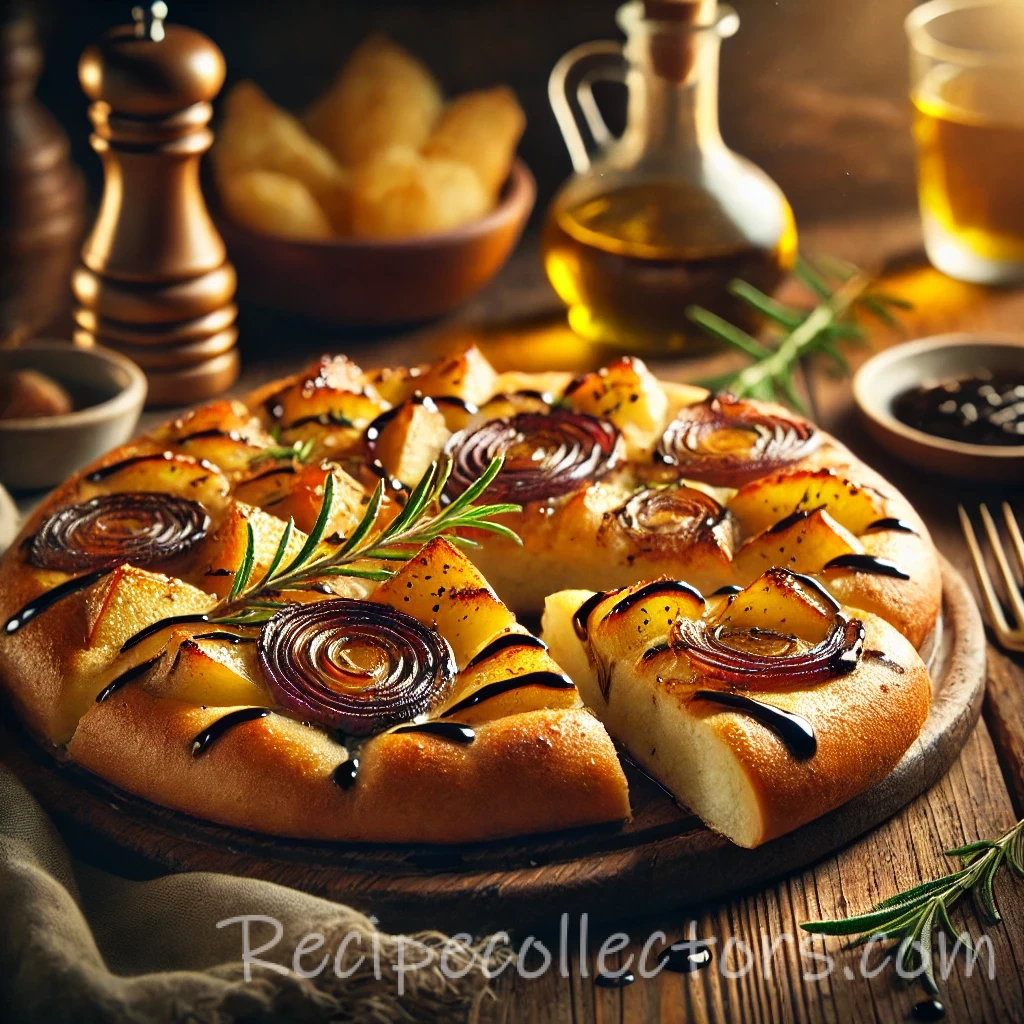
Focaccia’s Garden Party
Equipment
- Baking dish (23 x 33 cm)
- Fork
- Frying pan
- Large-size bowl
- Mandolin (optional)
- medium-size bowl
Ingredients
For the focaccia:
- 3 1/2 g active dry yeast
- 62 1/2 g all-purpose flour
- 1 g dried basil
- 1/2 tsp evaporated cane juice or granulated sugar
- 1/4 tsp freshly cracked pepper
- Olive oil for coating
- 8 g onion powder
- 1/4 tsp salt
- 60 ml water heated to 38°C (100°F)
- 60 g whole wheat pastry flour
For the potatoes:
- Nonstick cooking spray
- 227 1/2 g potatoes
For the onions:
- 30 ml balsamic vinegar
- 15 ml extra-virgin olive oil
- 15 ml extra-virgin olive oil
- For the béchamel sauce:
- 1/2 large-size red onion sliced into rings
- 15 g minced garlic
- Refer to a separate recipe for this sauce
- Pinch salt

Instructions
- Mix together the 3 1/2 g active dry yeast, 1/2 tsp evaporated cane juice or granulated sugar, and 60 ml water heated to 38°C (100°F) in a medium-size bowl.
- Let proof for about 10 minutes; it should foam and bubble up. If it doesn’t, start over again because your yeast might not be fresh.
- In a large-size bowl, combine 60 g whole wheat pastry flour, 62 1/2 g all-purpose flour, 8 g onion powder, 1 g dried basil, 1/4 tsp salt, and 1/4 tsp freshly cracked pepper.
- Add the yeast mixture and begin to knead. If the dough is too dry, add more water, 15 ml (1 tablespoon) at a time, until you can incorporate all of the flour.
- Knead for about 5 minutes, until you get a soft, elastic, uniform dough ball.
- Lightly coat the ball with olive oil, cover lightly with plastic wrap, and let rise for 45 minutes to 1 hour.
- Use your preferred type of potatoes, and slice 227 1/2 g potatoes as thin as possible (using a mandolin or a sharp knife). Rinse the sliced potatoes in cold water to prevent discoloration.
- Preheat the oven to 180°C (350°F) and prepare a glass 23 × 33-cm (9 × 13-inch) baking dish by lightly greasing or spraying with nonstick cooking spray.
- In a large-size frying pan, heat 15 ml extra-virgin olive oil over medium heat.
- Add 1/2 large-size red onion sliced into rings and a pinch of salt and sauté until translucent and beginning to brown, 5 to 7 minutes.
- Add 30 ml balsamic vinegar and continue to cook for 2 to 3 more minutes, tossing to coat. Remove from the heat.
- Punch down the dough. Press the dough into the baking dish, making sure you get it into the corners, and create dimples in the surface with your fingers.
- Using a fork, poke holes all over the surface of the dough.
- Spread 15 g minced garlic over the dough, then drizzle with 15 ml olive oil.
- Layer the potatoes on top to cover completely, and spread the béchamel sauce all over the potatoes (refer to a separate recipe for this sauce).
- Top with the balsamic caramelized onions.
- Bake for 1 hour, or until the potatoes are fork-tender and the edges of the focaccia are beginning to brown.
- Let cool before slicing and serving.
Notes & Wine Advice
Serving Advice
Serve this focaccia warm or at room temperature alongside a fresh green salad dressed with lemon and olive oil for a balanced meal. It also pairs beautifully with a light vegetable soup or a Mediterranean mezze platter featuring olives, cheeses, and cured meats. This dish makes an excellent centerpiece for a casual dinner party or a festive gathering, offering a comforting yet sophisticated flavor profile that guests will enjoy.Variations
For a different flavor profile, try adding fresh rosemary or thyme to the dough or as a topping before baking. You can substitute the potatoes with thinly sliced sweet potatoes or even roasted root vegetables for a seasonal twist. For a vegan version, replace the béchamel sauce with a cashew cream or a plant-based white sauce. Adding crumbled feta or goat cheese on top before baking can also enhance the richness and add a tangy contrast to the sweet balsamic onions.Wine Advice
Pinot Noir: A medium-bodied Pinot Noir, such as one from Oregon, offers earthy notes and balanced acidity that complement the sweet balsamic caramelized onions and the rich béchamel sauce, enhancing the overall flavor of the focaccia. Prosecco: A crisp, dry Prosecco cuts through the richness of the béchamel and potatoes, refreshing the palate and making each bite feel light and delightful, perfect for pairing with this savory focaccia. For an alcohol-free pairing, try a sparkling water with a splash of lemon or a lightly brewed iced herbal tea such as chamomile or mint to refresh the palate and complement the savory and tangy flavors of the focaccia. Estimated ingredient cost: USD 3.50 per serving, excluding optional sides and drinks. Local prices vary. Missing nutrition values have been estimated per serving; existing values were retained. Assumptions: Nutrition estimates are per one of four servings, based on the combined ingredients including flours, potatoes, olive oil, onions, garlic, and béchamel sauce. Assumes typical béchamel made with butter, milk, and flour. Serving size is approximately one-quarter of the baked focaccia. Weights are based on edible portions of fresh ingredients. Optional sides and drinks are excluded.Nutrition values
————————————————————————————————–
Ingredients and Flavor Profile
This focaccia recipe combines a soft, pillowy bread base with a sophisticated topping of balsamic caramelized onions, béchamel sauce, and thinly sliced potatoes. The dough is made from a blend of whole wheat pastry flour and all-purpose flour, which provides a tender crumb with a slight nuttiness from the whole wheat. Onion powder and dried basil are incorporated into the dough to infuse subtle herbal and savory notes throughout. The caramelized onions add a sweet and tangy depth, enhanced by the balsamic vinegar, which balances the richness of the béchamel sauce. The thin potato slices create a tender, comforting layer that melds beautifully with the other components. Olive oil is used generously to coat the dough and enrich the flavors, contributing to the focaccia’s characteristic moistness and golden crust. This combination of ingredients results in a dish that is both hearty and elegant, suitable for a variety of occasions. The role of each ingredient in this focaccia is carefully balanced to create a harmonious texture and flavor. The whole wheat pastry flour contributes a delicate nuttiness and a tender crumb, while the all-purpose flour provides the necessary gluten structure for elasticity and rise. Onion powder and dried basil are subtle yet impactful, infusing the dough with aromatic and savory undertones that complement the toppings. The olive oil coating not only prevents sticking but also enriches the crust, giving it a golden hue and a slightly crisp exterior. The thin potato slices add a creamy, soft layer that contrasts with the bread’s chewiness, while the balsamic caramelized onions introduce a sweet acidity that cuts through the richness of the béchamel sauce. The texture interplay is a key feature of this recipe. The dough’s softness and elasticity come from proper kneading and hydration, which allows it to rise well and develop a light crumb. The potatoes, sliced thinly, become tender and almost melt into the béchamel, creating a luscious mouthfeel. The caramelized onions add a slight chew and a sticky glaze that enhances the overall sensory experience. The seasoning with salt and freshly cracked pepper in the dough ensures that the base is flavorful even before adding toppings, making every bite balanced and satisfying. The use of evaporated cane juice or granulated sugar in the yeast mixture serves a dual purpose: it activates the yeast by providing a quick energy source and subtly enhances the dough’s flavor by adding a hint of sweetness. This small addition helps the yeast proof more effectively, ensuring a good rise and a light texture. The combination of herbs and spices in the dough also complements the natural sweetness of the caramelized onions and the creamy béchamel, creating a layered flavor profile that is both complex and approachable. Olive oil’s fruity notes further elevate the dish’s Mediterranean character.
Practical Preparation Tips
Preparing this focaccia involves several key steps that ensure the best texture and flavor. Proofing the yeast mixture properly is essential; it should foam and bubble to confirm the yeast is active, which guarantees a good rise in the dough. Kneading the dough until it is soft and elastic helps develop gluten, providing structure and chewiness. Using a mandolin or a sharp knife to slice the potatoes thinly ensures they cook evenly and become tender during baking. Rinsing the potato slices in cold water prevents discoloration and removes excess starch, which can affect texture. The caramelized onions require gentle cooking over medium heat to develop sweetness without burning, and adding balsamic vinegar towards the end enhances their complexity. Pressing the dough into the baking dish with dimples and poking holes with a fork allows for even baking and prevents large air pockets. Finally, spreading the béchamel sauce over the potatoes before topping with onions adds creaminess and moisture, making the focaccia rich and satisfying. Timing and temperature control are crucial throughout the preparation of this focaccia. The water used to proof the yeast should be precisely heated to 38°C (100°F) to activate the yeast without killing it. Allowing the dough to rise in a warm, draft-free environment for 45 minutes to an hour ensures optimal fermentation, which develops flavor and texture. When kneading, aim for a smooth, elastic dough that springs back when pressed; this indicates well-developed gluten. If the dough feels too dry, adding water gradually helps achieve the right consistency without making it sticky or overly wet. When handling the potatoes, uniform thin slices are essential for even cooking and texture. Using a mandolin slicer is recommended for consistent thickness, which prevents some slices from undercooking while others become mushy. Rinsing the slices in cold water removes excess starch, which can cause the potatoes to stick together or become gummy. After layering the potatoes on the dough, spreading the béchamel sauce evenly ensures every bite is creamy and moist. The caramelized onions should be added last to preserve their texture and flavor, preventing them from becoming soggy during baking. To avoid common pitfalls, make sure to dimple the dough deeply with your fingers before adding toppings; this helps the focaccia maintain its characteristic airy texture and prevents large air pockets. Poking holes with a fork further aids in even baking and steam release. Baking at 180°C (350°F) for one hour allows the potatoes to become tender and the focaccia edges to brown nicely without burning. Letting the focaccia cool before slicing helps the layers set, making it easier to cut clean pieces and enhancing the presentation.
Serving Suggestions and Variations
This focaccia is versatile and can be served as a main dish or an appetizer. It pairs wonderfully with a fresh salad or a light soup, making it suitable for a complete meal or part of a Mediterranean-inspired spread. For a festive occasion, it can be sliced into small squares and served as finger food alongside dips and antipasti. Variations include adding fresh herbs like rosemary or thyme to the dough or topping, substituting potatoes with sweet potatoes or other root vegetables for seasonal interest, or incorporating cheeses such as feta or goat cheese for added tang and richness. For those avoiding dairy, béchamel can be replaced with a plant-based cream sauce. The focaccia also works well with different types of vinegar or infused oils to customize the flavor. These options allow you to tailor the dish to your preferences or dietary needs while maintaining its delicious character. This focaccia can be served warm or at room temperature, making it a flexible option for different dining occasions. For a casual meal, pair it with a crisp green salad dressed with lemon vinaigrette to balance the richness of the béchamel and potatoes. It also complements roasted or grilled vegetables and can be served alongside charcuterie or cheese boards for a more elaborate spread. Leftovers can be reheated gently in the oven to restore the focaccia’s crispness and warmth, making it a convenient choice for meal planning. To customize the dish, consider adding fresh herbs like rosemary or thyme either into the dough or sprinkled on top before baking to introduce aromatic notes that enhance the focaccia’s flavor. For a seasonal twist, substitute the potatoes with thinly sliced sweet potatoes or parsnips, which add natural sweetness and a different texture. Incorporating crumbled feta or goat cheese into the béchamel or as a topping can add tanginess and richness, while a sprinkle of toasted pine nuts or walnuts provides a pleasant crunch and nutty flavor. For dietary adaptations, the béchamel sauce can be replaced with a plant-based cream sauce made from cashews or almond milk to accommodate vegan or lactose-intolerant eaters without sacrificing creaminess. Experimenting with different types of vinegar, such as sherry or red wine vinegar, in the caramelized onions can subtly alter the flavor profile to suit personal preferences. Additionally, infused olive oils with garlic or chili can be drizzled over the focaccia before serving to add an extra layer of flavor and visual appeal. These variations allow the recipe to be tailored to diverse tastes and occasions while maintaining its core deliciousness. Browse our bread recipes for more ideas. General kitchen guidance is available from the FDA.