
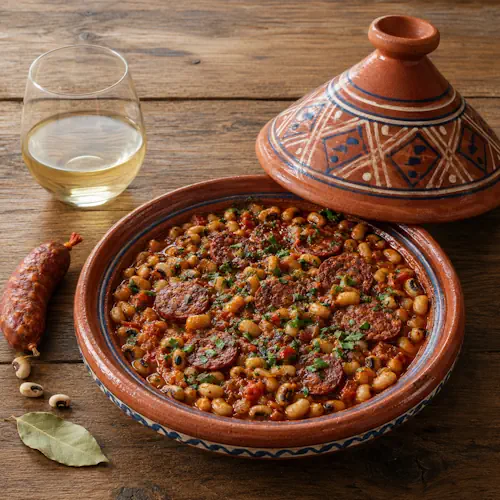
Chorizo Wine Bean Tagine
Equipment
- oven
- Saucepan, Large
- Tagine
- Wooden spoon
Ingredients
For the Black-Eyed Beans
- 175 g Dried Black-Eyed Beans
- Water for soaking and cooking
For the Tagine
- 2 tablespoons Smen
- 1 medium Yellow Onion coarsely chopped
- 3 cloves Garlic finely chopped
- 2 Red Chillies deseeded and finely chopped
- 1 teaspoon Cumin Seeds
- 1½ teaspoons Coriander Seeds
- 700 g Spanish Chorizo sliced
- 3 Bay Leaves
- 400 g Chopped Tomatoes canned and drained
- 150 ml Dry White Wine
- 1 teaspoon Sea Salt
- ½ teaspoon Black Pepper freshly ground
For Serving
- 1 bunch Fresh Flat-Leaf Parsley roughly chopped

Instructions
For Soaking the Beans
- Place the dried black-eyed beans in a large bowl.
- Cover them generously with cold water.
- Let the beans soak for 8 hours.
- Drain the soaked beans in a colander.
- Rinse them thoroughly under cold running water.
For Cooking the Beans
- Transfer the beans to a large saucepan.
- Cover them generously with fresh water.
- Bring the water to a boil over high heat.
- Reduce the heat to low.
- Cover the saucepan and simmer for 25 minutes until the beans are tender.
- Drain the cooked beans.
- Rinse them briefly under cold running water.
- Remove and discard any loose bean skins.
For the Tagine
- Preheat the oven to 350°F (180°C).
- Place the tagine base over medium heat.
- Add the smen and let it melt.
- Add the chopped onion, garlic, chillies, cumin seeds, and coriander seeds.
- Cook for 3 minutes while stirring regularly.
- Add the sliced chorizo.
- Stir until the chorizo is coated with the spices.
- Cook for another 3 minutes.
- Add the cooked black-eyed beans, bay leaves, and drained tomatoes.
- Pour in the dry white wine.
- Stir until evenly combined.
- Cover the tagine.
- Transfer it carefully to the preheated oven.
- Bake for 30 minutes.
- Remove the tagine carefully from the oven.
- Discard the bay leaves.
- Season with sea salt and freshly ground black pepper.
- Stir most of the parsley through the beans.
- Garnish with the remaining parsley.
- Serve hot.
Notes & Wine Advice
Serving Suggestions
Serve the tagine hot with crusty bread, couscous, rice, or roasted potatoes to absorb the spiced tomato and wine sauce. A simple green salad or steamed vegetables provide a fresh contrast to the rich chorizo. Smaller portions can be served as part of a larger Moroccan-inspired meal.Recipe Notes
Soaking the beans for eight hours shortens their cooking time and promotes even cooking. The beans should be tender before they enter the tagine. Choose a tagine that is approved for both stovetop and oven use, or prepare the recipe in an oven-safe casserole with a lid.Variations
For a meat-free version, replace the chorizo with 450 grams of diced red, yellow, and orange peppers. Replace the black-eyed beans with 225 grams of dried borlotti beans, soak them for eight hours, and boil them for 30 minutes before continuing with the recipe.Storage and Reheating
Cool leftovers promptly and refrigerate them in an airtight container for up to three days. Reheat individual portions gently in a saucepan or microwave until piping hot throughout. Add a splash of water or stock when the sauce has thickened during storage.Wine Advice
A Spanish Tempranillo complements the smoky chorizo, tomatoes, and earthy spices. When you prefer white wine, serve the dish with a dry Verdejo, which provides enough freshness to balance the rich pork.Nutrition values
————————————————————————————————–
About Chorizo Bean Tagine
Chorizo bean tagine combines tender black-eyed beans with Spanish chorizo, tomatoes, white wine, chillies, cumin, and coriander. The ingredients cook together in a covered tagine, producing a rich sauce and a substantial Moroccan chorizo stew with smoky, spicy, and savoury flavours.
This recipe serves four and uses a generous quantity of chorizo, making it a rich main course rather than a light bean dish. Fresh parsley added at the end brings colour and freshness, while the white wine prevents the tomato sauce from feeling excessively heavy.
Combining Moroccan and Spanish Flavours
The recipe brings together ingredients associated with two neighbouring culinary traditions. A tagine, smen, cumin, coriander, and chillies provide Moroccan character. Spanish chorizo contributes smoked paprika, garlic, pork fat, and a deep savoury flavour.
White wine and tomatoes connect the two profiles and create enough liquid for the beans to absorb. As the covered dish bakes, the chorizo releases seasoned fat into the sauce, coating the beans and vegetables.
Preparing the Black-Eyed Beans
Dried black-eyed beans need to be soaked before cooking. Eight hours in cold water allows them to hydrate gradually. Use a large bowl and plenty of water because the beans expand considerably while soaking.
After soaking, drain and rinse them before covering them with fresh water. Simmering for approximately 25 minutes should make them tender, although the exact time depends on their age. Older dried beans may require longer cooking.
The beans should be properly cooked before they are added to the tagine. The wine and tomatoes create an acidic environment, and acidity can slow further softening. Starting with tender beans avoids a finished stew containing firm or chalky centres.
Building the Tagine Base
Smen is a seasoned fermented butter used in North African cooking. Melting it before adding the onion, garlic, chillies, cumin, and coriander creates an aromatic base. Three minutes of cooking releases the fragrance of the spices without allowing the garlic to burn.
The sliced chorizo is cooked briefly so its surface begins to release fat and paprika. The beans, bay leaves, tomatoes, and wine are then added. Covering the tagine traps steam and keeps the mixture moist during baking.
Choosing the Right Cooking Vessel
Traditional clay tagines differ in how they can be heated. Some are suitable for stovetop and oven use, while decorative versions are not designed for direct heat. Check the manufacturer’s instructions before placing a tagine over a burner or inside a hot oven.
An enamelled cast-iron casserole or Dutch oven can be used when the tagine is unsuitable. Choose a heavy pan with a tightly fitting lid. Browse the stew recipes and bean collection for more slow-cooked meals.
Serving the Moroccan Chorizo Stew
Serve the Moroccan chorizo stew with crusty bread, couscous, rice, or potatoes. These accompaniments absorb the wine and tomato sauce and turn the dish into a complete dinner. A green salad or roasted vegetables provide balance.
For another hearty meal with warming spices, try our Peanut Coconut Potato Stew. You can also explore the pork recipes, Moroccan collection, and main courses for related dishes.
Dietary and Nutritional Considerations
The quantity of chorizo makes this recipe high in calories, saturated fat, and sodium. It should not be classified as low-fat, low-calorie, low-salt, or low-sodium. Smaller portions and additional vegetables can make the meal less rich.
The dish can be gluten-free and wheat-free when the chorizo, spices, and wine are confirmed suitable. Processed meats can contain unexpected additives, so check the chorizo label carefully when cooking for someone with an allergy or intolerance.
Storage and Food Safety
Transfer leftovers to shallow containers and refrigerate them promptly. Store for up to three days and reheat only the amount required. Add water or stock if the beans have absorbed too much sauce during storage.
Make sure every reheated portion is hot throughout. Follow current FDA safe food-handling guidance when cooking dried beans, cooling stew, storing cooked pork, and reheating leftovers.
With creamy beans, smoky pork, warming spices, and a rich wine sauce, chorizo bean tagine provides a bold fusion of Moroccan and Spanish flavours.