
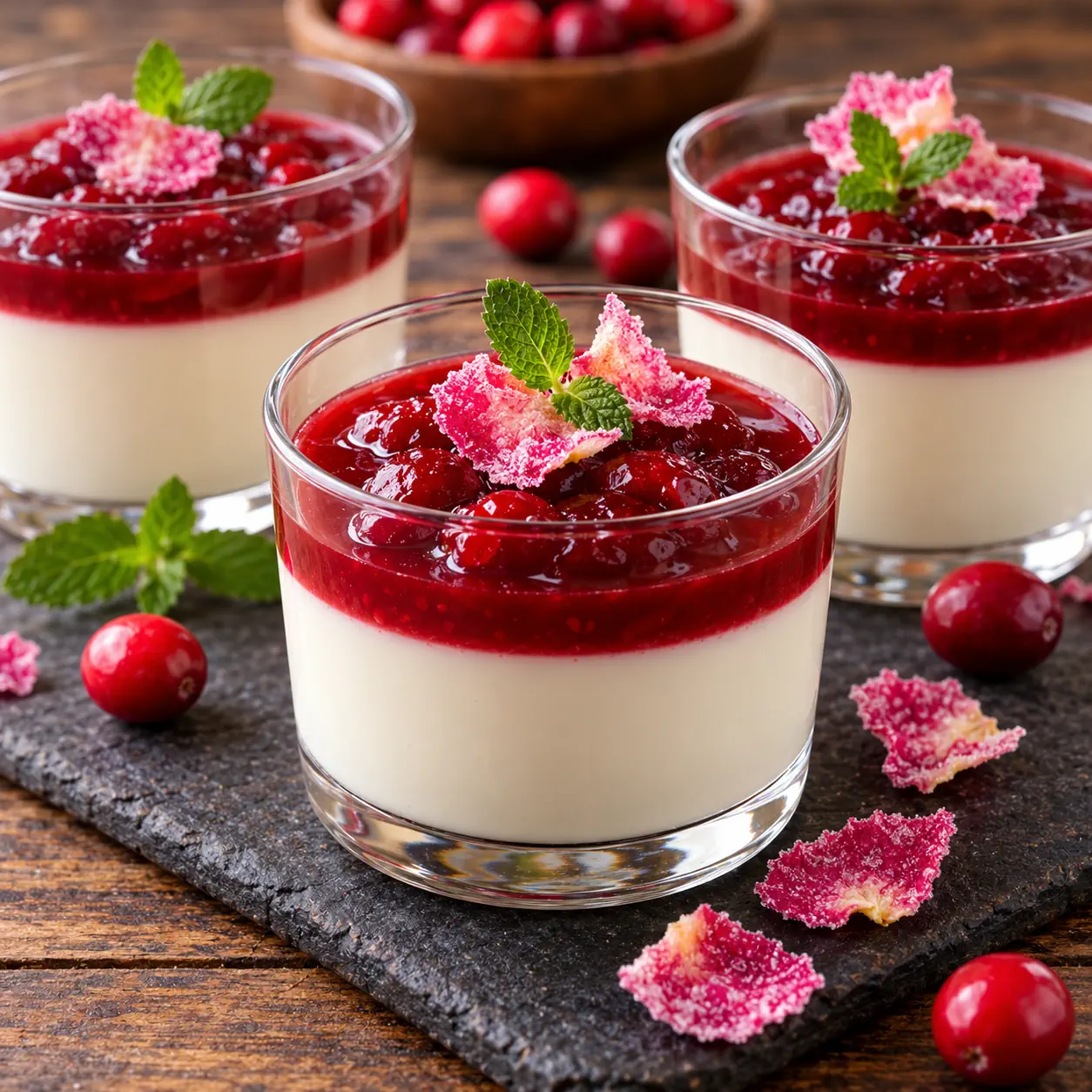
Cranberry Buttermilk Panna Cotta
Equipment
- Small saucepan
- Mixing bowl
- Whisk
- Rubber spatula
- Measuring jug
- Dessert glasses
Ingredients
- 50 g cranberries fresh or frozen
- 45 g caster sugar
- 15 ml water
- 420 ml low-fat buttermilk
- 5 g unflavoured powdered gelatine
- Low-fat plain yogurt for serving
- Candied rose petals optional, for decoration

Instructions
- Combine the cranberries, caster sugar and water in a small saucepan. Bring to the boil over medium heat.
- Reduce the heat and simmer for approximately 5 minutes, stirring occasionally, until the cranberries soften.
- Mash the cranberries with the back of a spoon to create a thick sauce.
- Transfer the cranberry sauce to a mixing bowl and refrigerate for approximately 15 minutes, stirring occasionally, until cool.
- Stir 360 ml of the buttermilk into the cooled cranberry sauce until evenly combined.
- Pour the remaining 60 ml buttermilk into a small saucepan. Sprinkle the powdered gelatine evenly over the surface and leave to stand for 5 minutes.
- Warm gently over low heat for approximately 1–2 minutes, stirring until the gelatine has completely dissolved. Do not boil.
- Gradually stir the warm gelatine mixture into the cranberry and buttermilk mixture until thoroughly combined.
- Divide the mixture evenly between four dessert glasses.
- Cover and refrigerate for approximately 2 hours, or until completely set.
- Top each panna cotta with a small spoonful of low-fat yogurt and decorate with candied rose petals, if desired, just before serving.
Notes & Wine Advice
Serving Advice
Serve this cranberry buttermilk panna cotta well chilled in individual dessert glasses. A small spoonful of plain yogurt adds a pleasant tangy contrast, while candied rose petals provide an elegant decorative touch. Its vibrant cranberry colour makes it particularly attractive for festive Christmas recipes and special dinner celebrations.Tips for Perfect Panna Cotta
Allow the gelatine to bloom properly in cold buttermilk before heating. Warm it gently and stir until completely dissolved, but never let it boil. Make sure the cranberry mixture has cooled before combining it with the gelatine mixture. For an especially smooth texture, strain the cranberry sauce through a fine sieve before adding the buttermilk.Variations
For a richer dessert, replace the yogurt topping with lightly whipped cream. A little finely grated orange zest adds a lovely citrus fragrance, while fresh raspberries or pomegranate seeds provide extra colour and freshness. You can also experiment with other berries when cranberries are unavailable.Make-Ahead Advice
Prepare the panna cotta the evening before serving and leave it covered in the refrigerator. Add the toppings just before presenting the dessert. This makes it a convenient choice for entertaining, allowing you to concentrate on the rest of the meal.Storage Advice
Store the panna cotta covered in the refrigerator for up to 2 days. Keep it chilled until serving. Freezing is not recommended because thawing can affect the delicate gelatine structure and cause the dessert to release moisture.Wine Advice
A lightly sparkling Moscato d’Asti pairs beautifully with this dessert. Its gentle sweetness, delicate bubbles and fresh fruit aromas complement the creamy buttermilk while balancing the tart cranberries.Nutrition values
————————————————————————————————–
About This Cranberry Buttermilk Panna Cotta
Cranberry buttermilk panna cotta brings a refreshing twist to one of Italy’s most recognisable chilled desserts. The combination of tart cranberries and cultured buttermilk creates a delicate balance of fruitiness, acidity and creaminess. Its soft pink colour and elegant presentation make it a distinctive addition to any dessert menu.
Traditional panna cotta originated in northern Italy, particularly in the Piedmont region. Its name translates to “cooked cream”, reflecting the original preparation method of gently heating cream with sugar before allowing it to set. Modern interpretations often introduce fruit, yogurt or cultured dairy products to create lighter variations of this classic Italian recipe.
Cranberries have a different culinary heritage. Native to North America, they have long been valued for their distinctive tartness and vibrant colour. They became especially associated with autumn harvests and festive winter meals. Combining cranberries with panna cotta brings together two culinary traditions in a dessert that feels both familiar and contemporary.
Why You’ll Love Cranberry Buttermilk Panna Cotta
- Refreshing flavour: Cultured buttermilk introduces a gentle acidity that makes the dessert taste lighter than traditional cream-based versions.
- Natural fruit character: Cranberries contribute a distinctive sweet-tart flavour and an attractive rosy colour.
- Elegant presentation: Individual portions create a refined dessert without requiring complicated pastry techniques.
- Interesting culinary combination: Italian dessert traditions meet the distinctive character of a North American berry.
- Versatile appeal: The balance of fruit and dairy makes this a satisfying conclusion to both rich and lighter meals.
How To Make Cranberry Buttermilk Panna Cotta
The preparation follows the essential principles of traditional panna cotta while using cultured buttermilk instead of heavy cream. Cranberries are gently cooked with sugar to develop their flavour and soften their naturally firm texture. This creates a fruit base that blends with the buttermilk.
Gelatine provides the delicate structure that gives panna cotta its characteristic texture. Unlike a baked custard, panna cotta does not rely on eggs or oven heat to set. The mixture firms as it cools, producing a tender consistency that remains softer than a conventional jelly.
The finished dessert retains the gentle acidity of the buttermilk alongside the concentrated fruit character of the cranberries. This combination distinguishes it from richer versions made entirely with cream.
Serving Suggestions
Cranberry buttermilk panna cotta works particularly well as the final course of a substantial dinner. Its bright fruit character provides a pleasant contrast after savoury dishes, especially roasted vegetables, poultry or slow-cooked meals.
It also fits naturally into a selection of individual desserts, where its rosy colour provides visual contrast alongside chocolate-based or baked creations. Discover more inspiration among our Dessert recipes.
Storage Tips
Because panna cotta contains dairy, temperature control is important. Keep the dessert refrigerated and minimise the time it spends at room temperature during presentation. Good refrigeration practices help preserve both its delicate structure and freshness.
For general guidance on safe food handling and refrigeration, consult the FDA food safety recommendations.
A Refreshing Interpretation of an Italian Classic
Cranberry buttermilk panna cotta demonstrates how a traditional dessert can evolve through a thoughtful combination of ingredients. The Italian technique provides its delicate structure, while North American cranberries contribute colour, acidity and a distinctive seasonal character. The result is a memorable dessert that celebrates both culinary heritage and modern creativity.
About This Cranberry Buttermilk Panna Cotta
Cranberry buttermilk panna cotta brings a refreshing twist to one of Italy’s most beloved desserts. The combination of tart cranberries and cultured buttermilk creates a delicate balance of sweetness, acidity and creaminess. Its beautiful pink colour makes this dessert especially attractive for festive meals and elegant dinner parties.
Traditional panna cotta originated in northern Italy, particularly in the Piedmont region. Its name translates to cooked cream, referring to the classic method of gently heating cream and sugar before allowing the mixture to set. Over time, creative variations have introduced fruit, yogurt and cultured dairy products, giving this Italian favourite a lighter, more contemporary character.
Cranberries bring an entirely different culinary heritage to the dessert. Native to North America, these vibrant red berries have been used in traditional cooking for centuries. Their distinctive tartness makes them particularly suitable for sweet dishes, where they provide a refreshing contrast to rich or creamy ingredients.
By combining Italian dessert-making techniques with the bright flavour of cranberries, this recipe brings together two culinary traditions in one elegant creation.
Why You’ll Love Cranberry Buttermilk Panna Cotta
- Light and refreshing: Buttermilk creates a pleasantly tangy flavour that feels less rich than traditional cream-based panna cotta.
- Beautiful natural colour: Cranberries give the dessert an attractive pink appearance.
- Delicate texture: The soft, silky consistency makes every spoonful wonderfully smooth.
- Elegant presentation: Individual portions are ideal for dinner parties and festive occasions.
- A distinctive flavour combination: Sweet, tart and creamy elements work together without becoming overpowering.
Unlike many traditional Italian desserts, this variation relies on the acidity of cultured buttermilk to create a particularly fresh flavour profile.
How To Make Cranberry Buttermilk Panna Cotta
The preparation begins by gently cooking cranberries with sugar and a little water. As the berries soften, they release their juices and develop a concentrated fruit flavour.
The cranberry mixture is then combined with buttermilk, which introduces a subtle tanginess and creates a lighter alternative to traditional cream-based panna cotta.
Gelatine provides the delicate structure that allows the dessert to set without baking. Unlike custards, which depend on eggs for thickening, panna cotta develops its characteristic texture through gentle chilling.
The finished dessert has a tender consistency and a balanced flavour that highlights both the fruit and the cultured dairy.
Serving Suggestions
Cranberry buttermilk panna cotta is an excellent choice after a substantial main course. Its refreshing acidity offers a pleasant contrast to rich savoury dishes.
It also works beautifully as part of a dessert selection, especially alongside chocolate creations, delicate biscuits or other fruit-based sweets.
For more inspiration, explore our collection of [Desse