
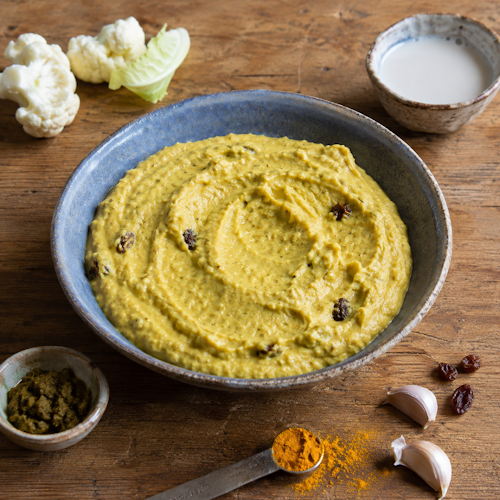
Creamy Curry Cauliflower Purée
Equipment
- Blender or immersion blender
- large saucepan
- Measuring cups
- Measuring spoons
Ingredients
- 1 head Cauliflower trimmed and separated into florets
- 1 1/2 cups Unsweetened Almond Milk
- 1 1/2 tablespoons Green Curry Paste
- 1/4 teaspoon Ground Turmeric
- 1 tablespoon Tamari
- 2 tablespoons Natural Peanut Butter crunchy
- 1/4 cup Raisins
- 2 cloves Garlic grated
- 1 teaspoon Coarse Sea Salt

Instructions
- Place the cauliflower florets in a large saucepan and cover with water.
- Bring the water to a boil and cook the cauliflower for about 10 minutes until tender.
- Drain the cauliflower thoroughly.
- Place the cooked cauliflower, almond milk, green curry paste, turmeric, tamari, peanut butter, raisins, garlic, and sea salt in a blender.
- Blend until completely smooth and creamy.
- Return to the saucepan briefly if the purée needs reheating.
- Serve hot as a side dish or stir into rice, quinoa, soups, or stews.
Notes & Wine Advice
Serving Suggestions
Serve the cauliflower purée alongside tofu, seitan, roasted vegetables, or a plant-based curry. It can also be spooned over brown rice or quinoa or stirred into soups and stews for extra creaminess.Recipe Notes
Drain the cauliflower thoroughly before blending to prevent a watery purée. Check that the green curry paste and tamari are certified gluten-free when preparing the dish for someone following a strict gluten-free diet.Variations
For a spicier purée, add a little more green curry paste. A squeeze of fresh lime juice adds acidity and freshness, while fresh cilantro can be added just before serving. Smooth peanut butter can replace crunchy peanut butter when an especially silky texture is preferred.Storage
Store leftover cauliflower purée in an airtight container in the refrigerator for up to three days. Reheat gently in a saucepan, adding a small splash of almond milk if the purée becomes too thick.Wine Advice
A crisp Sauvignon Blanc works well with the green curry and creamy cauliflower. A slightly aromatic Riesling is another good choice when you prefer a softer contrast to the curry spices.Nutrition values
————————————————————————————————–
This curry cauliflower purée transforms simple cauliflower into a creamy, warmly spiced side dish with plenty of character. Green curry paste and turmeric provide aromatic heat, while peanut butter adds richness and raisins contribute a subtle sweetness. Almond milk keeps the texture smooth without adding dairy, making this an easy plant-based accompaniment for everyday meals.
The recipe is also surprisingly versatile. Serve the purée instead of mashed potatoes, spoon it underneath roasted vegetables, or combine it with grains to create a more substantial meal. If you enjoy aromatic dishes built around warming spices, browse our Curry recipes for more inspiration.
Creating a Smooth and Creamy Texture
The most important step is cooking the cauliflower until completely tender. Undercooked florets produce a grainier purée and are more difficult to blend smoothly. After cooking, drain the cauliflower thoroughly because excess water can make the finished dish thin and dilute the curry flavour.
Unsweetened almond milk adds moisture gradually without making the mixture heavy. Peanut butter supplies extra body and a mild nutty flavour that works naturally with green curry. The raisins may seem unusual, but their sweetness provides contrast to the savoury tamari and spicy curry paste.
Building the Curry Flavour
Green curry paste provides several flavours in a single ingredient, while turmeric contributes an earthy note and warm colour. Garlic adds another savoury layer, and tamari supplies saltiness and umami. Together, these ingredients turn mild cauliflower into a much more distinctive side dish.
If you prefer stronger heat, increase the green curry paste gradually. For a brighter finish, add fresh lime juice after blending. Chopped cilantro can also be scattered over the finished curry cauliflower purée immediately before serving.
What to Serve with It
This green curry cauliflower works particularly well with tofu, roasted vegetables, seitan, or other plant-based proteins. For a simple bowl meal, spoon it alongside brown rice or quinoa and add crisp vegetables for contrasting texture. Visit our Rice recipes when you want more ideas for turning it into a complete meal.
The purée can also become an ingredient rather than simply a side dish. Stir a few spoonfuls into vegetable soup to create a thicker, creamier consistency without using dairy cream. It is equally useful for enriching a stew or adding flavour to cooked grains. More warming combinations can be found among our Soup recipes and Stew recipes.
Easy Variations
The basic method is flexible. Smooth peanut butter creates a silkier consistency than crunchy peanut butter. Fresh ginger can be blended with the garlic for additional warmth, while lime zest introduces a fragrant citrus note. If you like a thinner purée, add almond milk a tablespoon at a time until the preferred consistency is reached.
You can also use the purée as a base for roasted cauliflower, chickpeas, sautéed greens, or grilled vegetables. This makes it useful for creating different meals from one simple preparation rather than serving exactly the same side dish each time.
Storage and Food Safety
Allow leftovers to cool before transferring them to a clean airtight container. Refrigerate promptly and use within three days. Reheat the purée gently in a saucepan, stirring regularly and adding a splash of almond milk when necessary. For current information on safe preparation, cooling, and storage, consult the FDA safe food-handling guidance.
Creamy, aromatic, and easy to adapt, this curry cauliflower purée offers an interesting alternative to traditional vegetable mash while remaining simple enough for an everyday family dinner.