
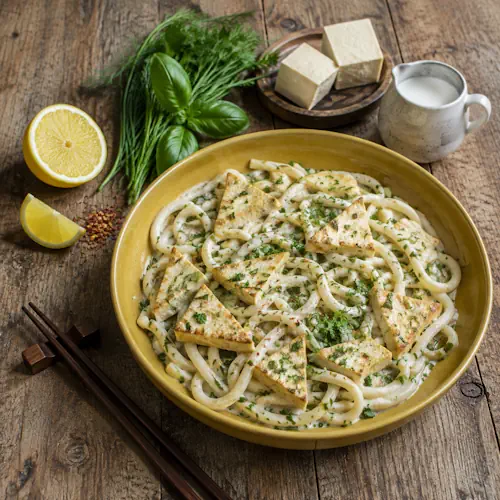
Lemon Coconut Tofu Udon
Equipment
- Knife
- Large pot
- Measuring cups
- Measuring spoons
- medium saucepan
- strainer
- Wooden spoon
Ingredients
- 10 ounces udon noodles
- 12 ounces extra-firm tofu drained and pressed
- 1 can full-fat coconut milk 14 ounces
- 3 tablespoons fresh lemon juice
- ½ cup finely chopped scallions
- 7 tablespoons chopped fresh chives
- 3 tablespoons finely chopped fresh basil
- 1 tablespoon chopped fresh dill
- 1 tablespoon finely chopped fresh parsley
- ¼ teaspoon yellow curry powder
- Salt and freshly ground black pepper to taste

Instructions
- Cook the udon noodles in lightly salted water according to the package instructions.
- Reserve ¼ cup of the noodle water.
- Drain the noodles and set them aside.
- Cut the pressed tofu into bite-size triangles.
- Pour the coconut milk into a medium saucepan.
- Add the lemon juice, scallions, chives, basil, dill, parsley and curry powder.
- Bring the mixture to a gentle boil over medium heat.
- Reduce the heat to low.
- Add the tofu and simmer uncovered for 10 minutes.
- Stir occasionally without breaking the tofu.
- Add the drained udon noodles.
- Toss gently until the noodles are evenly coated.
- Add a little reserved noodle water if the sauce is too thick.
- Season with salt and black pepper.
- Serve warm or allow it to cool before serving.
Notes & Wine Advice
Serving Suggestions
Top the noodles with additional fresh herbs, scallions, lemon zest or chili flakes. Serve warm as a main course or refrigerate and serve chilled as a noodle salad.Recipe Notes
Press the tofu thoroughly so it absorbs more of the coconut and herb sauce. Bring the coconut milk only to a gentle boil because prolonged high heat can cause it to separate. Reserve some noodle water so you can adjust the sauce after adding the udon.Dietary Information
This recipe contains soy. Standard udon noodles contain wheat, so the original gluten-free and wheat-free classifications were incorrect. Only classify the dish as gluten-free or wheat-free when using certified gluten-free udon-style noodles. Check the noodles, tofu, coconut milk and curry powder for allergen warnings and the appropriate halal or kosher certification when required. Coconut is not a culinary nut, although people with a coconut allergy must avoid this recipe.Nutrition Information
The nutritional values assume 280 g dry udon noodles and full-fat canned coconut milk. Fresh precooked udon contains more water and may provide fewer calories per 280 g package. The original estimate of 350 calories was therefore too low for the stated dry ingredient quantities. Sodium depends heavily on the noodles and the amount of added salt.Variations
Add broccoli, mushrooms, snow peas or baby spinach for extra vegetables. Replace the tofu with tempeh for a firmer texture. Use light coconut milk to reduce calories, total fat and saturated fat. Fresh basil, dill and parsley provide a brighter flavor than dried herbs.Storage
Refrigerate leftovers in a covered container within 2 hours and use them within 3 days. The noodles will continue absorbing sauce during storage. Add a splash of water or coconut milk when reheating them gently on the stove.Wine Advice
A crisp Sauvignon Blanc complements the lemon and fresh herbs with lively acidity. A lighter Pinot Grigio also works well because its fresh character balances the rich coconut sauce without overpowering the tofu and herbs. Serve either wine chilled at approximately 8–10°C.Nutrition values
————————————————————————————————–
Lemon coconut tofu udon combines creamy coconut milk, tender tofu, thick Japanese noodles and a generous selection of fresh herbs. Lemon juice adds enough acidity to balance the rich sauce, while a small amount of curry powder provides warmth without dominating the other flavors.
This recipe makes four portions and takes about 30 minutes from start to finish. You can serve it warm as a comforting main course or chill it for a creamy noodle salad. The combination of Japanese udon, coconut milk and Mediterranean-style herbs gives the dish its distinctive fusion character.
Why This Flavor Combination Works
Full-fat coconut milk creates a smooth sauce that clings to the thick noodles. Lemon juice cuts through its richness and keeps the finished dish from feeling heavy. Scallions and chives add a mild onion flavor, while basil, dill and parsley provide several fresh aromatic layers.
Extra-firm tofu contributes protein and absorbs the seasoned sauce. Pressing it before cooking removes excess water and improves its texture. The result is a creamy herb tofu noodles dish with contrasting citrus, coconut and savory flavors.
How to Make Lemon Coconut Tofu Udon
Cook the udon according to the instructions on its package. The required cooking time varies considerably between dry, frozen and precooked noodles. Reserve a small amount of noodle water before draining because its starch helps loosen the sauce without making it watery.
Cut the pressed tofu into small triangles or cubes of similar size. Bring the coconut milk, lemon juice, scallions, herbs and curry powder to a gentle boil. Immediately lower the heat before adding the tofu. A gentle simmer allows the flavors to combine without causing the coconut milk to separate.
Add the cooked udon after the tofu has simmered for ten minutes. Toss everything carefully to avoid breaking the tofu. If the sauce appears too thick, add the reserved noodle water one tablespoon at a time.
Fresh Herbs and Useful Substitutions
Fresh herbs provide the brightest result, but dried herbs offer a practical alternative. Use approximately one-third of the fresh quantity when substituting dried basil, dill or parsley. Add dried herbs earlier so they have enough time to soften and release their flavor.
You can add mushrooms, broccoli, snow peas, pak choi or baby spinach. Cook firm vegetables before adding the tofu and stir tender leafy vegetables through the sauce shortly before serving. Tempeh can replace tofu when you prefer a firmer, nuttier texture.
For another citrus-flavored tofu dish, try Grilled Ginger Lime Tofu. Tofu Marsala provides a richer mushroom variation, while Veggie Tofu Bake offers an oven-baked alternative.
Serving It Warm or Chilled
Serve the warm noodles immediately with lemon zest, extra herbs and chili flakes. For a cold version, let the dish cool briefly before refrigerating it. Stir in a small splash of coconut milk or lemon juice before serving because the noodles continue absorbing sauce as they rest.
A cucumber salad or quickly steamed green vegetables provide a fresh accompaniment. Avoid pairing the noodles with another heavy coconut dish because the meal may become overly rich.
Dietary Classification and Nutrition
The ingredients contain no meat, fish, dairy products or eggs, making the recipe vegan and vegetarian. Tofu means the dish contains soy. Regular udon contains wheat and gluten, so the original gluten-free and wheat-free classifications do not apply.
You can prepare a gluten-free version with certified gluten-free udon-style noodles. Check packaged tofu, coconut milk and curry powder for allergen statements. Coconut is not a culinary nut, but anyone with a specific coconut allergy must avoid the dish.
Full-fat coconut milk contributes most of the saturated fat. Light coconut milk reduces both calories and fat, although it produces a thinner sauce. The precise nutritional values also depend on whether you use dry, frozen or precooked udon.
Storage and Food Safety
Refrigerate leftovers in a covered container within two hours and use them within three days. Reheat the noodles gently with a splash of water or coconut milk until piping hot. Do not repeatedly cool and reheat the complete batch. Consult the FDA’s safe food-handling guidance for more information.
Fresh White Wine Pairings
A crisp Sauvignon Blanc reinforces the lemon and fresh herbal notes. Its lively acidity also balances the coconut milk. A light Pinot Grigio provides a more neutral alternative that will not overpower the delicate tofu and herbs. Serve either wine at approximately 8–10°C.
With its quick preparation and bright, creamy sauce, lemon coconut tofu udon offers a flexible dinner for every season. Adjust the herbs, vegetables and heat level to suit the occasion while retaining the balance between citrus and coconut.