
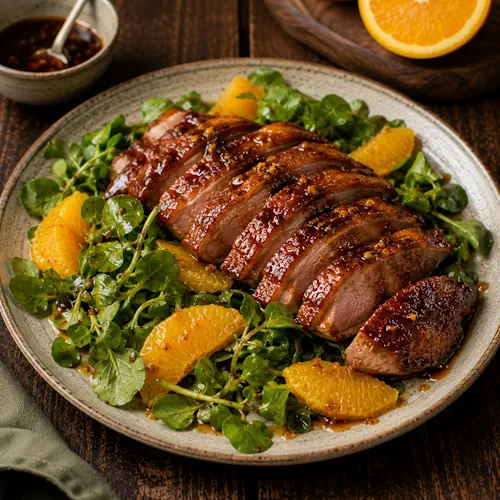
Maple-Glazed Duck with Orange
Equipment
- Frying Pan, Nonstick
- Knife
- Roasting tin
- spoon
Ingredients
- 4 duck breasts
- 2 tablespoons extra virgin olive oil
- 1½ tablespoons fresh root ginger finely grated
- ½ orange juiced and zested
- 2 oranges peeled and segmented
- 2½ tablespoons maple syrup
- 3½ tablespoons soy sauce
- 1 plus extra ½ tablespoon sunflower oil
- 1 tablespoon rice vinegar
- 1 tablespoon sesame oil
- 100 g watercress

Instructions
- Combine the soy sauce, maple syrup, honey and orange juice in a saucepan and bring to a simmer.
- Heat a nonstick frying pan, add the ginger and simmer until the glaze thickens and becomes sticky.
- Set the glaze aside to cool.
- Preheat the air fryer to 180°C.
- Pat the duck skin very dry with paper towel.
- Place the duck legs in the air fryer basket in a single layer, skin-side up.
- Cook for 25 minutes, turning twice, until the skin begins to crisp.
- Brush generously with the glaze and cook for a further 5 to 10 minutes, until caramelised and cooked through.
- Transfer the duck to a warm plate and allow it to rest.
- Make the dressing by combining the extra soy sauce, extra maple syrup, rice vinegar, sesame oil and extra virgin olive oil.
- Divide the watercress and orange segments between four plates.
- Top each portion with duck and drizzle with the remaining dressing.
Notes & Wine Advice
Serving Suggestions
Serve the glazed Duck on a bed of fresh watercress and orange segments, with the dressing spooned over just before serving. The combination is substantial enough for a Main Course, although roasted potatoes or steamed vegetables can be added for a larger meal.Recipe Notes
Pat the duck skin thoroughly dry before cooking to help it become crisp. Apply the maple glaze during the final stage of cooking because its high sugar content can burn if exposed to intense heat for too long. Allow the cooked duck to rest before serving. This gives the meat time to settle while you prepare the watercress, orange segments and dressing.Variations
For a sharper glaze, add a little extra orange juice or rice vinegar. For additional warmth, increase the fresh ginger. The watercress can also be combined with other peppery salad leaves if desired.Storage Advice
Store leftover cooked duck separately from the watercress and orange salad in airtight containers in the refrigerator and use within 2 days. Reheat the duck thoroughly before serving and prepare fresh watercress for the best texture.Wine Advice
A fruity Pinot Noir pairs particularly well with rich duck, orange and the sweetness of maple syrup. A Riesling is a good white-wine alternative, with enough freshness to balance the glaze and rich duck meat.Nutrition values
————————————————————————————————–
About Maple-Glazed Duck with Orange
Maple-Glazed Duck with Orange combines rich Duck with a sweet and savoury glaze and a fresh watercress and orange salad. Maple syrup provides sweetness, soy sauce contributes savoury depth and fresh ginger adds warmth. The orange brings acidity and fruitiness that balances the richness of the duck.
Preparing the Maple Glaze
The glaze brings together soy sauce, maple syrup, orange and ginger. Heating these ingredients concentrates their flavours and creates a sticky consistency that can cling to the duck during the final stage of cooking.
Because maple syrup contains a considerable amount of sugar, the glaze is best applied toward the end. This allows it to caramelise without becoming excessively dark.
Preparing the Duck
Drying the surface of the duck thoroughly before cooking is important. Moisture on the skin can interfere with browning and prevent it from developing a crisp finish.
Arrange the duck in a single layer so hot air can circulate properly. Turning during cooking helps it cook evenly before the glaze is applied.
Glazing the Duck
Once the duck has begun to brown and crisp, brush it generously with the prepared maple glaze. The final cooking period allows the glaze to become glossy and caramelised.
Watch the surface carefully during these final minutes because the combination of maple syrup and orange can darken quickly.
Orange and Watercress
Watercress provides a peppery contrast to the richness of the duck. Fresh orange segments add sweetness, acidity and moisture, creating a much lighter accompaniment than a heavy sauce.
Arrange the watercress and orange immediately before serving so the leaves retain their fresh texture.
Making the Dressing
The dressing continues the flavours used in the glaze, combining soy sauce and maple syrup with rice vinegar, sesame oil and extra virgin olive oil.
Rice vinegar supplies acidity while sesame oil adds a distinctive toasted flavour. Only a small amount is needed because sesame oil can easily dominate a dressing.
Serving the Dish
Divide the watercress and orange segments among four plates before adding the rested duck. Spoon the dressing over immediately before serving.
The combination of rich poultry, fresh salad and citrus makes this suitable for both a special dinner and a festive occasion. Roasted vegetables or potatoes can be served alongside when a more substantial meal is wanted.
Sweet and Savoury Flavours
Duck naturally works well with fruit-based accompaniments. In this recipe, orange provides the familiar fruity element while maple syrup gives the glaze a deeper sweetness.
Soy sauce, ginger and sesame prevent the dish from becoming overly sweet by introducing savoury, aromatic and nutty notes.
Preparing Ahead
The glaze can be prepared in advance and refrigerated until needed. The orange can also be segmented beforehand, although the watercress is best prepared shortly before serving.
Keep the raw duck refrigerated until cooking and avoid adding the glaze too early. Once cooked, allow the meat to rest briefly before plating.
Food Safety
Keep raw duck separate from salad ingredients and other foods that will be eaten without further cooking. Wash hands, knives, boards and preparation surfaces thoroughly after handling raw poultry.
For current information about safely handling and cooking poultry, consult the U.S. Food and Drug Administration food-safety information.
Maple-Glazed Duck with Orange combines caramelised duck with citrus, peppery watercress and a savoury-sweet dressing. The contrast between rich meat, sticky glaze and fresh salad makes it an attractive Poultry dish for both everyday dinners and special occasions