
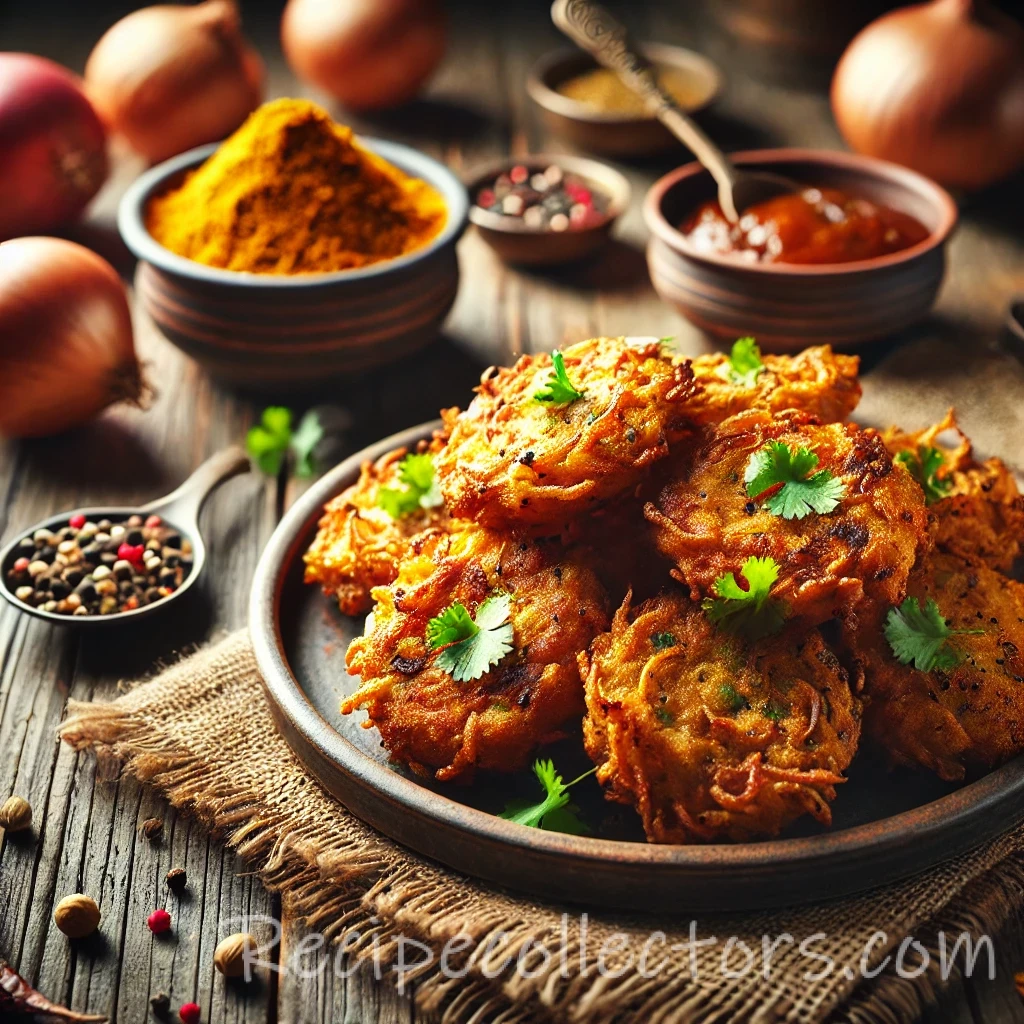
Onion bhajis
Ingredients
- 1 litre 1¾ pints sunflower or vegetable oil
- 1 teaspoon cumin seeds
- ½ teaspoon dried chilli flakes
- ½ teaspoon fennel seeds
- 2 garlic cloves chopped
- 60 g gram flour 2¼ oz
- juice of ½ lemon
- 1 tablespoon melted butter
- 2 onions thinly sliced
- 30 g rice flour
- salt and pepper
- small bunch of coriander chopped
- ½ teaspoon turmeric
- 2 cm ¾ inch piece of fresh root ginger, peeled and grated

Instructions
- Sift 60 g gram flour and 30 g rice flour into a bowl, then stir in 1 tablespoon melted butter and the juice of ½ lemon.
- Add enough cold water to make a batter the consistency of double cream.
- Stir in 1 teaspoon cumin seeds, ½ teaspoon fennel seeds, ½ teaspoon dried chilli flakes, ½ teaspoon turmeric, 2 chopped garlic cloves, a small bunch of chopped coriander, 2 cm peeled and grated fresh root ginger, and 2 thinly sliced onions. Season with salt and pepper and mix well.
- Heat 1 litre sunflower or vegetable oil in a deep pan to 180–190°C (350–375°F), or until a drop of batter sizzles in the hot oil.
- Using 2 tablespoons, gently spoon an eighth of the mixture into the oil, then repeat until there are 3 or 4 dollops – try not to overcrowd the pan.
- Cook for 4–5 minutes, turning occasionally, until crisp and golden.
- Drain on kitchen paper and keep warm.
- Repeat with the remaining batter to make 8 bhajis.
- Serve with gluten-free mango chutney, if liked.
Notes & Wine Advice
Serving Advice
Serve these onion bhajis hot and crispy as a delicious appetizer or snack. They pair wonderfully with a side of gluten-free mango chutney or a cooling yogurt dip to balance the spices. These bhajis are perfect for sharing at parties or as a flavorful starter before a main meal. Accompany with fresh salad or pickled vegetables for added freshness and texture.Variations
To vary this recipe, you can add finely chopped green chili for extra heat or substitute coriander with fresh mint for a different herbal note. For a vegan version, replace the melted butter with vegetable oil or vegan margarine. You can also experiment with adding other vegetables like grated carrot or spinach to the batter for added nutrition and color. Adjust the spices to your taste, increasing or reducing the chili flakes or turmeric as preferred.Wine Advice
Gewürztraminer: Gewürztraminer's aromatic and slightly sweet profile complements the spices in the bhajis, balancing the heat and enhancing the flavors without overpowering the dish. Sauvignon Blanc: A crisp Sauvignon Blanc offers refreshing acidity that cuts through the fried batter and complements the fresh herbs and spices in the bhajis. Pair the bhajis with a chilled sparkling water infused with lemon or a lightly spiced iced tea to refresh the palate and complement the spices without alcohol. Estimated ingredient cost: USD 1.75 per serving, excluding optional sides and drinks. Local prices vary. Missing nutrition values have been estimated per serving; existing values were retained. Assumptions: Nutrition estimates are based on the edible portions of all ingredients as listed, assuming 4 servings from the total recipe. The oil absorption during frying is estimated, and no additional sides or condiments are included in the calculation. Optional sides and drinks are excluded.Nutrition values
————————————————————————————————–
Ingredients and Flavor Profile
Onion bhajis are a popular Indian snack made primarily from onions and a spiced gram flour batter. Gram flour, also known as chickpea flour, provides a nutty flavor and a crispy texture when fried. The addition of rice flour helps to lighten the batter, making the bhajis crispier. Aromatic spices such as cumin seeds, fennel seeds, dried chili flakes, and turmeric contribute layers of flavor and warmth. Fresh ingredients like garlic, ginger, and coriander add pungency and freshness, balancing the earthiness of the flours and the sweetness of the onions. The lemon juice adds a subtle tang that brightens the overall taste. The use of sunflower or vegetable oil for deep frying ensures a neutral flavor and a high smoke point, which is essential for achieving the perfect crispiness without burning the bhajis. Gram flour acts as the primary binding agent in the batter, giving the bhajis their characteristic dense yet crispy texture. Rice flour complements this by absorbing moisture and creating a lighter, crunchier finish. The melted butter enriches the batter, adding subtle depth and helping to bind the ingredients together. The combination of cumin and fennel seeds introduces aromatic notes that awaken the palate, while the dried chili flakes provide a gentle heat that can be adjusted to taste. Turmeric not only imparts a warm color but also a mild earthy bitterness that balances the sweetness of the onions. Fresh garlic and ginger are essential for their pungent and zesty qualities, which cut through the richness of the fried batter. Coriander adds a fresh, herbaceous brightness that lifts the overall flavor profile. The lemon juice is a key ingredient that adds acidity, helping to tenderize the onions slightly and brighten the dish. Using sunflower or vegetable oil ensures a neutral frying medium that does not overpower the spices, while its high smoke point allows for consistent frying temperatures, critical for achieving the perfect golden crust without imparting any off-flavors. The thinly sliced onions provide the main texture contrast, offering a slight crunch and sweetness that melds with the spiced batter. The balance of flours and spices is designed to create a harmonious blend of textures and flavors, where the crisp exterior gives way to a soft, flavorful interior. The salt and pepper seasoning enhances all these elements, ensuring the bhajis are well-rounded and satisfying. This careful layering of ingredients results in a snack that is both complex and comforting, with each component playing a vital role.
Preparation and Cooking Techniques
The preparation of onion bhajis involves creating a batter with the right consistency, similar to double cream, to coat the onions evenly. Sifting the flours ensures a smooth batter without lumps. Mixing the spices and fresh ingredients into the batter allows the flavors to meld before frying. Deep frying at a controlled temperature of 180–190°C is crucial to cook the bhajis thoroughly while achieving a golden, crispy exterior. Overcrowding the pan is avoided to maintain the oil temperature and ensure even cooking. Draining the bhajis on kitchen paper removes excess oil, keeping them crisp and less greasy. This method results in a snack that is crunchy on the outside and tender on the inside, with a complex flavor profile from the spices and fresh ingredients. Achieving the correct batter consistency is crucial; it should be thick enough to coat the onions without dripping excessively, ensuring the bhajis hold their shape during frying. Adding cold water gradually while stirring helps prevent lumps and maintains the desired texture. Sifting the gram and rice flours before mixing ensures a smooth batter, which contributes to an even coating and a uniform crispness after frying. When mixing the spices and fresh ingredients into the batter, it is important to distribute them evenly to ensure every bhaji has a balanced flavor. The thin slicing of onions allows them to cook quickly and absorb the spiced batter, creating a tender interior. Maintaining the oil temperature between 180–190°C is essential; too low and the bhajis will absorb excess oil and become greasy, too high and they risk burning on the outside while remaining undercooked inside. Using two tablespoons to portion the batter helps create uniform-sized bhajis, which cook evenly and present well. Avoiding overcrowding the pan preserves the oil temperature and prevents the bhajis from sticking together. Turning them occasionally ensures all sides become golden and crisp. Draining on kitchen paper immediately after frying removes excess oil, preserving the crisp texture and making them more enjoyable to eat. Keeping the cooked bhajis warm in a low oven allows for batch cooking without loss of quality.
Serving Suggestions and Variations
Onion bhajis are traditionally served hot as an appetizer or snack, often accompanied by chutneys such as mango or mint chutney, which add sweetness or freshness to complement the spices. They can also be paired with yogurt-based dips to cool the palate. For a complete meal, bhajis can be served alongside rice dishes or curries. Variations include adding other vegetables like spinach or grated carrot to the batter for added nutrition and color. Adjusting the spice levels allows customization to suit different palates. For those avoiding dairy, melted butter can be replaced with vegetable oil or vegan alternatives. These versatile snacks are popular at parties, festivals, and casual gatherings, appreciated for their satisfying crunch and flavorful bite. Onion bhajis are best served fresh and hot to enjoy their crisp texture and vibrant flavors. Pairing them with gluten-free mango chutney adds a sweet and tangy contrast that complements the spices. Alternatively, a cooling yogurt dip with fresh herbs can balance the heat and add creaminess. These accompaniments enhance the eating experience by introducing complementary textures and flavors. For a more substantial meal, onion bhajis can be served alongside rice or lentil dishes, providing a crunchy contrast to softer components. They also work well as part of a larger Indian-inspired platter with various chutneys, pickles, and salads. Adding a wedge of lemon on the side allows diners to add extra acidity if desired, brightening the flavors further. Variations of this recipe can include mixing in other finely grated vegetables such as carrot or spinach to add color, nutrients, and subtle flavor differences. Adjusting the quantity of dried chili flakes or omitting them altogether can tailor the heat level to suit different preferences. For those avoiding dairy, substituting melted butter with vegetable oil or vegan margarine maintains the richness without altering the texture significantly. These adaptations make onion bhajis versatile and suitable for a range of dietary needs and occasions. Browse our appetizer recipes for more ideas. General kitchen guidance is available from the FDA.