
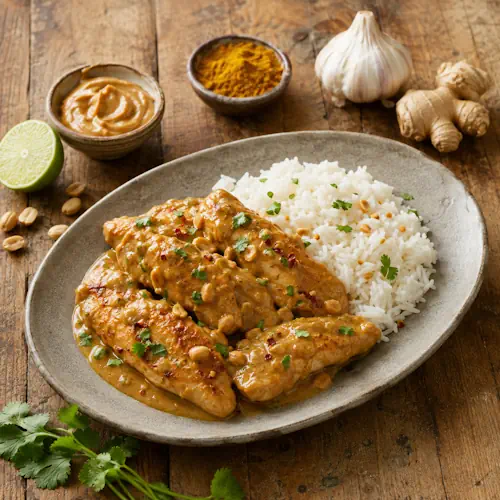
Peanut Curry Chicken Tenders
Equipment
- Large skillet
- Measuring cups
- Measuring spoons
- Meat thermometer
- Plate
- Tongs
- Whisk
Ingredients
- 680 g chicken tenders
- ½ teaspoon fine sea salt
- ¼ teaspoon ground black pepper
- 1 teaspoon curry powder
- ½ teaspoon ground ginger
- 2 tablespoons olive oil
- 3 cloves garlic minced
- 180 ml low-sodium chicken broth
- 128 g creamy peanut butter
- 1 tablespoon reduced-sodium gluten-free tamari
- 1 tablespoon freshly squeezed lime juice
- 1 teaspoon honey
- ½ teaspoon crushed red pepper flakes optional
- 60 ml coconut milk
- 2 tablespoons chopped fresh coriander optional

Instructions
- Pat the chicken tenders dry with paper towels.
- Season the chicken with the salt, black pepper, curry powder and ground ginger.
- Heat the olive oil in a large skillet over medium-high heat.
- Arrange the chicken tenders in a single layer.
- Sear them for 4 to 5 minutes.
- Turn the chicken tenders over with kitchen tongs.
- Cook for another 4 to 5 minutes.
- Check that the thickest pieces have reached an internal temperature of 74°C.
- Transfer the chicken to a clean plate.
- Reduce the heat to medium.
- Add the minced garlic to the skillet.
- Cook for 30 seconds while stirring.
- Pour in the chicken broth.
- Whisk in the peanut butter until smooth.
- Add the tamari, lime juice, honey and coconut milk.
- Whisk until the sauce is evenly combined.
- Bring the sauce to a gentle simmer.
- Cook for 3 to 4 minutes or until slightly thickened.
- Add a splash of chicken broth if the sauce becomes too thick.
- Return the cooked chicken tenders and their resting juices to the skillet.
- Turn the chicken until evenly coated with the sauce.
- Simmer for 2 to 3 minutes.
- Sprinkle with red pepper flakes when desired.
- Garnish with fresh coriander.
- Serve immediately.
Notes & Wine Advice
Serving Suggestions
Serve the chicken tenders over jasmine rice, brown rice or cauliflower rice. Steamed broccoli, green beans, roasted bell peppers or warm flatbread also pair well with the creamy sauce.Recipe Notes
The nutritional values have been recalculated from the complete ingredient list and divided into four portions. They include all the olive oil, peanut butter and coconut milk. Sodium varies according to the chicken broth, peanut butter and tamari selected. Use low-sodium products when possible and check that the chicken reaches 74°C internally.Variations
Replace the chicken tenders with pieces of chicken breast or boneless chicken thigh. Add more red pepper flakes for a hotter sauce or omit them for a mild version. Almond butter can replace peanut butter, although this changes the flavour and allergen information.Storage
Refrigerate the chicken and sauce in an airtight container for up to three days. Reheat gently in a covered skillet until piping hot, adding a small splash of broth or water to loosen the sauce. Freezing is possible for up to two months, although the sauce may require whisking after thawing.Wine Advice
An off-dry Riesling balances the curry spices, lime and rich peanut sauce. An aromatic Gewürztraminer is another suitable option, particularly when the red pepper flakes are included.Nutrition values
————————————————————————————————–
Looking for more inspiration? Explore our complete chicken recipes guide.
Peanut curry chicken combines golden chicken tenders with a creamy sauce of peanut butter, coconut milk, curry spices and lime. Garlic, ginger and tamari add savoury depth, while a little honey balances the salty, spicy and acidic flavours. You can prepare the complete dish in approximately 30 minutes.
Peanut curry chicken
Chicken tenders have a narrow and relatively even shape, so they cook more quickly than whole chicken breasts. Pat the chicken dry before seasoning to help the surface brown properly. Curry powder and ground ginger create a fragrant coating without requiring a long marinating time.
Sear the chicken for approximately four to five minutes on each side. Thickness and skillet temperature can change the required cooking time. Use a meat thermometer and check that the thickest tender reaches 74°C before removing the chicken from the skillet.
Building the creamy sauce
Peanut butter gives the sauce richness, body and a distinctly nutty flavour. Coconut milk softens the curry spices, while chicken broth prevents the mixture from becoming too heavy. Tamari supplies salt and umami, so taste the sauce before adding any extra seasoning.
Fresh lime juice brightens the sauce and balances the fat from the peanut butter and coconut milk. Honey rounds out the acidity without making the meal noticeably sweet. Add crushed red pepper flakes for extra heat or leave them out when preparing a milder version.
Getting the texture right
Gradually whisk the peanut butter into the warm broth. This method creates a smooth sauce and prevents thick lumps. Add the coconut milk, tamari, lime juice and honey, then keep the heat moderate while the mixture simmers.
The sauce thickens quickly as moisture evaporates. Add chicken broth one tablespoon at a time if it becomes too firm. A properly finished sauce should coat the chicken but remain loose enough to spoon over rice or vegetables.
A practical skillet dinner
This creamy curry chicken requires about ten minutes of preparation and twenty minutes of cooking. That estimate covers seasoning and searing the chicken, making the sauce and simmering everything together. It does not assume that you complete every preparation task during cooking.
For more convenient one-pan meals, browse the stove-top collection. You can also discover more poultry dishes in the chicken recipe collection.
Serving ideas
Jasmine rice makes a natural accompaniment because it absorbs the sauce without competing with its flavours. Brown rice offers a firmer texture, while cauliflower rice keeps the complete meal lower in carbohydrates. Steamed broccoli, green beans, roasted peppers and spinach also pair well with the sauce.
Add fresh coriander and lime wedges immediately before serving for colour and freshness. Warm flatbread works well for scooping up the sauce. Choose gluten-free bread when serving the meal to someone who avoids wheat or gluten.
Food safety and storage
Place cooked chicken on a clean plate rather than returning it to the plate that held the raw meat. Wash knives, boards and utensils thoroughly after they touch uncooked poultry. Read the FDA safe food handling information for additional kitchen safety guidance.
Transfer leftovers to an airtight container within two hours and refrigerate them for up to three days. Reheat the chicken and sauce until piping hot throughout. The sauce thickens during refrigeration, so add a little broth or water while reheating it.
Wine pairing
An off-dry Riesling offers enough acidity to refresh the palate and enough sweetness to soften the curry and chilli. Gewürztraminer provides a more aromatic alternative and works especially well with fresh coriander.
Serve the finished peanut curry chicken immediately so the tenders remain juicy and the sauce stays smooth, warm and easy to spoon over your chosen accompaniment.