
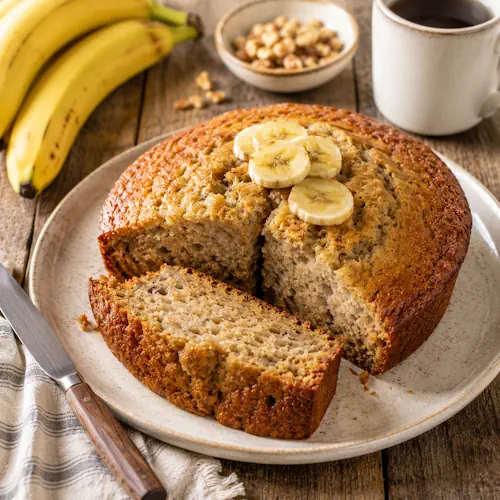
Slow Cooker Banana Bread
Equipment
- Measuring cups
- Mixing bowls
- Parchment paper
- slow cooker
Ingredients
- 2 cups all-purpose flour
- 1 teaspoon baking soda
- ½ cup butter softened
- ½ cup chopped walnuts or chocolate chips optional
- 1 cup granulated sugar
- 2 large eggs
- 1 cup mashed ripe bananas about 2 to 3 bananas
- ½ cup milk
- ½ teaspoon salt
- 1 teaspoon vanilla extract

Instructions
- Line the slow cooker with parchment paper and lightly grease it.
- Cream the ½ cup softened butter and 1 cup granulated sugar until light and fluffy.
- Beat in the 2 large eggs one at a time.
- Mix in the 1 teaspoon vanilla extract.
- Whisk together 2 cups all-purpose flour, 1 teaspoon baking soda, and ½ teaspoon salt in a separate bowl.
- Add the dry ingredients to the butter mixture, alternating with ½ cup milk.
- Fold in 1 cup mashed ripe bananas (about 2 to 3 bananas).
- Stir in ½ cup chopped walnuts or chocolate chips if using.
- Pour the batter into the prepared slow cooker.
- Cover and cook on LOW for 2 to 3 hours until a toothpick inserted into the center comes out clean.
- Carefully remove the banana bread from the slow cooker.
- Cool before slicing and serving.
Notes & Wine Advice
Serving Advice
Serve the slow cooker banana bread warm or at room temperature. It pairs beautifully with a spread of butter, cream cheese, or peanut butter for added richness. For a delightful dessert, top with whipped cream or a scoop of vanilla ice cream. Fresh berries or sliced bananas complement the flavors nicely. This bread is also excellent alongside a cup of coffee or tea for breakfast or an afternoon snack. Leftovers can be stored in an airtight container and enjoyed over several days.Variations
To customize this banana bread, try adding a pinch of cinnamon or nutmeg to the dry ingredients for a warm spice note. Substitute chopped walnuts with pecans or omit nuts entirely for a nut-free version. Chocolate chips can be swapped for white chocolate or dried fruit like raisins or cranberries for different flavor profiles. For a dairy-free option, replace the butter and milk with plant-based alternatives such as coconut oil and almond milk. You can also swirl in peanut butter or Nutella before cooking for a decadent twist.Wine Advice
Moscato d’Asti: A lightly sparkling Moscato d’Asti complements the sweet banana flavors perfectly with its fruity and floral notes, enhancing the moist texture of the bread without overpowering it. Riesling: A fruity Late Harvest Riesling pairs wonderfully with the moist banana bread, balancing its sweetness with crisp acidity and adding layers of tropical fruit aromas. Pair this banana bread with a chilled glass of sparkling apple cider or a fruity herbal tea to complement its sweet and moist flavors without alcohol. Estimated ingredient cost: USD 1.75 per serving, excluding optional sides and drinks. Local prices vary. Missing nutrition values have been estimated per serving; existing values were retained. Assumptions: Nutrition estimates are based on one serving out of four total servings, using standard weights for all ingredients including peeled bananas and typical all-purpose flour. The calculation assumes the entire loaf is consumed without optional walnuts or chocolate chips. Cholesterol and sodium values reflect the use of butter, eggs, and salt as listed. Optional sides and drinks are excluded.Nutrition values
————————————————————————————————–
Ingredients and Flavor Profile
Slow Cooker Banana Bread relies on simple, wholesome ingredients that come together to create a moist and flavorful loaf. The key ingredient is ripe bananas, which provide natural sweetness and moisture, making the bread tender and rich in banana flavor. Butter adds a creamy texture and depth, while granulated sugar balances the natural fruit sugars for a well-rounded sweetness. The use of all-purpose flour and baking soda ensures a light crumb and proper rise. Vanilla extract enhances the overall aroma and flavor, making the bread inviting and comforting. Optional additions like chopped walnuts or chocolate chips introduce texture and complementary flavors, allowing for customization. The salt is essential to balance sweetness and enhance the other flavors. Milk contributes to the batter’s moisture and helps achieve a soft crumb. This combination of ingredients results in a classic banana bread that is both satisfying and versatile. The softened butter in this recipe plays a crucial role beyond just flavor; it helps create a tender crumb by coating the flour proteins, which limits gluten formation. This results in a softer texture that contrasts nicely with the slight chewiness of the banana. Granulated sugar not only sweetens but also contributes to the bread's moistness by attracting and retaining water molecules during baking. The baking soda acts as a leavening agent, reacting with the acidic components in the mashed bananas to produce carbon dioxide bubbles, which help the bread rise and become airy. The salt, though used sparingly, is vital for enhancing the overall flavor profile by balancing sweetness and highlighting the banana's natural fruitiness. The inclusion of milk in the batter adds moisture and richness, which helps achieve a tender crumb and prevents the bread from becoming dry or crumbly. Milk proteins also contribute to browning through the Maillard reaction, enhancing the bread's color and flavor complexity. The vanilla extract imparts a warm, sweet aroma that complements the bananas and enriches the sensory experience. Optional mix-ins like chopped walnuts introduce a crunchy texture and nutty flavor, providing contrast to the soft bread, while chocolate chips add bursts of sweetness and a creamy mouthfeel when melted. These variations allow for personalization based on taste preferences. Using ripe bananas is essential because their higher sugar content and softer texture improve both flavor and moisture. Overripe bananas with brown spots are ideal as they blend easily into the batter and impart a stronger banana taste. The balance of ingredients ensures the bread is neither too dense nor too dry, with the slow cooker method preserving moisture throughout the cooking process. This combination results in a loaf that is rich, flavorful, and satisfying, making it a comforting treat for any occasion. The recipe’s simplicity also allows for easy ingredient substitutions or additions to suit dietary needs or flavor experiments.
Practical Preparation and Cooking Method
Preparing banana bread in a slow cooker is a convenient alternative to traditional oven baking, especially when you want to avoid heating up the kitchen or need a hands-off approach. The recipe begins by creaming softened butter with sugar to incorporate air, which helps create a light texture. Eggs are added one at a time to ensure even mixing and structure. Dry ingredients are whisked separately to distribute leavening agents and salt evenly before being combined with the wet mixture. Alternating the addition of dry ingredients with milk prevents overmixing and keeps the batter tender. Folding in mashed bananas last helps maintain their distribution throughout the batter. Lining the slow cooker with parchment paper and greasing it prevents sticking and makes removal easier. Cooking on low heat for 2 to 3 hours allows the bread to cook gently and evenly, resulting in a moist crumb without drying out. Monitoring the bread and leaving the lid slightly ajar if excess moisture accumulates ensures the best texture. Cooling the bread before slicing helps achieve clean slices and enhances flavor development. The creaming step, where softened butter and sugar are beaten until light and fluffy, is critical for incorporating air into the batter, which contributes to the bread’s rise and tender texture. Beating the eggs one at a time ensures they are fully incorporated, preventing curdling and promoting a smooth batter. Whisking the dry ingredients separately helps distribute the baking soda and salt evenly, which is important for consistent leavening and flavor throughout the bread. Alternating the addition of dry ingredients with milk prevents overmixing, which can develop gluten and result in a tough texture. Lining the slow cooker with parchment paper and greasing it thoroughly is a practical step that simplifies removal of the finished bread, preventing it from sticking to the sides or bottom. This is especially important because slow cookers do not brown the crust as an oven would, so the bread can be more delicate when unmolding. Cooking on low heat for 2 to 3 hours allows the batter to cook gently and evenly, avoiding the risk of burning or drying out. Checking doneness with a toothpick ensures the bread is fully cooked without overbaking, which can compromise moisture. If condensation collects on the lid during cooking, slightly propping it open with a wooden spoon can help excess moisture escape, preventing the bread from becoming soggy. Cooling the bread in the slow cooker for a short time before removing it helps it firm up, making slicing easier and cleaner. This hands-off cooking method is ideal for busy schedules or when oven space is limited, allowing you to prepare the batter in advance and let the slow cooker do the work. The technique also frees up the oven for other dishes, making it practical for meal planning.
Serving Suggestions and Storage Tips
Slow Cooker Banana Bread is versatile and can be enjoyed at any time of day. It is perfect for breakfast or brunch, served warm with butter, cream cheese, or peanut butter for added richness. For a dessert option, pair it with whipped cream, honey, or fresh fruit like berries and sliced bananas. The bread also complements hot beverages such as coffee, tea, or hot chocolate, making it a comforting treat. Leftovers should be stored in an airtight container at room temperature for up to three days or refrigerated for up to five days to maintain freshness. Individual slices freeze well for up to three months, allowing you to enjoy the bread later by thawing at room temperature or warming gently. Proper storage preserves the moist texture and flavor, ensuring that the bread remains delicious over time. This makes it a convenient recipe for meal prep or gifting to friends and family. Serving Slow Cooker Banana Bread warm enhances its soft texture and brings out the rich banana aroma. Spreading a thin layer of butter or cream cheese adds a creamy contrast that complements the bread’s sweetness. For a more indulgent treat, topping slices with nut butter or a drizzle of honey can add flavor complexity and richness. Pairing the bread with fresh fruit or a dollop of yogurt can balance the sweetness and provide a refreshing contrast, making it suitable for breakfast or a light snack. This banana bread pairs exceptionally well with hot beverages such as coffee, tea, or hot chocolate, making it a comforting choice for chilly mornings or cozy afternoons. It can also be sliced and toasted lightly for a crisp exterior while maintaining a soft interior, offering a different texture experience. For a quick dessert, serving it alongside vanilla ice cream or whipped cream with a sprinkle of cinnamon or nutmeg can elevate the simple loaf into a special treat. For storage, wrapping the cooled bread tightly in plastic wrap or placing it in an airtight container helps maintain moisture and freshness. Refrigeration extends its shelf life but may slightly firm the texture, which can be remedied by warming slices before serving. Freezing individual slices is convenient for portion control and quick snacks; thawing at room temperature or warming in a toaster oven restores softness. This flexibility makes the recipe practical for meal prep, gifting, or enjoying over several days without compromising quality. Browse our bread recipes for more ideas. General kitchen guidance is available from the FDA.