
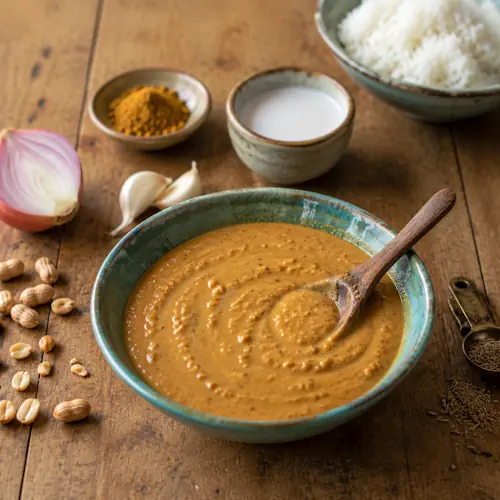
Creamy Thai Peanut Sauce
Equipment
- Measuring cups
- Measuring spoons
- medium saucepan
- Whisk
- Wooden spoon
Ingredients
- 1 teaspoon Peanut Oil
- 2 tablespoons Shallot chopped
- 2 cloves Garlic grated
- 1 teaspoon Ground Ginger
- 1 tablespoon Curry Powder
- 2 teaspoons Ground Cumin
- 1 teaspoon Dried Cilantro
- 1 tablespoon Arrowroot Powder
- 14 ounces Light Coconut Milk
- 1/2 cup Natural Peanut Butter crunchy
- 2 tablespoons Tamari
- 2 tablespoons Agave Nectar
- 1/4 cup Vegetable Broth

Instructions
- Heat the peanut oil in a medium saucepan over medium heat.
- Add the shallot and garlic and sauté until fragrant, about 2 minutes.
- Reduce the heat and stir in the ginger, curry powder, cumin, and dried cilantro.
- Cook for another minute, stirring continuously.
- Whisk the arrowroot powder with 1/4 cup of the coconut milk in a small bowl until completely dissolved.
- Add the arrowroot mixture, remaining coconut milk, peanut butter, tamari, agave nectar, and vegetable broth to the saucepan.
- Whisk until smooth and bring the sauce gently to a boil.
- Reduce the heat to medium-low and cook for about 10 minutes, whisking occasionally, until thick and creamy.
- Remove from the heat and serve warm.
Notes & Wine Advice
Serving Suggestions
Serve this creamy peanut sauce over noodles, steamed rice, stir-fried vegetables, tofu, or roasted vegetables. It is also excellent as a dipping sauce for spring rolls, vegetable skewers, or crispy snacks.Recipe Notes
Mix the arrowroot powder thoroughly with a small amount of cold coconut milk before adding it to the saucepan. This prevents lumps and helps the sauce thicken evenly. Use certified gluten-free tamari, curry powder, and vegetable broth when preparing the sauce for a strict gluten-free diet.Variations
Add fresh lime juice for extra acidity or chilli flakes for additional heat. Smooth natural peanut butter can be used when you prefer a completely silky sauce. For a thinner consistency, stir in a small amount of vegetable broth before serving.Storage
Allow leftover sauce to cool before transferring it to an airtight container. Refrigerate for up to four days. Reheat gently in a saucepan and add a splash of vegetable broth or coconut milk if the sauce has thickened during storage.Wine Advice
A lightly aromatic Riesling works particularly well with the curry spices, coconut, and peanut flavours. A crisp Pinot Grigio is a refreshing drier alternative.Nutrition values
————————————————————————————————–
This Thai peanut sauce combines creamy peanut butter, coconut milk, curry spices, tamari, and agave into a rich sauce with an appealing balance of savoury, sweet, and aromatic flavours. It works equally well as a dipping sauce, noodle sauce, or finishing drizzle for vegetables, rice bowls, and tofu.
The combination of peanut and coconut gives the sauce plenty of body, while ginger, cumin, curry powder, garlic, and cilantro provide warmth and complexity. Despite its rich flavour, preparation is straightforward and the entire sauce is ready in less than twenty minutes. Explore our Sauce recipes for more easy homemade condiments and finishing sauces.
Getting the Creamy Texture Right
Natural peanut butter provides the main richness, while light coconut milk loosens the peanut butter and creates a smooth consistency. Arrowroot powder thickens the mixture without requiring wheat flour. Mixing the arrowroot with cold coconut milk before adding it to the saucepan is important because adding the powder directly to hot liquid can create lumps.
Once combined, gentle cooking allows the sauce to thicken naturally. Keep whisking occasionally while it simmers. The finished consistency should be thick enough for dipping but still fluid enough to drizzle over rice or noodles.
Sweet, Savoury and Spicy Flavours
Tamari supplies saltiness and umami, while agave nectar provides enough sweetness to balance the curry spices. Ginger and garlic add warmth, cumin contributes earthiness, and dried cilantro rounds out the aromatic profile.
If you prefer more heat, chilli flakes, cayenne, or fresh chilli can easily be added. Fresh lime juice is another useful addition because its acidity cuts through the richness of the peanut butter and coconut milk. These small adjustments allow you to make the coconut peanut sauce either mild and creamy or considerably more assertive.
Serving Thai Peanut Sauce
One of the easiest ways to use this sauce is with noodles. Toss warm noodles with the sauce and add steamed broccoli, carrots, peppers, or zucchini for a fast meal. Browse our Noodels recipes for more combinations using noodles and flavourful sauces.
It is also delicious spooned over steamed jasmine rice or brown rice with crispy tofu and vegetables. Our Rice recipes provide more inspiration for creating complete bowls around simple sauces and toppings.
For appetizers, serve the sauce in a small bowl alongside spring rolls, vegetable skewers, or crispy tofu. Its thick consistency makes it particularly suitable for dipping, so it also fits naturally among our Dips recipes.
Adjusting and Storing the Sauce
The consistency is easy to adjust after cooking. If it becomes too thick, whisk in vegetable broth or coconut milk one tablespoon at a time. For a thicker dipping sauce, simply simmer it slightly longer. Smooth peanut butter can replace crunchy peanut butter when you want an especially silky finish.
Cool leftovers before transferring them to a clean airtight container. Store refrigerated for up to four days. Peanut-based sauces usually become thicker when chilled, so add a splash of broth or coconut milk while reheating. Warm slowly over low heat and stir regularly.
For general recommendations about preparing, cooling, and storing food safely, consult the FDA safe food-handling guidance.
Whether you serve it with noodles, rice, vegetables, tofu, or spring rolls, this Thai peanut sauce is an easy way to add creamy texture, warming spices, and rich peanut flavour to everyday meals.