
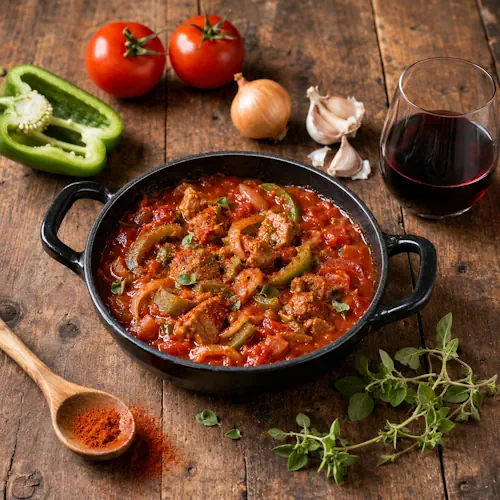
Vegetable Mycoprotein Goulash
Equipment
- Kitchen Knife
- Measuring cups
- Measuring spoons
- Skillet, Large
- Wooden spoon
Ingredients
For the Vegetables and Mycoprotein
- 2 teaspoons Olive Oil
- 1 medium Onion thinly sliced
- 2 medium Green Bell Peppers thinly sliced
- 2 ounces Mycoprotein Pieces gluten-free
- 2 cloves Garlic chopped
For the Goulash Sauce
- 2 cans Whole Peeled Tomatoes 14.5 ounces each and chopped with juice reserved
- 1 cup Dry Red Wine
- 2 teaspoons Tomato Purée
- 2 teaspoons Paprika
- 2 teaspoons Dried Oregano
- 2 teaspoons Granulated Sugar
- 1 teaspoon Kosher Salt
- ½ teaspoon Black Pepper freshly ground

Instructions
For the Vegetables and Mycoprotein
- Heat the olive oil in a large skillet over medium heat.
- Add the sliced onion.
- Cook for 5 minutes, stirring occasionally, until softened.
- Add the mycoprotein pieces and sliced green peppers.
- Cook for another 5 minutes until the peppers begin to soften.
- Add the chopped garlic and paprika.
- Stir for 1 minute until fragrant.
For the Goulash Sauce
- Add the chopped tomatoes and their reserved juice to the skillet.
- Stir in the tomato purée and dried oregano.
- Pour in the dry red wine.
- Stir until all the ingredients are evenly combined.
- Increase the heat and bring the mixture to a boil.
For Simmering and Finishing
- Reduce the heat to low.
- Simmer uncovered for 25 minutes, stirring occasionally, until the sauce thickens.
- Stir in the granulated sugar.
- Season with kosher salt and black pepper.
- Taste and adjust the seasoning if necessary.
- Divide the goulash among four bowls.
- Serve hot.
Notes & Wine Advice
Serving Suggestions
Serve the goulash with brown rice, mashed potatoes, noodles, or crusty bread. A spoonful of sour cream or plant-based yogurt adds creaminess, while chopped parsley provides a fresh finish.Recipe Notes
Check the mycoprotein packaging carefully because some products contain wheat, gluten, egg, or milk. Use a specifically labelled gluten-free product when required. Simmer the goulash uncovered so the tomato and wine sauce can reduce and thicken.Variations
Add mushrooms, carrots, courgette, potatoes, or smoked paprika. Replace the mycoprotein with cooked lentils, chickpeas, tofu, or another meat substitute. Vegetable stock can replace the red wine when preparing an alcohol-free version.Storage
Refrigerate cooled goulash in an airtight container for up to three days. Reheat it gently in a skillet or saucepan until thoroughly hot. The goulash can also be frozen for up to two months when the chosen mycoprotein product is suitable for freezing.Wine Advice
A medium-bodied Merlot complements the tomato, paprika, and red wine sauce. A light Pinot Noir is another suitable choice when you prefer a fresher red wine.Nutrition values
————————————————————————————————–
About Vegetable Mycoprotein Goulash
Vegetable Mycoprotein Goulash combines meat-free pieces with green peppers, onions, tomatoes, paprika, oregano, garlic, and red wine. The ingredients simmer together in one skillet until the vegetables are tender and the tomato sauce becomes rich and thick. It provides a lighter vegetarian interpretation of traditional Hungarian comfort food.
This version makes four portions and is suitable for a family dinner or simple weekend meal. Mycoprotein gives the goulash a meat-like texture without using beef or pork. The tomatoes provide the body of the sauce, while paprika adds colour and the warm flavour associated with Hungarian-style dishes.
Cooking the Vegetables
Slice the onion and green peppers thinly so they soften during the relatively short cooking time. Cook the onion first because it needs slightly longer to become tender and sweet. Add the peppers and mycoprotein after five minutes, allowing them to cook before introducing the liquid ingredients.
Garlic and paprika should be stirred in briefly before the tomatoes are added. This releases their aroma without exposing them to enough heat to burn. Burnt garlic or paprika can give the entire sauce a bitter flavour, so keep the ingredients moving in the skillet.
Meat-Free Goulash
This meat-free goulash uses mycoprotein, a fermented protein commonly formed into pieces that resemble chicken or meat. Brands and products vary considerably. Some contain egg, milk, wheat, barley, or other allergens, while others are vegan or gluten-free. Always check the complete ingredient list rather than relying only on the product name.
The quantity used here gives the vegetables and tomato sauce a prominent role. If you want a more protein-rich meal, increase the mycoprotein or add cooked lentils or beans. For another filling vegetable dinner, try our Curried Parsnip Coconut Stew.
Building the Tomato Sauce
Whole peeled tomatoes provide both pieces of tomato and enough juice for simmering. Chop the tomatoes before adding them, but retain all their liquid. Tomato purée intensifies the flavour and helps the sauce develop a deeper colour.
Red wine adds acidity and complexity. Bring the sauce to a boil before reducing the heat so the simmer begins evenly. Leaving the skillet uncovered allows moisture to evaporate and creates a thicker sauce. Vegetable stock can replace the wine when preparing an alcohol-free version.
Balancing the Seasoning
Paprika is the principal seasoning, so choose a fresh product with a strong colour and aroma. Sweet paprika produces a mild goulash, while smoked paprika gives the sauce a deeper flavour. Hot paprika can be used when you prefer additional heat.
A small amount of sugar balances the natural acidity of the tomatoes and wine. Add it near the end and taste before using more. Salt requirements depend on the tomatoes and mycoprotein, which may already contain sodium. Season only after the sauce has reduced.
Serving Ideas and Variations
Serve the goulash with brown rice, mashed potatoes, pasta, noodles, or crusty bread. A spoonful of sour cream or plant-based yogurt adds creaminess. Chopped parsley or fresh oregano can be scattered over the top immediately before serving.
Mushrooms, carrots, courgette, potatoes, or red peppers can be added. Chickpeas, lentils, tofu, or another meat substitute can replace the mycoprotein. Serve it alongside our Potato-Stuffed Cabbage Rolls for a larger Eastern European-style meal.
Storage and Food Safety
Cool leftovers before placing them in an airtight container. Refrigerate for up to three days and reheat in a skillet or saucepan until thoroughly hot. Add a small amount of water if the sauce has thickened considerably during storage.
Check whether the selected mycoprotein product is suitable for freezing and reheating. Follow current FDA safe food-handling guidance when cooling, storing, and reheating prepared meals.
With its rich tomato sauce, tender vegetables, paprika, and convenient meat substitute, this goulash provides an approachable vegetarian dinner prepared entirely in one skillet.