
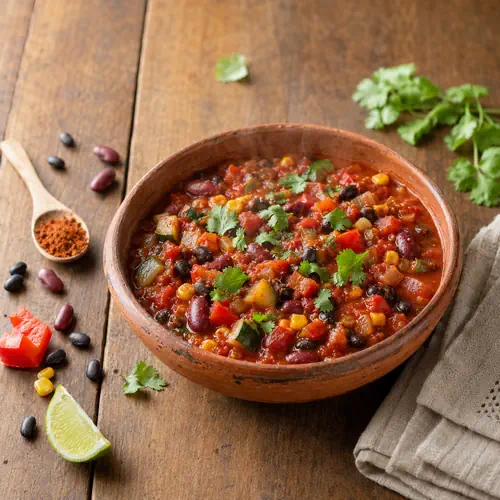
Smoky Veggie Bean Chili
Equipment
- Large Cooking Pot
- Measuring cups
- Measuring spoons
- Wooden spoon
Ingredients
- ½ teaspoon Black Pepper ground or to taste
- 1 can Black Beans 15 ounces, drained and rinsed
- 1 can Kidney Beans 15 ounces, drained and rinsed
- 2 cans Diced Tomatoes 14.5 ounces each
- 1 tablespoon Chilli Powder
- 1 cup Corn Kernels fresh or frozen
- 1 tablespoon Fresh Cilantro chopped for garnish
- 2 cloves Garlic minced
- ½ teaspoon Ground Cinnamon
- 1 teaspoon Ground Cumin
- Kosher Salt to taste
- 1 medium Bell Pepper diced
- 1 medium Onion diced
- 1 medium Zucchini diced
- 1 tablespoon Olive Oil
- 1 teaspoon Smoked Paprika
- 2 cups Vegetable Broth

Instructions
- Heat 1 tablespoon of olive oil in a large cooking pot over medium heat.
- Add 1 diced medium onion and 1 diced medium bell pepper.
- Sauté for 5 to 6 minutes until the vegetables begin to soften.
- Add 2 cloves of minced garlic, 1 diced medium zucchini, and 1 cup of fresh or frozen corn kernels.
- Cook for another 3 to 4 minutes while stirring occasionally.
- Add 1 tablespoon of chilli powder, 1 teaspoon of ground cumin, 1 teaspoon of smoked paprika, ½ teaspoon of ground cinnamon, kosher salt to taste, and ½ teaspoon of ground black pepper.
- Stir continuously for 1 to 2 minutes to release the flavours of the spices.
- Add 2 cans (14.5 ounces each) of diced tomatoes with their juices.
- Stir in 1 can (15 ounces) of drained and rinsed kidney beans and 1 can (15 ounces) of drained and rinsed black beans.
- Pour in 2 cups of vegetable broth.
- Stir until all the ingredients are evenly combined.
- Increase the heat and bring the chilli to a gentle boil.
- Reduce the heat to low.
- Simmer uncovered for 30 to 40 minutes.
- Stir occasionally to prevent the beans and vegetables from sticking to the bottom.
- Simmer until the vegetables are tender and the chilli has thickened.
- Add a little extra vegetable broth if the chilli becomes too thick.
- Taste and adjust the salt, black pepper, or spices as needed.
- Divide the chilli among four bowls.
- Garnish with 1 tablespoon of freshly chopped cilantro.
- Serve hot.
Notes & Wine Advice
Serving Advice
Serve the Smoky Veggie Bean Chili hot, garnished with fresh cilantro for a bright herbal note. It pairs wonderfully with sides like cornbread, steamed rice, tortilla chips, or baked potatoes to make a complete meal. For added freshness and texture contrast, offer toppings such as sliced avocado, jalapeño, lime wedges, or dairy-free sour cream. A crisp cabbage salad also complements the warm, smoky flavors nicely, making this dish a versatile and satisfying option for any dinner occasion.Variations
To vary this chili, add vegetables like mushrooms, sweet potatoes, carrots, or celery for extra texture and nutrition. You can swap kidney or black beans for pinto or cannellini beans to change the flavor profile. For more heat, include cayenne pepper or chopped jalapeño peppers. To intensify the smoky flavor, use fire-roasted tomatoes instead of regular diced tomatoes. For a thicker chili, mash some beans against the pot’s side and stir them back in. These adjustments allow you to customize the chili to your taste and ingredient availability.Wine Advice
Zinfandel: A fruit-forward Zinfandel complements the smoky paprika, tomatoes, and warming spices in the chili, enhancing the dish’s rich and robust flavors with its ripe berry notes and moderate tannins. Merlot: A medium-bodied Merlot offers a softer, rounder profile that pairs well with the chili’s smoky and spicy elements, especially if you prefer a less intense wine or omit extra hot peppers from the recipe. For an alcohol-free pairing, try a sparkling water with a splash of lime or a chilled hibiscus iced tea. These beverages provide refreshing acidity and a slight tartness that balance the chili’s smoky and spicy flavors without overpowering them. Estimated ingredient cost: USD 2.50 per serving, excluding optional sides and drinks. Local prices vary. Missing nutrition values have been estimated per serving; existing values were retained. Assumptions: Nutrition estimates are based on one serving out of four, assuming the use of canned beans drained and rinsed, fresh vegetables, and standard vegetable broth. Serving size is approximately 2 cups. Sodium content reflects typical canned ingredients and added salt to taste. Calcium is estimated from beans and vegetables. Optional sides and drinks are excluded.Nutrition values
————————————————————————————————–
Ingredients and Flavor Profile
Smoky Veggie Bean Chili combines a variety of wholesome ingredients to create a balanced and flavorful vegan meal. The use of two types of beans—black beans and kidney beans—adds both creamy and firm textures, making the chili hearty and satisfying. Fresh vegetables such as diced zucchini, bell pepper, corn, and onion contribute sweetness, crunch, and color, enhancing the dish’s nutritional value and visual appeal. The tomato base, made from diced tomatoes and vegetable broth, provides acidity and moisture, allowing the flavors to meld during simmering. The spice blend is key to the chili’s character: chili powder delivers warmth and mild heat; ground cumin adds earthiness; smoked paprika imparts a gentle smoky aroma; and a small amount of ground cinnamon rounds out the spices with subtle sweetness and depth. Garlic enhances the savory notes, while black pepper and kosher salt season the dish to taste. This combination results in a complex yet approachable chili that is both comforting and nutritious. The inclusion of fresh corn kernels in the chili adds a pleasant burst of sweetness and a slightly crisp texture that contrasts nicely with the softness of the beans and cooked vegetables. Corn also contributes natural sugars that balance the acidity of the diced tomatoes, enhancing the overall flavor harmony. The diced zucchini provides a mild, slightly earthy note and a tender bite, absorbing the spices and broth during simmering without overpowering the dish. Olive oil serves as the cooking fat, helping to sauté the aromatics and vegetables while also carrying the fat-soluble flavors of the spices, which deepens the chili’s complexity. Each spice in the blend plays a distinct role: chili powder offers a foundational warmth and subtle heat, while cumin introduces a nutty, smoky earthiness that complements the smoked paprika’s distinct smoky aroma. The ground cinnamon, though used sparingly, adds a surprising layer of warmth and sweetness that rounds out the spice profile and prevents it from becoming one-dimensional. Fresh garlic enhances the savory backbone of the chili, contributing pungency and depth. Black pepper adds a sharp, piquant note that brightens the dish, and kosher salt is essential for amplifying all these flavors, ensuring the chili is well-seasoned and balanced. The choice of two types of beans—black beans and kidney beans—adds not only textural variety but also nutritional diversity, as each bean type offers different levels of protein, fiber, and micronutrients. The black beans tend to be creamier and softer, while kidney beans hold their shape better, providing a pleasant chew. This combination makes the chili more satisfying and hearty, ideal for a filling vegan meal. The vegetable broth used as the simmering liquid adds subtle savory notes without overpowering the fresh vegetable flavors, allowing the spices and beans to shine through in the final dish.
Preparation and Cooking Techniques
The preparation of Smoky Veggie Bean Chili is straightforward, requiring only basic kitchen equipment such as a chef’s knife, cutting board, and a large cooking pot. The cooking process builds flavor in stages, starting with sautéing the diced onion and bell pepper in olive oil to soften and develop sweetness. Adding garlic, zucchini, and corn next allows these ingredients to cook gently without becoming mushy. The spices are then briefly toasted in the pot to release their essential oils and deepen their aroma, which is crucial for a rich flavor profile. Adding the tomatoes, beans, and vegetable broth creates the chili’s base, which is brought to a gentle boil before reducing to a simmer. Simmering uncovered for 30 to 40 minutes allows excess liquid to evaporate, thickening the chili and concentrating the flavors. Stirring occasionally prevents sticking and ensures even cooking. Adjusting the consistency by adding broth if needed and tasting for seasoning balance are important final steps. This method results in a chili with tender vegetables, well-integrated spices, and a satisfying texture. Sautéing the onion and bell pepper first is a critical step that builds the chili’s flavor foundation. Cooking these vegetables until they soften and begin to caramelize releases their natural sugars, which enhances the chili’s sweetness and complexity. Adding garlic later prevents it from burning and turning bitter, ensuring it imparts a mellow, aromatic quality. Introducing zucchini and corn after the initial sauté allows these more delicate vegetables to cook just enough to retain some texture and freshness, preventing them from becoming mushy during the long simmer. Toasting the spices briefly in the hot oil after the vegetables are cooked is a technique that intensifies their flavors by releasing essential oils. Stirring continuously during this step prevents the spices from burning and becoming bitter, which is crucial for maintaining a balanced taste. Adding the diced tomatoes with their juices early in the simmering process allows their acidity to meld with the spices and vegetables, creating a rich, cohesive sauce. The beans are added after the tomatoes to warm through without breaking apart, preserving their texture. Simmering the chili uncovered for 30 to 40 minutes serves multiple purposes: it reduces excess liquid, thickening the chili to a hearty consistency, and allows the flavors to meld and deepen. Stirring occasionally prevents the beans and vegetables from sticking to the pot’s bottom and ensures even heat distribution. Adjusting the seasoning toward the end of cooking is important because the flavors concentrate during simmering, and a final taste test allows for balancing salt, pepper, and spice levels. Adding extra vegetable broth if the chili becomes too thick helps maintain a desirable texture without diluting the flavors.
Serving Suggestions and Storage
Smoky Veggie Bean Chili is a versatile dish that can be served in many ways to suit different tastes and occasions. It is delicious on its own as a warming vegan main course, but it also pairs well with sides like cornbread, steamed rice, tortilla chips, or baked potatoes to create a more substantial meal. Fresh toppings such as chopped cilantro, sliced avocado, jalapeño, lime wedges, or dairy-free sour cream add brightness, creaminess, and heat, allowing diners to customize their bowls. For a refreshing contrast, a crisp cabbage salad complements the chili’s rich tomato and bean base. Leftover chili stores well in the refrigerator for up to four days, with flavors often improving overnight. Reheat gently on the stovetop or microwave, adding a splash of vegetable broth if it has thickened too much. The chili can also be frozen in individual portions for up to three months, making it a convenient meal prep option. Following safe food handling guidelines ensures the chili remains delicious and safe to eat. This chili is excellent for meal planning as it can be prepared in advance and tastes even better the next day when the flavors have had more time to meld. It can be portioned into airtight containers for easy grab-and-go lunches or quick dinners. Serving it over a bed of steamed rice or alongside warm cornbread can turn it into a complete, satisfying meal. For a lighter option, spooning the chili into baked sweet potatoes or stuffing it into bell peppers offers variety and adds nutritional value. Optional garnishes can elevate the dish and provide contrasting textures and flavors. Fresh cilantro adds a bright, herbal note that cuts through the chili’s richness. Sliced avocado or a dollop of dairy-free sour cream introduces creaminess that balances the chili’s spices. For those who enjoy heat, thinly sliced jalapeños or a squeeze of fresh lime juice can add a refreshing zing and enhance the overall flavor profile. These customizable toppings allow each diner to tailor the chili to their preference. Leftover chili should be cooled to room temperature before refrigerating to maintain quality. When reheating, adding a splash of vegetable broth or water helps restore the chili’s original consistency, as it tends to thicken in the fridge. This chili also freezes well in portioned containers, making it a convenient option for batch cooking. Thawing overnight in the refrigerator and reheating gently on the stovetop preserves the texture and flavor, ensuring a delicious meal any time. Browse our dinner recipes for more ideas. General kitchen guidance is available from the FDA.