
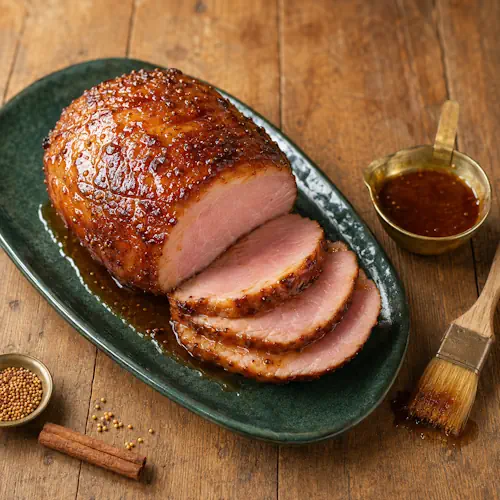
White Wine Ham Glaze
Equipment
- Measuring cups
- Measuring spoons
- Saucepan, Small
- Whisk
Ingredients
- ⅓ cup Dry White Wine
- 2 tablespoons plus 2 teaspoons Dijon Mustard
- 2 tablespoons plus 2 teaspoons Dark Brown Sugar firmly packed
- 1 tablespoon plus 1 teaspoon Apple Cider Vinegar
- 1 tablespoon plus 1 teaspoon Tamari gluten-free
- ⅛ teaspoon Ground Cinnamon
- ⅛ teaspoon Ground Cloves
- 2 teaspoons Extra-Virgin Olive Oil
- ⅛ teaspoon Black Pepper freshly ground

Instructions
- Pour the white wine into a small saucepan.
- Add the Dijon mustard, brown sugar, apple cider vinegar, tamari, cinnamon, and cloves.
- Set the saucepan over medium heat.
- Whisk until the sugar has dissolved.
- Bring the mixture to a gentle simmer.
- Reduce the heat to low.
- Simmer for 15 minutes while stirring frequently.
- Remove the saucepan from the heat when the glaze has slightly thickened.
- Whisk in the olive oil and black pepper.
- Reserve a clean portion of the glaze for serving.
- Brush the remaining glaze over the cooked ham during the final 20 minutes of roasting.
- Apply another layer of glaze every 5 minutes.
- Remove the ham from the oven when the surface is glossy and caramelised.
- Serve with the reserved wine sauce.
Notes & Wine Advice
Serving Suggestions
Use the glaze during the final 20 minutes of roasting a fully cooked ham. Serve the ham with roasted potatoes, green beans, glazed carrots, Brussels sprouts, or a fresh salad. Offer the reserved sauce separately at the table.Recipe Notes
Simmer the glaze gently and stir frequently because the brown sugar can scorch. The mixture thickens further as it cools. Reserve the serving portion before the basting brush touches the ham to prevent cross-contamination.Variations
Replace the white wine with apple juice for an alcohol-free glaze. Add orange zest, maple syrup, honey, ginger, or smoked paprika for a different flavour. Whole-grain mustard can replace part of the Dijon mustard for extra texture.Dietary Advice
Use certified gluten-free tamari and Dijon mustard when necessary. The glaze is dairy-free, egg-free, lactose-free, nut-free, and wheat-free. It contains soy and alcohol and is therefore unsuitable for soy-free or alcohol-free diets.Wine Advice
Use a fruity, dry Sauvignon Blanc in the glaze and serve the same wine with the meal. A light Pinot Noir also complements the sweet, savoury, and gently spiced ham.Nutrition values
————————————————————————————————–
About White Wine Ham Glaze
White Wine Ham Glaze combines dry white wine, Dijon mustard, brown sugar, apple cider vinegar, tamari, cinnamon, and cloves. This mustard ham glaze creates a glossy, sweet, tangy, and savoury coating that caramelises during the final stage of roasting.
The glaze is designed for four servings and works particularly well with recipes from our Pork Recipes category. It can also be used in smaller quantities with roasted chicken, pork tenderloin, pork chops, or other savoury dishes that benefit from a sweet wine sauce.
White Wine Ham Glaze
Dry white wine provides acidity, fruitiness, and depth without making the glaze overly sweet. Sauvignon Blanc is a useful choice because its fresh character balances the brown sugar and rich ham. Use a wine that you would also be comfortable serving with the meal.
The alcohol reduces while the sauce simmers and during roasting, but some may remain. Replace the wine with apple juice or alcohol-free white wine when preparing the glaze for children or anyone who avoids alcohol.
Balancing Mustard and Brown Sugar
Dijon mustard cuts through the sweetness and gives the sauce a smooth consistency. It also helps combine the wine, vinegar, and olive oil. Choose certified gluten-free mustard when that dietary requirement applies.
Dark brown sugar contains molasses, providing a deeper flavour than white sugar. It also encourages the surface of the ham to caramelise. Stir the glaze frequently as it simmers because sugar can settle against the bottom of the saucepan and burn.
Mustard Ham Glaze
This mustard ham glaze receives additional savoury flavour from tamari. Tamari is used instead of regular soy sauce so the recipe can remain gluten-free, but the packaging must still be checked for certification. Because tamari is salty, the glaze does not need additional salt.
Apple cider vinegar prevents the sugar from becoming cloying. Cinnamon and cloves add gentle warmth associated with holiday cooking. Measure both carefully because too much can overpower the wine, mustard, and natural flavour of the ham.
Creating a Caramelised Finish
Apply the glaze only during the final 20 minutes of roasting. Adding it too early can cause the sugar to burn before the ham is thoroughly heated. Brush on a thin, even layer and repeat every five minutes to build a glossy coating.
Watch the surface closely during the final minutes. Caramelised sugar can change from golden to burned quickly. If the glaze darkens too rapidly, loosely cover the ham with foil or reduce the oven temperature.
Serving with Holiday Meals
White Wine Ham Glaze is particularly suitable for dishes collected under our Christmas Recipes, Easter Recipes, and Sauce Recipes categories. Serve the glazed ham with roasted potatoes, carrots, green beans, Brussels sprouts, or baked squash.
For another mustard-based sauce with a fresher lemon flavour, try our Lemon Dijon Lamb Sauce. That recipe pairs naturally with lamb but can also accompany roasted vegetables and other grilled meats.
Safe Basting and Storage
Reserve some clean glaze before beginning to baste the ham. Place that portion in a separate container for serving. Do not dip a brush that has touched meat back into sauce intended for the table.
Refrigerate unused glaze in an airtight container for up to three days. Reheat it gently in a saucepan and add a splash of wine or water if it becomes too thick. Follow current FDA safe food-handling guidance when heating, serving, cooling, and storing ham.
White Wine Ham Glaze gives roasted ham a glossy surface and a balanced combination of wine, mustard, sweetness, and warm spice.