
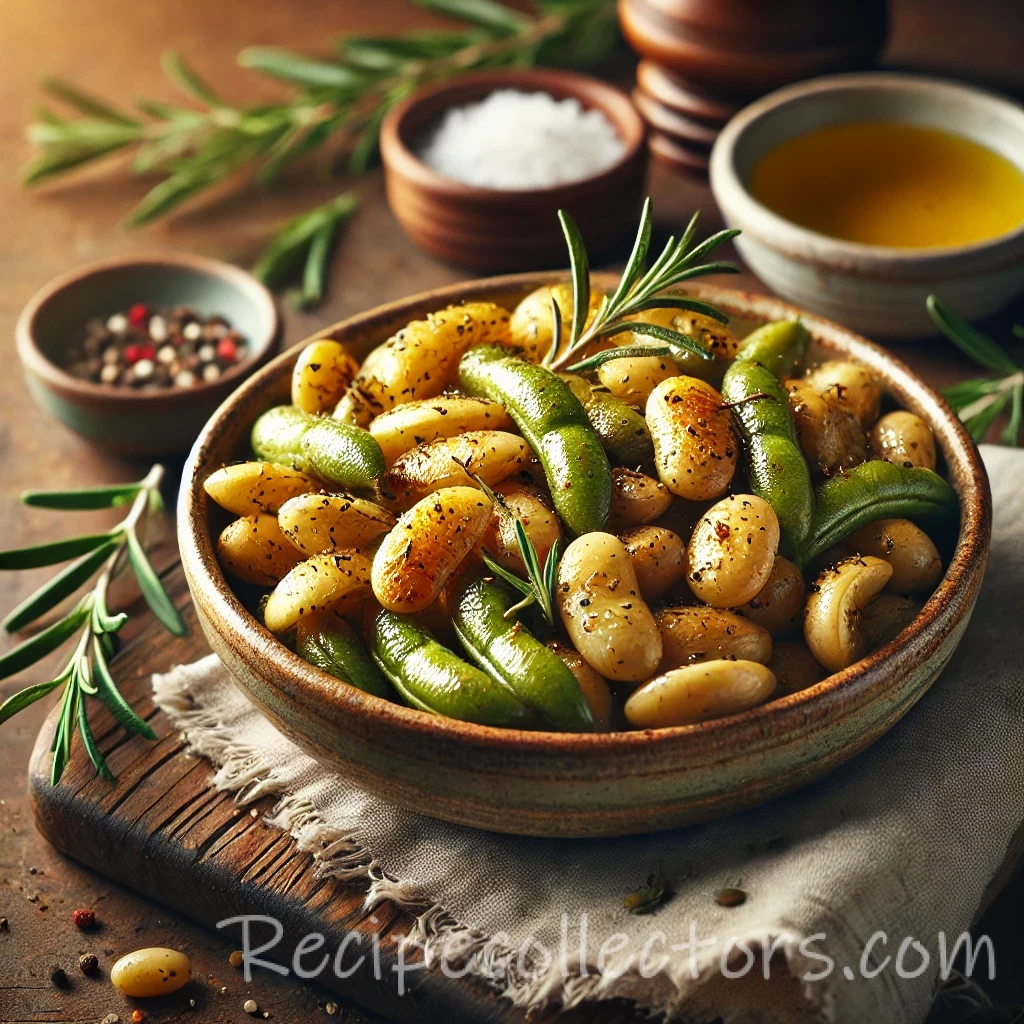
Roasted Lima Beans
Equipment
- aluminum foil
- Baking sheet
- Knife
- Mixing bowl
- oven
Ingredients
- 2 tablespoons 30 g minced garlic
- 2 tablespoons 30 ml balsamic vinegar
- 2 tablespoons 30 ml extra-virgin olive oil
- 1 pound 455 g lima beans, fresh, frozen, or canned
- 1 red onion sliced into julienne
- Salt and pepper to taste

Instructions
- Preheat the oven to 350°F (180°C, or gas mark 4).
- Line a baking sheet with aluminum foil.
- In a mixing bowl, toss together 1 pound of lima beans (fresh, frozen, or canned), 1 sliced red onion (julienned), 2 tablespoons of minced garlic, 2 tablespoons of extra-virgin olive oil, 2 tablespoons of balsamic vinegar, and salt and pepper to taste to coat evenly.
- Spread the mixture evenly on the prepared baking sheet.
- Bake for 20 to 25 minutes, or until the lima beans are tender and the onions are translucent and beginning to brown.
Notes & Wine Advice
Serving Advice
Serve these roasted lima beans warm as a nutritious and flavorful side dish alongside grilled meats, roasted chicken, or fish. They also pair well with a fresh green salad or crusty bread for a light vegetarian meal. The caramelized onions and balsamic vinegar add a sweet and tangy depth that complements a variety of main courses. Garnish with fresh herbs like parsley or thyme for an added touch of freshness and color.Variations
For a different flavor profile, try adding a pinch of smoked paprika or chili flakes before roasting to introduce a smoky or spicy note. You can substitute the balsamic vinegar with red wine vinegar or apple cider vinegar for a slightly different acidity. If you prefer a creamier texture, stir in a spoonful of ricotta or goat cheese after roasting. For added crunch, sprinkle toasted nuts such as almonds or pine nuts on top just before serving. Fresh herbs like rosemary or thyme can be mixed in with the beans before roasting to enhance the aroma.Wine Advice
Pinot Noir: A light red wine like Pinot Noir complements the sweetness of the caramelized onions and the earthiness of the lima beans without overpowering the dish. Its bright acidity and subtle fruitiness balance the balsamic vinegar's tang. Try a sparkling water with a splash of lemon or a lightly brewed iced herbal tea to refresh the palate and complement the roasted flavors without alcohol. Estimated ingredient cost: USD 1.50 per serving, excluding optional sides and drinks. Local prices vary. Missing nutrition values have been estimated per serving; existing values were retained. Assumptions: Nutrition estimates are based on 1 pound of lima beans (fresh, frozen, or canned), 1 red onion, 2 tablespoons each of garlic, olive oil, and balsamic vinegar, and salt to taste, divided into four servings. Edible portions are assumed with no peel or inedible parts. Serving size is one quarter of the prepared dish. Optional sides and drinks are excluded.Nutrition values
————————————————————————————————–
Ingredients and Flavor Profile
Lima beans, also known as butter beans, are prized for their creamy texture and mild, slightly nutty flavor. They provide a hearty base for this roasted dish, which is enhanced by the sweetness of caramelized red onions and the tangy depth of balsamic vinegar. Fresh, frozen, or canned lima beans can be used, offering flexibility depending on availability and convenience. The addition of minced garlic and extra-virgin olive oil contributes aromatic richness and a smooth mouthfeel. Salt and pepper season the dish to taste, allowing the natural flavors of the beans and onions to shine. This combination creates a balanced side dish that is both comforting and sophisticated, suitable for a variety of meals and occasions. The texture of lima beans is a key element in this recipe, as their creamy interior contrasts nicely with the slight crispness that roasting imparts to the outer skin. This textural interplay is enhanced by the caramelized edges of the red onion, which add a subtle sweetness and a tender bite. The minced garlic infuses the dish with a warm, pungent aroma that deepens during roasting, complementing the balsamic vinegar’s acidity and slight sweetness. Olive oil not only helps in roasting but also contributes a fruity richness that coats the beans and onions, creating a harmonious mouthfeel. Salt and pepper are essential for balancing these flavors, ensuring the dish is neither bland nor overpowering. The choice between fresh, frozen, or canned lima beans affects the final texture and flavor subtly. Fresh beans tend to have a firmer bite and a more pronounced buttery flavor, while frozen beans offer convenience with minimal compromise in taste. Canned beans are the quickest option but may require rinsing to reduce excess sodium and preserve the natural bean flavor. Regardless of the type used, the roasting process concentrates the beans’ natural sugars and enhances their nutty undertones. The red onion’s julienne cut allows for even cooking and maximum surface area exposure, promoting caramelization and flavor development. Balsamic vinegar plays a dual role in this recipe, acting as both a flavor enhancer and a tenderizing agent. Its acidity helps break down the beans’ surface slightly, allowing the olive oil and garlic to penetrate more deeply. This results in a more cohesive flavor profile where each bite carries a balanced tanginess and richness. The vinegar’s sweetness also counterbalances the savory garlic and the mild bitterness of the olive oil, creating a complex yet approachable taste. The seasoning with salt and pepper is crucial to elevate these flavors, as it sharpens the overall profile and prevents the dish from tasting flat.
Practical Preparation Tips
Preparing roasted lima beans is straightforward and requires minimal equipment, making it accessible for cooks of all skill levels. Using a baking sheet lined with aluminum foil simplifies cleanup and ensures even roasting. Tossing the beans and other ingredients in a mixing bowl allows for thorough coating with oil, vinegar, and seasonings, which promotes caramelization and flavor development during baking. Preheating the oven to 350°F (180°C) ensures the beans cook evenly and the onions soften and brown without burning. Baking for 20 to 25 minutes is sufficient to achieve tender beans and translucent, slightly browned onions. Monitoring the dish towards the end of cooking helps prevent overcooking and maintains the desired texture. This method is efficient and yields consistent results. To ensure even roasting, it is important to spread the lima bean mixture in a single layer on the baking sheet. Overcrowding can cause steaming rather than roasting, which would result in less caramelization and a softer texture. Using a rimmed baking sheet helps contain any juices released during cooking, preventing messes in the oven. Additionally, tossing the ingredients halfway through the baking time can promote uniform browning and prevent any pieces from sticking or burning. This simple step enhances both the appearance and flavor of the dish. When working with frozen or canned lima beans, draining and patting them dry before tossing with the other ingredients is recommended. Excess moisture can inhibit browning and lead to a soggy texture. For fresh beans, trimming and blanching briefly before roasting can help achieve tenderness without overcooking. The minced garlic should be distributed evenly to avoid burning, as garlic can become bitter if exposed to high heat for too long. Adjusting the oven rack to the middle position ensures balanced heat circulation, which is ideal for roasting vegetables and beans alike. Timing is key to achieving the perfect texture in this recipe. Checking the lima beans at the 20-minute mark allows you to assess their tenderness and the onions’ caramelization level. If the beans are not yet tender, additional baking time in five-minute increments can be given, but care should be taken to avoid drying out the dish. Using a fork to test the beans’ softness is an effective way to gauge doneness. Once cooked, allowing the dish to rest for a few minutes before serving helps the flavors meld and the beans to firm up slightly, improving the overall eating experience.
Serving Suggestions and Variations
Roasted lima beans make a versatile side dish that pairs well with a wide range of main courses, including grilled meats, roasted poultry, and fish. They can also be served as part of a vegetarian meal alongside grains or salads. Garnishing with fresh herbs such as parsley or thyme adds a burst of color and freshness. For variation, spices like smoked paprika or chili flakes can be added before roasting to introduce new flavor dimensions. Substituting balsamic vinegar with other types of vinegar or adding a creamy element like ricotta cheese can alter the dish’s character to suit different tastes. Toasted nuts sprinkled on top provide a pleasant crunch and additional nutrients. These options allow customization while maintaining the dish’s core appeal. This roasted lima bean dish can be served warm or at room temperature, making it a flexible option for various dining occasions. It pairs exceptionally well with Mediterranean-inspired meals, complementing dishes like grilled lamb or roasted eggplant. For a heartier presentation, mixing the roasted beans with cooked quinoa or couscous creates a satisfying vegetarian main course. Adding a squeeze of fresh lemon juice just before serving can brighten the flavors and add a refreshing contrast to the richness of the olive oil and balsamic vinegar. To introduce additional textures and flavors, consider topping the roasted lima beans with crumbled feta or goat cheese. The creamy, tangy cheese contrasts beautifully with the sweet onions and earthy beans. For a nutty crunch, toasted pine nuts or slivered almonds can be sprinkled on top just before serving. These additions not only enhance the dish’s complexity but also increase its nutritional value, providing healthy fats and protein. Experimenting with fresh herbs like basil or oregano can further customize the flavor profile to suit seasonal availability and personal preference. For those seeking a spicier variation, incorporating a pinch of red chili flakes or a dash of smoked paprika before roasting adds warmth and depth without overpowering the dish. Alternatively, swapping balsamic vinegar for apple cider vinegar or sherry vinegar can subtly shift the acidity and sweetness balance, offering new taste experiences. Planning this dish as part of a meal prep routine is convenient since it reheats well and maintains its texture, making it suitable for lunches or quick dinners throughout the week. This versatility makes roasted lima beans a practical and flavorful addition to any culinary repertoire. Browse our beans recipes for more ideas. General kitchen guidance is available from the FDA.