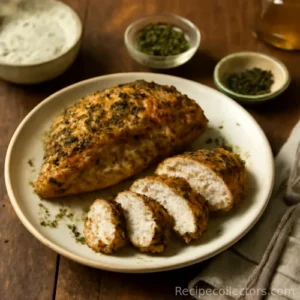
Herb-Roasted Turkey or Chicken in a Bag
Equipment
- blender
- Large cooking bag
- Large roasting dish
- Meat thermometer
Ingredients
- 0.4 7-10 lb. turkey or chicken
- 0.8 tablespoons dried parsley
- 0.4 tablespoon flour
- 0.4 teaspoon marjoram
- 0.2 teaspoon rosemary
- 0.4 tablespoon rubbed sage
- 0.4 teaspoon savory
- 0.4 teaspoon thyme

Instructions
- Rinse the 0.4 7-10 lb. turkey or chicken thoroughly and pat it dry.
- In a blender, combine 0.8 tablespoons dried parsley, 0.4 tablespoon rubbed sage, 0.4 teaspoon marjoram, 0.4 teaspoon thyme, 0.4 teaspoon savory, and 0.2 teaspoon rosemary.
- Blend until the herbs are finely ground.
- Sprinkle the herb mixture evenly over the cavity and outside of the turkey or chicken, ensuring it is well coated.
- Preheat the oven to 325°F (165°C).
- Shake 0.4 tablespoon flour into the cooking bag, coating the inside.
- Place the bag in a large roasting dish.
- Carefully place the seasoned turkey or chicken into the prepared cooking bag according to the bag’s instructions.
- Insert a meat thermometer into the thickest part of the meat, ensuring it does not touch bone.
- Bake until the thermometer reads 185°F (85°C), typically about 3-4 hours depending on the size of the bird.
- Once cooked, carefully slit open the bag.
- Remove the turkey or chicken and let it rest for 15 minutes before carving.
- Serve with your preferred dressing or side dishes.
Notes & Wine Advice
Serving Advice
This herb-roasted turkey or chicken pairs wonderfully with classic side dishes such as mashed potatoes, roasted root vegetables, or a fresh green salad. Consider serving with a savory gravy or cranberry sauce to complement the herb flavors. For a festive touch, garnish with fresh herbs or lemon slices. This dish is ideal for family dinners or holiday celebrations where a comforting, flavorful main course is desired.Variations
For a different flavor profile, try adding garlic powder or onion powder to the herb blend. You can also substitute fresh herbs for dried if available, using about three times the amount of fresh herbs. For a spicier version, include a pinch of cayenne pepper or smoked paprika. If you prefer, use chicken thighs or a whole chicken instead of turkey. Cooking times will vary accordingly, so always rely on the meat thermometer to ensure proper doneness. Additionally, you can add vegetables like carrots and potatoes inside the cooking bag to roast alongside the bird for a one-pan meal.Wine Advice
Chardonnay: A medium-bodied Chardonnay complements the savory herb flavors of the roasted poultry with its balanced acidity and subtle fruit notes, enhancing the overall dining experience. Pinot Noir: A light-bodied Pinot Noir pairs well with herb-roasted turkey or chicken, offering delicate red fruit flavors that do not overpower the dish and provide a pleasant contrast to the herbs. For a non-alcoholic pairing, consider a sparkling apple cider or a herbal iced tea with lemon. These beverages provide refreshing acidity and subtle sweetness that complement the herb-roasted poultry without alcohol. Estimated ingredient cost: USD 5.50 per serving, excluding optional sides and drinks. Local prices vary. Missing nutrition values have been estimated per serving; existing values were retained. Assumptions: Nutrition estimates are based on a 0.4 portion of a 7-10 lb. turkey or chicken with the specified dried herbs and flour. The serving size is one of four equal portions of the cooked bird. No additional sides or sauces are included in the nutrition calculation. Optional sides and drinks are excluded.Nutrition values
————————————————————————————————–
Herbs and Flavor Profile
The combination of dried parsley, rubbed sage, marjoram, thyme, savory, and rosemary creates a classic herb blend that imparts a fragrant and savory character to the turkey or chicken. Each herb contributes unique notes: parsley adds a fresh, slightly peppery flavor; sage brings an earthy, slightly minty aroma; marjoram offers a sweet, citrusy undertone; thyme provides a subtle woodsy taste; savory adds a peppery bite; and rosemary contributes a pine-like fragrance. Using dried herbs allows for a concentrated flavor that permeates the meat during roasting. This blend is traditional in many Western cuisines for poultry seasoning and enhances the natural flavors of the bird without overpowering them. The flour inside the cooking bag helps to absorb moisture and prevent the bag from sticking, ensuring the herbs and meat cook evenly. The finely ground herb mixture not only flavors the surface but also penetrates the meat slightly during roasting, enhancing the overall taste experience. The balance of herbs ensures no single flavor dominates, creating a harmonious blend that complements the natural poultry flavor. The dried herbs' concentrated oils release slowly in the moist environment of the cooking bag, infusing the bird evenly. This method avoids the bitterness that can sometimes occur with fresh herbs when exposed to prolonged heat. The subtle use of rosemary adds a distinctive aroma that pairs well with the other herbs, rounding out the flavor profile with a gentle piney note. The flour sprinkled inside the cooking bag serves a dual purpose beyond preventing sticking; it also helps to thicken the natural juices released during cooking, creating a light coating on the bird's skin. This coating can contribute to a slightly crisp texture on the surface once the bag is opened and the bird is exposed to the oven's dry heat for a few minutes if desired. The flour also absorbs excess moisture, preventing the bird from steaming excessively, which helps maintain a desirable texture in the meat and skin. Using dried herbs instead of fresh ones offers practical advantages such as longer shelf life and consistent potency, which is important for achieving reliable flavor results. The specific quantities of each herb are calibrated to complement the size of the bird, ensuring the seasoning is neither too subtle nor overpowering. This precise balance allows the natural flavors of the turkey or chicken to shine through while being enhanced by the aromatic herb blend. The herbs also contribute antioxidants and subtle health benefits, adding nutritional value to the dish.
Practical Preparation and Cooking Method
Roasting poultry in a cooking bag is a practical technique that helps retain moisture and flavor while simplifying cleanup. The bag traps steam and juices, effectively braising the bird and resulting in tender, juicy meat. Coating the inside of the bag with flour prevents the bag from sticking to the meat and herbs, which can otherwise cause tearing or uneven cooking. Using a meat thermometer is essential to ensure the bird reaches a safe internal temperature of 185°F (85°C), which guarantees doneness without drying out the meat. The relatively low oven temperature of 325°F (165°C) allows for slow, even cooking, which is especially important for larger birds. Resting the meat for 15 minutes after cooking allows the juices to redistribute, making carving easier and the meat more succulent. The step of rinsing and thoroughly drying the bird before seasoning is crucial for optimal herb adhesion and browning. Excess moisture on the skin can prevent the herbs from sticking properly and may cause steaming rather than roasting. Patting the bird dry ensures the herb mixture clings evenly, promoting a flavorful crust. Additionally, placing the bird inside the flour-coated cooking bag minimizes the risk of the bag tearing during cooking, which could lead to loss of juices and uneven cooking. When placing the meat thermometer, it is important to avoid contact with bones, as this can give inaccurate temperature readings. The thickest part of the breast or thigh is ideal for monitoring doneness. Checking the temperature periodically toward the end of cooking helps prevent overcooking, which can dry out the meat. The slow roasting temperature of 325°F (165°C) is gentle enough to allow the connective tissues to break down gradually, resulting in tender meat without the risk of burning the herb coating. After removing the bird from the bag, letting it rest uncovered for 15 minutes allows the internal juices to redistribute evenly throughout the meat. This resting period also firms up the meat slightly, making it easier to carve cleanly. During this time, the skin can be briefly exposed to oven heat if a crisper texture is desired. Resting is a key step that enhances both the texture and flavor of the final dish, ensuring a satisfying eating experience.
Serving Suggestions and Variations
This herb-roasted turkey or chicken is versatile and pairs well with a variety of side dishes, making it suitable for both casual family meals and special occasions. Traditional accompaniments include mashed potatoes, roasted vegetables, stuffing, and cranberry sauce. For a lighter meal, serve with a crisp green salad or steamed seasonal vegetables. The recipe can be adapted by changing the herb blend to suit different flavor preferences or regional cuisines. For example, adding garlic, lemon zest, or smoked paprika can introduce new dimensions of taste. Additionally, cooking smaller cuts such as chicken thighs or breasts in the bag can reduce cooking time while maintaining moisture. The method is also suitable for other poultry like duck or Cornish hens. This flexibility makes the recipe a reliable choice for various occasions and dietary needs. For a complete meal, consider pairing the herb-roasted bird with sides that complement its savory profile. Roasted root vegetables such as carrots, parsnips, and potatoes can be cooked alongside the bird in the oven, absorbing some of the herb-infused juices for added flavor. Alternatively, a wild rice pilaf or quinoa salad with toasted nuts and dried fruit provides a contrasting texture and a touch of sweetness that balances the savory herbs. To customize the recipe for different occasions, the herb blend can be adjusted by incorporating regional spices or fresh ingredients. For example, adding minced garlic or shallots to the cavity before roasting introduces a deeper aromatic layer. Citrus zest or slices placed inside the bird can brighten the flavor and add moisture. For a smoky twist, a small amount of smoked paprika or chipotle powder can be mixed into the herb blend, creating a more robust and complex taste profile. Meal planning with this recipe is convenient due to the bird's size and cooking method. Leftovers can be repurposed into sandwiches, salads, or soups, extending the enjoyment of the dish. The cooking bag method also simplifies cleanup, making it suitable for busy weeknight dinners or holiday gatherings. For smaller households, cooking chicken pieces in the bag reduces cooking time and allows for portion control while maintaining the moist, flavorful results characteristic of this technique. Browse our dinner recipes for more ideas. General kitchen guidance is available from the FDA.