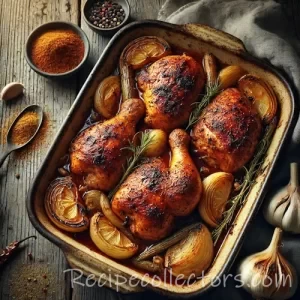
Rustic Allspice Chicken with Caramelized Onions
Equipment
- Knife
- Large skillet
- Spatula or tongs
Ingredients
- 1 bay leaf
- 1/2 tsp. ground allspice
- 4 pieces of chicken thighs, drumsticks, or breasts
- 1 large onion sliced
- Pepper to taste
- Salt to taste
- 2 tbsp. vegetable oil

Instructions
- Heat 2 tablespoons of vegetable oil in a large skillet over medium heat.
- Add 4 pieces of chicken (thighs, drumsticks, or breasts) and brown them on all sides, about 5-7 minutes per side.
- Add 1 large sliced onion to the skillet and cook until softened, about 5 minutes.
- Sprinkle the chicken and onion with 1/2 teaspoon of ground allspice, salt to taste, and pepper to taste.
- Add 1 bay leaf to the skillet.
- Reduce the heat to low, cover the skillet, and cook the chicken slowly.
- Turn the chicken pieces often to prevent sticking or burning, until the chicken is cooked through and tender, about 40-45 minutes.
- Remove the bay leaf before serving.
- Serve hot.
Notes & Wine Advice
Serving Advice
Serve this rustic allspice chicken hot, accompanied by simple sides such as steamed rice, roasted vegetables, or a fresh green salad. The caramelized onions add a sweet and savory depth that pairs well with mild starches and crisp, fresh greens. For a heartier meal, consider serving with crusty bread to soak up the flavorful pan juices. This dish is ideal for a cozy family dinner or a casual weekend meal.Variations
To vary this recipe, try using different cuts of chicken such as bone-in breasts or boneless thighs for quicker cooking. You can add other spices like cinnamon or nutmeg to complement the allspice for a warmer flavor profile. Incorporate garlic or fresh herbs such as thyme or rosemary during cooking for added aroma. For a richer sauce, stir in a splash of chicken broth or white wine after browning the chicken and before slow cooking. Alternatively, add sliced bell peppers or mushrooms with the onions for extra vegetables and texture.Wine Advice
Merlot: Merlot's medium body and balanced fruit and acidity complement the savory and slightly spicy flavors of the allspice chicken without overpowering it. Pinot Noir: Pinot Noir offers a light to medium body with bright acidity and subtle earthiness that pairs well with the caramelized onions and tender chicken. For an alcohol-free pairing, try a sparkling water with a splash of cranberry or pomegranate juice to add a refreshing tartness that balances the savory spices. Estimated ingredient cost: USD 3.50 per serving, excluding optional sides and drinks. Local prices vary. Missing nutrition values have been estimated per serving; existing values were retained. Assumptions: Nutrition estimates are based on four servings using chicken thighs with skin, 1 large onion, 2 tablespoons vegetable oil, and typical seasoning amounts. Sodium and cholesterol values assume moderate salt use. Fiber and sugar reflect the onion content. Serving size is one chicken piece with accompanying onions. Optional sides and drinks are excluded.Nutrition values
————————————————————————————————–
Ingredients and Flavor Profile
This rustic allspice chicken recipe relies on simple, accessible ingredients to create a dish rich in flavor and comforting texture. The choice of chicken pieces—thighs, drumsticks, or breasts—allows flexibility depending on preference and availability. Thighs and drumsticks provide more fat and connective tissue, which break down during slow cooking to yield tender, juicy meat. The key spice, ground allspice, imparts a warm, slightly sweet, and peppery aroma that complements the caramelized onions beautifully. The onions themselves are sliced and cooked until softened and golden, adding natural sweetness and depth to the dish. A single bay leaf adds subtle herbal notes that enhance the overall flavor complexity without overwhelming the palate. Vegetable oil is used for browning the chicken, creating a flavorful crust that seals in juices. Salt and pepper are added to taste, ensuring the seasoning balances the natural flavors. This combination of ingredients results in a dish that is both rustic and refined, showcasing the harmony between spice, sweetness, and savory meat. The texture of the chicken pieces plays a crucial role in the final dish. Thighs and drumsticks, with their higher fat content and connective tissue, become especially tender and succulent after slow cooking, while breasts offer a leaner option that requires careful attention to avoid drying out. The caramelized onions contribute a silky texture and a natural sweetness that balances the savory depth of the chicken. Ground allspice, though used sparingly, acts as a flavor enhancer by adding subtle warmth and complexity without overpowering the other ingredients. The bay leaf’s herbal notes are delicate but essential, providing an aromatic backdrop that elevates the overall sensory experience. Vegetable oil is chosen for its neutral flavor and high smoke point, making it ideal for browning the chicken thoroughly without burning. Browning not only develops flavor through the Maillard reaction but also creates a slight crust that helps seal in moisture. Salt and pepper are fundamental seasonings that bring out the natural flavors of the chicken and onions, and adjusting their quantities allows for personal taste preferences. The simplicity of the ingredient list highlights the importance of quality and freshness, as each component contributes distinctly to the dish’s rustic charm. The interplay between the sweet caramelized onions and the warm, slightly spicy allspice creates a harmonious flavor profile that is both comforting and intriguing. This balance makes the dish suitable for a wide range of palates and occasions. The use of a single bay leaf rather than multiple herbs keeps the flavor focused and clean, allowing the chicken and onions to shine. Overall, the ingredients work together to produce a dish that is straightforward yet layered, inviting diners to savor each bite.
Practical Preparation and Cooking Tips
Preparing this dish is straightforward and well-suited for cooks of all skill levels. Begin by heating vegetable oil in a large skillet over medium heat to ensure even browning of the chicken pieces. Browning the chicken on all sides for about 5-7 minutes per side develops a rich, caramelized exterior that enhances flavor and texture. Adding the sliced onion after browning allows it to soften and release its natural sugars, which meld with the chicken juices during cooking. Sprinkling the allspice, salt, and pepper at this stage ensures the spices infuse the meat and onions evenly. Adding a bay leaf introduces a subtle aromatic layer that simmers gently during the slow cooking phase. Reducing the heat to low and covering the skillet allows the chicken to cook slowly and evenly, preventing drying out while tenderizing the meat. Turning the chicken pieces often prevents sticking and burning, ensuring a consistent cook. The total cooking time of about 40-45 minutes is sufficient to cook the chicken through and develop tender, flavorful meat. Removing the bay leaf before serving is important to avoid an overpowering herbal taste. This method requires minimal equipment and attention, making it ideal for a comforting home-cooked meal. When browning the chicken, it is important to avoid overcrowding the skillet, as this can cause the meat to steam rather than brown. Cooking in batches if necessary ensures a better crust and more intense flavor development. Using medium heat helps control the browning process, preventing the exterior from burning while allowing the interior to begin cooking gently. After browning, deglazing the pan with a small amount of water or broth can help lift the flavorful browned bits, which then meld into the sauce during slow cooking. Slicing the onion uniformly ensures even cooking and consistent caramelization. Adding the onions after the chicken has browned allows them to soften and release their sugars without becoming mushy. Covering the skillet during the slow cooking phase traps moisture and heat, which tenderizes the chicken and melds the flavors. Turning the chicken pieces regularly not only prevents sticking but also promotes even cooking and flavor absorption. Monitoring the heat to keep it low is essential to avoid drying out the meat or burning the onions. Timing is key to achieving tender chicken with well-caramelized onions. The total cooking time of 40-45 minutes allows the connective tissues in the chicken to break down fully, resulting in a melt-in-the-mouth texture. Removing the bay leaf before serving is a simple but important step to prevent an overly strong herbal taste. Using a heavy-bottomed skillet helps distribute heat evenly, reducing the risk of hot spots that could cause uneven cooking or burning. This recipe’s straightforward technique makes it accessible for cooks seeking a flavorful, hands-off meal.
Serving Suggestions and Variations
This rustic allspice chicken is versatile and pairs well with a variety of sides and accompaniments. Serving it with steamed rice or mashed potatoes allows the flavorful pan juices and caramelized onions to be enjoyed fully. Roasted or steamed vegetables such as green beans, carrots, or broccoli add color and nutrition to the plate. A fresh green salad with a light vinaigrette provides a crisp contrast to the rich chicken. For a heartier meal, crusty bread is excellent for soaking up the sauce. Variations include adding other spices like cinnamon or nutmeg to complement the allspice or incorporating garlic and fresh herbs such as thyme or rosemary for additional aroma. Vegetables like bell peppers or mushrooms can be added with the onions for more texture and flavor. For a richer sauce, a splash of chicken broth or white wine can be added after browning the chicken and before slow cooking. This dish is suitable for casual family dinners, weekend meals, or special occasions where a comforting, flavorful main course is desired. For a complete meal, consider pairing the rustic allspice chicken with grains like couscous or quinoa, which absorb the flavorful pan juices and add a pleasant texture contrast. Incorporating a side of roasted root vegetables such as sweet potatoes or parsnips complements the warm spice notes and adds natural sweetness. Garnishing the dish with fresh herbs like parsley or cilantro just before serving can introduce a bright, fresh element that balances the richness of the chicken and onions. To vary the flavor profile, experiment with adding a splash of lemon juice or a few capers near the end of cooking to introduce a subtle tanginess that cuts through the richness. For a spicier version, a pinch of cayenne pepper or crushed red pepper flakes can be added alongside the allspice. Incorporating garlic cloves with the onions during cooking adds depth and a savory aroma that enhances the overall dish without overpowering the main flavors. This recipe is well-suited for meal planning as it reheats beautifully, with flavors often intensifying after a day. Leftovers can be served over salads, mixed into grain bowls, or used as a filling for wraps or sandwiches. The simplicity of the ingredients and cooking method also allows for easy scaling up to serve larger groups or for batch cooking. This versatility makes the rustic allspice chicken a practical and flavorful option for both everyday meals and special occasions. Browse our chicken recipes for more ideas. General kitchen guidance is available from the FDA.