
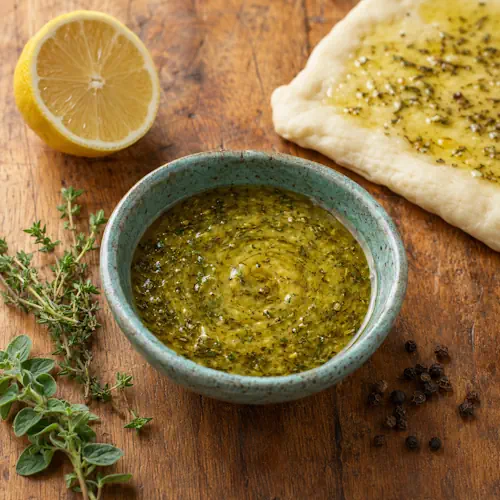
California Herb Pizza Oil
Equipment
- Measuring cups
- Measuring spoons
- Mixing bowl
- Whisk
Ingredients
- ⅛ cup Extra-Virgin Olive Oil
- ½ tablespoon Fresh Lemon Juice
- ½ teaspoon Honey
- ½ teaspoon Dijon Mustard
- ¼ teaspoon Dried Oregano
- ¼ teaspoon Dried Thyme
- ⅛ teaspoon Kosher Salt
- ⅛ teaspoon Black Pepper freshly ground

Instructions
- Pour the extra-virgin olive oil and lemon juice into a mixing bowl.
- Add the honey and Dijon mustard.
- Whisk until the ingredients are thoroughly combined.
- Add the oregano, thyme, kosher salt, and black pepper.
- Whisk again until the herbs and seasoning are evenly distributed.
- Let the pizza oil rest for 10 minutes so the flavours can develop.
- Brush a thin, even layer over prepared pizza dough.
- Add the desired cheese and toppings before baking the pizza as directed.
Notes & Wine Advice
Serving Suggestions
Brush a thin layer of California Herb Pizza Oil over pizza dough before adding toppings. It pairs particularly well with goat cheese, mozzarella, artichokes, mushrooms, roasted peppers, courgette, fresh tomatoes, or rocket. The oil can also be served as a dip for warm focaccia or breadsticks.Recipe Notes
Whisk the sauce immediately before using it because the oil and lemon juice will gradually separate. Apply it sparingly so the pizza base remains crisp rather than oily. This quantity provides enough sauce for approximately one large pizza serving four people.Variations
Replace the honey with maple syrup for a vegan version. Add crushed red pepper flakes for heat, minced garlic for a stronger savoury flavour, or finely grated lemon zest for additional freshness. Fresh thyme and oregano can replace the dried herbs when available.Storage
Transfer unused sauce to an airtight container and refrigerate it for up to four days. Allow refrigerated pizza oil to reach room temperature and whisk thoroughly before using, as the olive oil may become cloudy or partially solidify when chilled.Wine Advice
A crisp Sauvignon Blanc complements the lemon, mustard, and fresh-tasting herbs. A light Pinot Grigio is another refreshing choice, especially when the pizza is topped with mild cheese and vegetables.Nutrition values
————————————————————————————————–
About California Herb Pizza Oil
California Herb Pizza Oil is a fresh, tomato-free sauce designed for light pizzas topped with vegetables, herbs, and creamy cheeses. Extra-virgin olive oil forms the base, while lemon juice adds brightness and Dijon mustard helps bring the ingredients together. Honey softens the acidity, and oregano and thyme provide the familiar savoury aroma associated with freshly baked pizza. The result is flavourful without overwhelming delicate toppings.
This no-cook recipe takes only a few minutes to mix and requires no specialist equipment. It is especially useful when you want a change from traditional tomato sauce or need a pizza base that will complement lighter ingredients. Try it on homemade dough such as our Whole Wheat Pizza Dough or use it to add another layer of flavour to a thick, airy Sicilian Pizza Dough.
California Herb Pizza Oil
The key to a successful oil-based sauce is restraint. Unlike tomato sauce, the oil does not evaporate significantly during baking. A thin coating is therefore sufficient to carry the herbs across the dough and help the toppings brown. Applying too much can make the centre of the pizza heavy or greasy. Brush the mixture evenly across the surface while leaving a narrow border around the crust.
Whisking the Dijon mustard with the olive oil and lemon juice creates a temporary emulsion. This distributes the acidity and seasoning more evenly than simply drizzling each ingredient over the dough. The sauce will eventually separate while standing, which is entirely normal. Whisk it briefly again immediately before brushing it onto the pizza.
Choosing the Pizza Toppings
Mild and fresh toppings allow the character of this sauce to remain noticeable. Mozzarella, goat cheese, ricotta, or feta all work particularly well. Suitable vegetables include mushrooms, artichoke hearts, asparagus, courgette, sweet peppers, red onion, and cherry tomatoes. Add delicate rocket or fresh basil only after baking so the leaves retain their colour and texture.
For a completely dairy-free pizza, use grilled vegetables and a suitable plant-based cheese. Replacing the honey with maple syrup makes the sauce vegan. If you prefer a more traditional flavour, compare it with our Easy No-Cook Pizza Sauce or the deeper tomato flavour of our Rich Homemade Pizza Sauce.
Tomato-Free Pizza Sauce
This tomato-free pizza sauce can be adjusted without changing its basic method. A small amount of grated garlic adds pungency, while lemon zest strengthens its citrus character without adding extra liquid. Crushed red pepper flakes create gentle heat. Rosemary offers a woodier aroma, although it should be chopped finely and used sparingly so it does not dominate the thyme and oregano.
The mixture also works beyond pizza. Brush it over flatbread before baking, spoon it over roasted vegetables, or serve it as a dressing for a simple pasta salad. It makes an easy dipping oil for our Garlic Rosemary Focaccia and provides a lighter alternative to the richer options featured in our Oil-Based Pizza Sauces.
Storage and Food Safety
Store leftover sauce in a clean, airtight container in the refrigerator and use it within four days. Olive oil may become cloudy or firm at refrigerator temperature, but this does not indicate spoilage. Let the sauce stand briefly at room temperature and whisk it before use. Discard any portion that has come into contact with raw ingredients or an unclean pastry brush.
Use clean utensils and refrigerate leftovers promptly. Consult current FDA safe food-handling guidance for advice about storing prepared sauces and perishable pizza toppings. With its quick preparation and adaptable flavour, California Herb Pizza Oil offers a convenient way to create a bright, aromatic pizza without relying on tomatoes.