
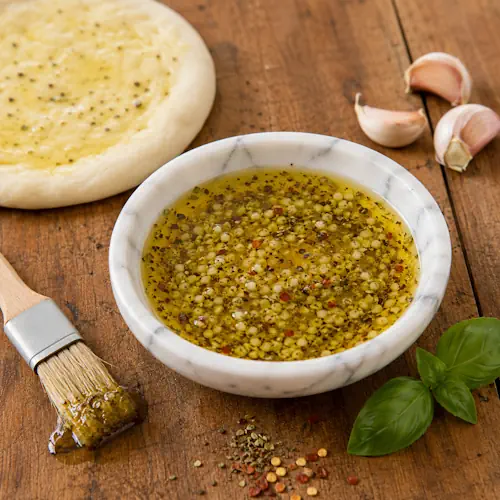
Garlic Herb Pizza Oil
Equipment
- Fine-mesh strainer
- heatproof bowl
- Saucepan, Small
- Whisk
Ingredients
- 2 tablespoons Extra-Virgin Olive Oil
- 2 cloves Garlic minced
- ¼ teaspoon Dried Basil
- ¼ teaspoon Dried Oregano
- ⅛ teaspoon Black Pepper freshly ground
- ⅛ teaspoon Kosher Salt
- ⅛ teaspoon Red Pepper Flakes

Instructions
- Pour the extra-virgin olive oil into a small saucepan.
- Add the minced garlic.
- Place the saucepan over low heat.
- Cook for 5 minutes while stirring occasionally.
- Keep the heat low and do not allow the garlic to brown.
- Remove the saucepan from the heat.
- Add the dried oregano, dried basil, kosher salt, black pepper, and red pepper flakes.
- Whisk until the seasonings are evenly distributed.
- Let the oil rest for 10 minutes so the flavours can infuse.
- Place a fine-mesh strainer over a heatproof bowl.
- Pour the oil through the strainer to remove the garlic pieces.
- Whisk the strained oil briefly before use.
- Brush a thin layer over prepared pizza dough before adding toppings.
Notes & Wine Advice
Serving Suggestions
Brush the oil lightly over pizza dough before adding mozzarella, mushrooms, spinach, artichokes, onions, or roasted peppers. It also works as a dip for breadsticks and our Garlic Rosemary Focaccia, or as a finishing drizzle over pasta and roasted vegetables.Recipe Notes
Keep the saucepan over low heat because browned or burnt garlic will make the oil bitter. Straining removes the garlic pieces and creates a smoother pizza base. Use only a thin coating so the crust becomes flavourful without feeling greasy.Variations
Add finely chopped rosemary or thyme for a stronger herbal flavour. Increase the red pepper flakes for additional heat. Lemon zest provides freshness, while smoked paprika gives the oil a warmer character. Parmesan can be added after cooking for a non-vegan variation.Storage
Fresh garlic stored in oil can present a food-safety risk when kept incorrectly. Refrigerate the finished oil immediately in a clean airtight container and use it within three days. Never store homemade garlic oil at room temperature.Wine Advice
A crisp Sauvignon Blanc balances the olive oil and garlic. A light-bodied Pinot Grigio complements pizzas topped with mozzarella, herbs, mushrooms, or fresh vegetables.Nutrition values
————————————————————————————————–
About Garlic Pizza Oil
Garlic pizza oil is a fragrant tomato-free sauce made by gently infusing extra-virgin olive oil with fresh garlic, oregano, basil, black pepper, and chilli flakes. A thin coating adds savoury flavour to homemade pizza without covering delicate toppings with tomatoes or a heavy cream sauce.
The original recipe made eight portions and has been recalculated for four. This smaller quantity is enough for four individual pizzas or one large pizza when applied sparingly. The oil can also be used for dipping bread, finishing pasta, or seasoning roasted vegetables.
Why Infused Olive Oil Works
Infused olive oil carries the flavour of garlic and dried herbs across the entire pizza base. Fat absorbs and distributes aromatic compounds particularly effectively, so only a small amount is needed. The oil also encourages browning where it touches the dough.
Unlike a tomato sauce, this mixture contains almost no water. It is therefore useful with toppings that release moisture, including mushrooms, spinach, courgette, and fresh mozzarella. The dry base reduces the chance of the centre becoming soggy.
Heating the Garlic Gently
Low heat is essential when preparing Garlic Herb Pizza Oil. Garlic can progress from fragrant to bitter very quickly. It should soften and release its aroma without developing a dark brown colour.
Five minutes over low heat is sufficient for finely minced garlic. Remove the saucepan immediately if the pieces begin to brown. Residual heat continues cooking the garlic briefly after the pan leaves the stovetop.
Adding Herbs and Chilli
Dried oregano and basil provide familiar Italian flavours. Adding them after removing the pan from the heat prevents the herbs from scorching. Black pepper contributes warmth, while red pepper flakes provide a mild chilli finish.
Let the mixture stand for 10 minutes before straining. This short resting period allows the oil to absorb the garlic, herbs, and spices. Straining creates a smooth sauce and removes garlic pieces that could burn during pizza baking.
Choosing Pizza Toppings
Garlic Herb Pizza Oil pairs naturally with mozzarella, Parmesan, ricotta, mushrooms, spinach, artichokes, olives, onions, courgette, or roasted peppers. It is also suitable for white pizzas topped with potatoes, rosemary, or caramelised onions.
Brush it over our Whole Wheat Pizza Dough for a nutty base or use it with the thicker Sicilian Pizza Dough. For three different tomato-free flavour options, see our Three Oil-Based Pizza Sauces.
Other Ways to Use the Oil
Serve the infused oil as a dip for focaccia, breadsticks, or crusty bread. It can also be drizzled over pasta, roasted potatoes, grilled vegetables, or soup. Browse the pizza collection, sauce recipes, and spreads for more homemade accompaniments.
For a salad dressing, whisk the oil with lemon juice or white wine vinegar. When using it as a finishing oil, add it immediately before serving so the garlic and herb aromas remain noticeable.
Safe Storage of Homemade Garlic Oil
Fresh garlic in oil must be handled carefully. Oil creates a low-oxygen environment in which harmful bacteria may grow when the mixture is stored improperly. Homemade garlic oil should never be kept at room temperature.
Transfer the cooled oil to a clean airtight container, refrigerate it promptly, and use it within three days. Discard it when its storage history is uncertain. Olive oil may become cloudy or partially solid in the refrigerator; this is normal and reverses as it warms slightly.
Follow current FDA safe food-handling guidance when preparing and storing infused oils. With low heat, a brief infusion, and safe refrigeration, garlic pizza oil provides an aromatic base for pizza, bread, pasta, and vegetables.