Heat the olive oil and butter in the base of a tagine or a large, heavy-based saucepan over a medium heat, stir in the ginger, cinnamon sticks and shallots, toss to coat well and cook for 3 minutes until the shallots begin to colour, then add the yam and cook for a further 3 minutes.
Add the prunes and honey and pour in the stock.
Bring to the boil, then reduce the heat, cover and cook gently for about 25 minutes.
Toss in most of the herbs, season to taste, and cook for a further 5–6 minutes to let the flavours mingle.
Garnish with the remaining herbs and serve immediately with plain, buttery couscous, if liked.
Notes & Wine Advice
For yam with carrots and sultanas, replace the shallots with 3 carrots, peeled and cut into bite-size chunks, and substitute the prunes with 150 g sultanas. Follow the recipe as for Yam with shallots & prunes and serve as a side dish with grilled or roasted meats, or with couscous.
Heat the olive oil in the base of a tagine or a large, heavy-based saucepan over a medium heat, stir in the onion and cook for 4 minutes until it begins to soften.
Add the garlic, coriander and cumin seeds, turmeric and dried mint, then toss in the potatoes, making sure they are coated in the spices.
Pour in the stock and bring to the boil, then reduce the heat, cover and cook gently for 5–6 minutes.
Add the artichokes and stir to combine, then re-cover and cook for 10 minutes.
Stir in the peas and preserved lemon rind and cook, covered, for a further 5 minutes until the peas are tender.
Season to taste with salt and pepper, then scatter the coriander over the top.
Serve with chunks of fresh crusty bread or couscous, if liked.
Notes & Wine Advice
For artichokes with broad beans, place 4 ready-prepared artichoke bottoms hollow-side up in the base of a tagine or a large, heavy-based saucepan. Mix together 2 tablespoons olive oil, the juice of 1 lemon and 2 tablespoons water in a bowl and pour the mixture over the artichokes. Cover and cook over a medium heat for about 15 minutes. Add 225 g fresh, podded broad beans, sprinkle over 1 teaspoon of sugar and scatter with 1 tablespoon finely chopped dill. Re-cover and cook for 5–6 minutes until the broad beans are tender. Season to taste and serve with couscous.
3sweet potatoespeeled and cut into bite-sized chunks
3tablespoonsolive or argan oil
25gfresh root gingerpeeled and cut into very thin sticks
3garlic clovespeeled and cut into thin sticks
sea salt and black pepper
small bunchof corianderfinely chopped, to garnish
Instructions
Put the sweet potato chunks in the base of a tagine or ovenproof dish, drizzle over the oil and toss in the ginger and garlic.
Place the tagine, uncovered, in a preheated oven, 200°C Gas Mark 6, for 45–50 minutes until the sweet potato is tender and some pieces are slightly caramelized.
Season to taste with salt and pepper.
Garnish with the coriander and serve as a side dish with roasted or grilled meats or with couscous, if liked.
Notes & Wine Advice
For roasted butternut squash with honey & ginger, peel, deseed and chop 1 large butternut squash into bite-sized pieces. Put the squash chunks in the base of a tagine or ovenproof dish, drizzle over 2 tablespoons olive oil and toss in 1 tablespoon peeled and finely chopped fresh root ginger. Place the tagine in the oven as above and roast the squash for about 30 minutes until tender. Drizzle over 1 tablespoon runny honey, stir to coat well and return the tagine to the oven for a further 10 minutes. Season to taste with salt and pepper and serve as a side dish to grilled and roasted meats or with couscous.
Put the tomatoes in the base of a tagine or ovenproof dish, drizzle over the oil, scatter the garlic, chillies and sugar over the tomatoes and toss to coat well.
Place, uncovered, in a preheated oven, 200°C Gas Mark 6, for 20–25 minutes until the tomato skins begin to wrinkle.
Sprinkle half the preserved lemon rind over the tomatoes and stir to coat well, then season with salt.
Return to the oven for 5–10 minutes.
Serve with chunks of crusty bread or with grilled and roasted dishes, if liked.
Notes & Wine Advice
For roasted cherry tomatoes with feta & mint, put 450 g cherry tomatoes in the base of a tagine or ovenproof dish, drizzle over 2 tablespoons olive oil, scatter over 4 garlic cloves, halved and smashed and 1 teaspoon sugar and toss to coat well. Place, uncovered, in a preheated oven, 200°C Gas Mark 6, for 20–25 minutes, then toss in 1½ teaspoons dried mint and scatter 150 g crumbled feta cheese over the top. Return to the oven for 5–10 minutes. Garnish with 1 tablespoon finely chopped mint.
Heat the oil in the base of a tagine or a large, heavy-based saucepan over a medium heat, stir in the onions, garlic and sugar and cook for 4 minutes until they begin to soften and colour.
Stir in the chilli flakes and the dried sage leaves and cook for a further 1 minute.
Use a wooden spoon to create 4 wells in the onion mixture and crack the eggs into them.
Cover and cook over a medium heat for a further 4 minutes until the whites of the eggs are firm.
Season with salt and pepper and serve immediately on toasted flat breads or with a dollop of thick yogurt, if liked.
Notes & Wine Advice
For eggs with black olives and parsley, heat the oil in the base of a tagine or a large, heavy-based saucepan over a medium heat, stir in 2 tablespoons black olives, pitted and finely sliced, and 2 finely chopped garlic cloves, omitting the sugar, and cook for 3 minutes. Finely chop a small bunch of parsley and add most of it to the olives and garlic. Crack the eggs over the top, cover and cook for about 4 minutes until the whites of the eggs are firm. Season with salt and pepper and scatter the remaining of the parsley over the top.
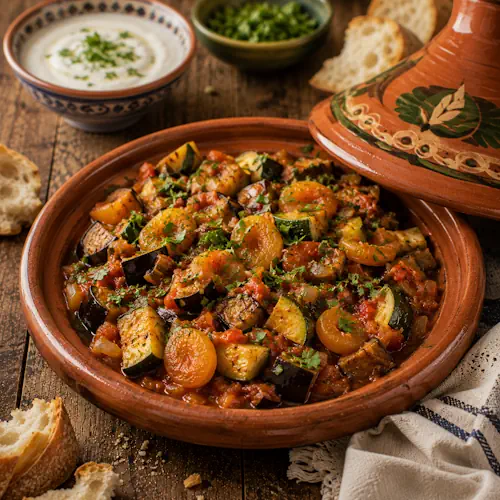
Moroccan Harvest Tagine is a fragrant vegetarian dish filled with tender eggplant, zucchini, sweet dried apricots, aromatic ras el hanout, and tomatoes. Slow simmering allows the vegetables to absorb the warm North African spices, creating a comforting meal that’s perfect for sharing with family and friends.
Heat the olive oil and butter in a tagine or heavy saucepan over medium heat.
Add the onion and garlic and cook for about 2 minutes until softened.
Stir in the aubergines and courgettes.
Cook for another 4 minutes, stirring occasionally.
Add the dried apricots, ras el hanout, and sugar.
Mix well until everything is coated with the spices.
Stir in the chopped tomatoes and half of the fresh herbs.
Bring the mixture to a gentle boil.
Cover and simmer for 30 to 40 minutes until the vegetables are tender.
Season with sea salt and black pepper.
Sprinkle with the remaining parsley and coriander before serving.
Serve with creamy yogurt and warm crusty bread if desired.
Notes & Wine Advice
Recipe Notes
For an even richer flavor, prepare the tagine a day ahead and gently reheat before serving.Replace the dried apricots with chopped dates for a deeper, caramel-like sweetness.Serve with fluffy couscous, warm flatbread, or steamed rice to soak up the flavorful sauce.A spoonful of Greek yogurt adds a refreshing contrast to the warm Moroccan spices.
Wine Advice
A chilled Viognier complements the sweet apricots and fragrant spices beautifully.For a lighter pairing, enjoy this tagine with a glass of Pinot Gris, whose fresh fruit notes balance the rich tomato sauce.
Moroccan Harvest Tagine is a comforting North African vegetable dish that celebrates the rich flavors of Moroccan cuisine. Tender aubergines, courgettes, sweet dried apricots, tomatoes, and the aromatic spice blend ras el hanout slowly simmer together until every bite is infused with warm, fragrant flavors. Traditionally prepared in a tagine, this vegetarian recipe is equally delicious cooked in a heavy Dutch oven or saucepan, making it easy to enjoy authentic Moroccan cooking at home.
Why You’ll Love This Moroccan Vegetable Tagine
This Moroccan vegetable tagine is packed with colorful vegetables, warming spices, and natural sweetness from dried apricots. The slow cooking process allows every ingredient to absorb the rich tomato sauce while keeping the vegetables tender without becoming mushy. If you enjoy one-pot meals, you’ll also love our Moroccan Recipes, Vegetable Recipes, Vegetarian Recipes, Stew Recipes, and Dinner Recipes.
Fresh Ingredients for Moroccan Harvest Tagine
Moroccan Harvest Tagine uses everyday vegetables combined with one of Morocco’s most famous spice blends. Ras el hanout brings warmth and complexity, while dried apricots add gentle sweetness that balances the acidity of the tomatoes. Fresh parsley and coriander brighten the finished dish, making every serving vibrant and full of flavor.
Serving Suggestions
This Moroccan vegetable tagine is wonderful served with fluffy couscous, steamed rice, warm flatbread, or crusty artisan bread. A spoonful of Greek yogurt adds a cool, creamy contrast to the fragrant spices. It’s equally suitable for a relaxed Family Dinner, a special Gourmet meal, or a cozy Weekend dinner.
Storage Tips
Store Moroccan Harvest Tagine in an airtight container in the refrigerator for up to four days. Like many slow-cooked dishes, the flavors become even richer overnight. It also freezes well for up to three months and reheats beautifully over gentle heat. For safe food storage recommendations, visit the FDA Food Safety website.
Whether you’re discovering Moroccan cooking for the first time or preparing another favorite from North Africa, Moroccan Harvest Tagine delivers warming spices, wholesome vegetables, and authentic comfort in every delicious serving.
500grunner beanstrimmed and cut into 3 or 4 pieces
2teaspoonssugar
juice of 1 lemon
2x 400 g cans chopped tomatoes
bunchof dillroughly chopped
sea salt and black pepper
small bunchof flat leaf parsleyfinely chopped, to garnish
Instructions
Heat the oil in the base of a tagine or a large, heavy-based saucepan over a medium heat, stir in the onions and garlic and cook for 3 minutes until they begin to soften.
Add the runner beans and stir to coat well, then stir in the sugar, lemon juice, tomatoes and dill.
Cover and cook gently for about 40 minutes until the beans are tender and the tomato sauce is fairly thick.
Season to taste with salt and pepper, then garnish with the parsley.
Serve with chunks of fresh crusty bread and bowl of thick, creamy yogurt, if liked.
For green beans with mint,
follow the recipe as for Runner beans with tomato & dill, replacing the runner beans with 500 g trimmed green beans and replacing the dill with a bunch of roughly chopped mint.
Serve with chunks of fresh crusty bread and a bowl of thick, creamy yogurt.
Heat the oil in the base of a tagine or a large, heavy-based saucepan over a medium heat, stir in the caraway seeds, garlic and chilli and cook for 1,5 minutes to let the flavours mingle.
Add the carrots and celery, stir to coat well and cook for a further 1,5 minutes, then add the lentils.
Pour in the stock and bring to the boil, then reduce the heat, cover and cook gently for 25–30 minutes until the lentils are tender but not mushy.
Season to taste with salt and pepper, then stir in the parsley.
Serve as a side dish with wedges of lemon to squeeze over it.
Notes & Wine Advice
For lentils with celery & harissa, heat the oil in the base of a tagine or a large, heavy-based saucepan, stir in 2 finely chopped garlic cloves and cook for 1,5 minutes. Trim and dice 2 celery sticks and add them to the garlic. Stir in 1½ teaspoons harissa paste, then add 225 g rinsed and drained brown lentils and pour in 600 ml water. Bring to the boil, reduce the heat, cover and cook gently for 25–30 minutes. Season and serve as for Lentils with celery & carrots.
Heat the smen, or ghee in the base of a tagine or a large, heavy-based saucepan over a medium heat, stir in the onions and garlic with the coriander, cumin and fennel seeds and cook for 3 minutes to let the flavours mingle.
Add the chickpeas, stir to coat well and cook for a further 1 minute, then add the chestnuts and ras el hanout.
Stir in the tomatoes and sugar and add enough water to just cover the chickpeas and chestnuts.
Bring to the boil, then reduce the heat, cover and cook gently for 25–30 minutes.
Season to taste with salt and pepper, then stir in most of the parsley.
Garnish with the remaining parsley and serve with chunks of fresh crusty bread, if liked.
Notes & Wine Advice
For butter beans with almonds & ras el hanout, follow the recipe as for Chickpeas with roasted chestnuts, replacing the chickpeas with 2 x 400 g cans butter beans, rinsed and drained, and replacing the chestnuts with 225 g blanched almonds.
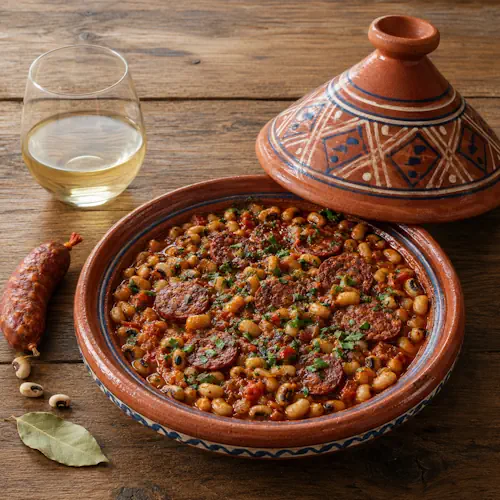
Chorizo Wine Bean Tagine combines tender black-eyed beans, spicy Spanish chorizo, tomatoes, white wine, chillies, and warming spices. Slow baking in a covered tagine creates a rich and comforting meal for four.
Cover the saucepan and simmer for 25 minutes until the beans are tender.
Drain the cooked beans.
Rinse them briefly under cold running water.
Remove and discard any loose bean skins.
For the Tagine
Preheat the oven to 350°F (180°C).
Place the tagine base over medium heat.
Add the smen and let it melt.
Add the chopped onion, garlic, chillies, cumin seeds, and coriander seeds.
Cook for 3 minutes while stirring regularly.
Add the sliced chorizo.
Stir until the chorizo is coated with the spices.
Cook for another 3 minutes.
Add the cooked black-eyed beans, bay leaves, and drained tomatoes.
Pour in the dry white wine.
Stir until evenly combined.
Cover the tagine.
Transfer it carefully to the preheated oven.
Bake for 30 minutes.
Remove the tagine carefully from the oven.
Discard the bay leaves.
Season with sea salt and freshly ground black pepper.
Stir most of the parsley through the beans.
Garnish with the remaining parsley.
Serve hot.
Notes & Wine Advice
Serving Suggestions
Serve the tagine hot with crusty bread, couscous, rice, or roasted potatoes to absorb the spiced tomato and wine sauce. A simple green salad or steamed vegetables provide a fresh contrast to the rich chorizo. Smaller portions can be served as part of a larger Moroccan-inspired meal.
Recipe Notes
Soaking the beans for eight hours shortens their cooking time and promotes even cooking. The beans should be tender before they enter the tagine. Choose a tagine that is approved for both stovetop and oven use, or prepare the recipe in an oven-safe casserole with a lid.
Variations
For a meat-free version, replace the chorizo with 450 grams of diced red, yellow, and orange peppers. Replace the black-eyed beans with 225 grams of dried borlotti beans, soak them for eight hours, and boil them for 30 minutes before continuing with the recipe.
Storage and Reheating
Cool leftovers promptly and refrigerate them in an airtight container for up to three days. Reheat individual portions gently in a saucepan or microwave until piping hot throughout. Add a splash of water or stock when the sauce has thickened during storage.
Wine Advice
A Spanish Tempranillo complements the smoky chorizo, tomatoes, and earthy spices. When you prefer white wine, serve the dish with a dry Verdejo, which provides enough freshness to balance the rich pork.
Chorizo bean tagine combines tender black-eyed beans with Spanish chorizo, tomatoes, white wine, chillies, cumin, and coriander. The ingredients cook together in a covered tagine, producing a rich sauce and a substantial Moroccan chorizo stew with smoky, spicy, and savoury flavours.
This recipe serves four and uses a generous quantity of chorizo, making it a rich main course rather than a light bean dish. Fresh parsley added at the end brings colour and freshness, while the white wine prevents the tomato sauce from feeling excessively heavy.
Combining Moroccan and Spanish Flavours
The recipe brings together ingredients associated with two neighbouring culinary traditions. A tagine, smen, cumin, coriander, and chillies provide Moroccan character. Spanish chorizo contributes smoked paprika, garlic, pork fat, and a deep savoury flavour.
White wine and tomatoes connect the two profiles and create enough liquid for the beans to absorb. As the covered dish bakes, the chorizo releases seasoned fat into the sauce, coating the beans and vegetables.
Preparing the Black-Eyed Beans
Dried black-eyed beans need to be soaked before cooking. Eight hours in cold water allows them to hydrate gradually. Use a large bowl and plenty of water because the beans expand considerably while soaking.
After soaking, drain and rinse them before covering them with fresh water. Simmering for approximately 25 minutes should make them tender, although the exact time depends on their age. Older dried beans may require longer cooking.
The beans should be properly cooked before they are added to the tagine. The wine and tomatoes create an acidic environment, and acidity can slow further softening. Starting with tender beans avoids a finished stew containing firm or chalky centres.
Building the Tagine Base
Smen is a seasoned fermented butter used in North African cooking. Melting it before adding the onion, garlic, chillies, cumin, and coriander creates an aromatic base. Three minutes of cooking releases the fragrance of the spices without allowing the garlic to burn.
The sliced chorizo is cooked briefly so its surface begins to release fat and paprika. The beans, bay leaves, tomatoes, and wine are then added. Covering the tagine traps steam and keeps the mixture moist during baking.
Choosing the Right Cooking Vessel
Traditional clay tagines differ in how they can be heated. Some are suitable for stovetop and oven use, while decorative versions are not designed for direct heat. Check the manufacturer’s instructions before placing a tagine over a burner or inside a hot oven.
An enamelled cast-iron casserole or Dutch oven can be used when the tagine is unsuitable. Choose a heavy pan with a tightly fitting lid. Browse the stew recipes and bean collection for more slow-cooked meals.
Serving the Moroccan Chorizo Stew
Serve the Moroccan chorizo stew with crusty bread, couscous, rice, or potatoes. These accompaniments absorb the wine and tomato sauce and turn the dish into a complete dinner. A green salad or roasted vegetables provide balance.
The quantity of chorizo makes this recipe high in calories, saturated fat, and sodium. It should not be classified as low-fat, low-calorie, low-salt, or low-sodium. Smaller portions and additional vegetables can make the meal less rich.
The dish can be gluten-free and wheat-free when the chorizo, spices, and wine are confirmed suitable. Processed meats can contain unexpected additives, so check the chorizo label carefully when cooking for someone with an allergy or intolerance.
Storage and Food Safety
Transfer leftovers to shallow containers and refrigerate them promptly. Store for up to three days and reheat only the amount required. Add water or stock if the beans have absorbed too much sauce during storage.
Make sure every reheated portion is hot throughout. Follow current FDA safe food-handling guidance when cooking dried beans, cooling stew, storing cooked pork, and reheating leftovers.
With creamy beans, smoky pork, warming spices, and a rich wine sauce, chorizo bean tagine provides a bold fusion of Moroccan and Spanish flavours.
Manage Consent
To provide the best experiences, we use technologies like cookies to store and/or access device information. Consenting to these technologies will allow us to process data such as browsing behavior or unique IDs on this site. Not consenting or withdrawing consent, may adversely affect certain features and functions.
Functional
Always active
The technical storage or access is strictly necessary for the legitimate purpose of enabling the use of a specific service explicitly requested by the subscriber or user, or for the sole purpose of carrying out the transmission of a communication over an electronic communications network.
Preferences
The technical storage or access is necessary for the legitimate purpose of storing preferences that are not requested by the subscriber or user.
Statistics
The technical storage or access that is used exclusively for statistical purposes.The technical storage or access that is used exclusively for anonymous statistical purposes. Without a subpoena, voluntary compliance on the part of your Internet Service Provider, or additional records from a third party, information stored or retrieved for this purpose alone cannot usually be used to identify you.
Marketing
The technical storage or access is required to create user profiles to send advertising, or to track the user on a website or across several websites for similar marketing purposes.
To provide the best experiences, we use technologies like cookies to store and/or access device information. Consenting to these technologies will allow us to process data such as browsing behavior or unique IDs on this site. Not consenting or withdrawing consent, may adversely affect certain features and functions.
Functional
Always active
The technical storage or access is strictly necessary for the legitimate purpose of enabling the use of a specific service explicitly requested by the subscriber or user, or for the sole purpose of carrying out the transmission of a communication over an electronic communications network.
Preferences
The technical storage or access is necessary for the legitimate purpose of storing preferences that are not requested by the subscriber or user.
Statistics
The technical storage or access that is used exclusively for statistical purposes.The technical storage or access that is used exclusively for anonymous statistical purposes. Without a subpoena, voluntary compliance on the part of your Internet Service Provider, or additional records from a third party, information stored or retrieved for this purpose alone cannot usually be used to identify you.
Marketing
The technical storage or access is required to create user profiles to send advertising, or to track the user on a website or across several websites for similar marketing purposes.