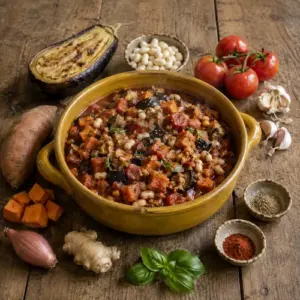
Gently Stewed Beetroots
Ingredients
- 900 g 2lb raw beetroots without stems and leaves
- 250 ml 8fl oz tinned chopped tomatoes (or lightly drained tinned whole tomatoes)
- 1 bay leaf
- ¼ teaspoon chilli powder
- 1 teaspoon cumin seeds
- 1 teaspoon ground coriander
- 1 teaspoon ground cumin
- ¼ teaspoon ground turmeric
- ¼ teaspoon salt
- 3 tablespoons vegetable oil

Instructions
- Peel the 900 g of raw beetroots and cut them into 2.5 cm (1 inch) chunks.
- Put 3 tablespoons of vegetable oil in a wide, medium-sized pan and set over high heat.
- When the oil is hot, add 1 teaspoon of cumin seeds and 1 bay leaf.
- As soon as the bay leaf darkens slightly, which takes just seconds, add 250 ml of tinned chopped tomatoes (or lightly drained tinned whole tomatoes), 1 teaspoon of ground cumin, 1 teaspoon of ground coriander, 1/4 teaspoon of ground turmeric, 1/4 teaspoon of chilli powder, the chopped beetroots, 1/4 teaspoon of salt, and 350 ml (12 fl oz) of water.
- Stir the mixture and bring it to a boil.
- Cover the pan, turn the heat to low, and simmer for 30 to 40 minutes or until the beetroots are tender.
Notes & Wine Advice
Serving Advice
Serve the gently stewed beetroots warm as a flavorful side dish or a light main course. They pair beautifully with crusty bread or a simple grain like quinoa or rice to soak up the rich tomato and spice sauce. A fresh green salad with a lemony dressing complements the earthiness of the beets. This dish also works well as part of a mezze platter alongside hummus, olives, and grilled vegetables for a vibrant, healthy meal.Variations
For a creamier texture, stir in a dollop of plain yogurt or coconut cream just before serving. You can also add other root vegetables like carrots or parsnips to the stew for added sweetness and variety. To increase the protein content, toss in cooked chickpeas or lentils during the last 10 minutes of cooking. Adjust the chili powder to taste for more or less heat. Fresh herbs such as cilantro or parsley sprinkled on top add a fresh contrast to the warm spices.Wine Advice
Pinot Noir: Pinot Noir’s light to medium body and bright acidity complement the earthy sweetness of the beetroots without overpowering the delicate spices in the stew. Gewürztraminer: Gewürztraminer’s aromatic and slightly spicy profile pairs well with the cumin and coriander, enhancing the dish’s warm flavors while balancing the tomato’s acidity. A sparkling water with a splash of lemon or a chilled herbal iced tea such as mint or chamomile will refresh the palate and complement the stew’s warm spices without alcohol. Estimated ingredient cost: USD 2.50 per serving, excluding optional sides and drinks. Local prices vary. Missing nutrition values have been estimated per serving; existing values were retained. Assumptions: Nutrition estimates are based on 900 g of raw beetroots peeled and cooked with 3 tablespoons of vegetable oil, tinned tomatoes, and spices. The serving size is one of four equal portions. No additional sides or garnishes are included. Sodium content accounts for added salt and natural sodium in canned tomatoes. Optional sides and drinks are excluded.Nutrition values
————————————————————————————————–
Beetroots and Their Unique Character
Beetroots are root vegetables known for their vibrant color and earthy flavor. They come in various varieties, including the chioggia beetroot mentioned in this recipe, which is prized for its striking red and pale yellow striped flesh and sweet taste. Beetroots are rich in nutrients such as folate, manganese, potassium, and dietary fiber, making them a healthy addition to any diet. Their natural sweetness intensifies when cooked slowly, as in this gently stewed preparation, which allows the flavors to meld with aromatic spices and tomatoes. The combination of cumin, coriander, turmeric, and chili powder adds warmth and complexity, enhancing the beets’ natural earthiness without overwhelming it. This dish showcases how simple ingredients can be transformed into a comforting and flavorful stew that highlights the beetroot’s unique qualities. The texture of beetroots changes significantly during cooking, transitioning from firm and crunchy when raw to tender and slightly creamy when stewed gently. This transformation is key to the dish’s appeal, as the slow simmering allows the beetroot chunks to soften without disintegrating, preserving their shape and bite. The natural sugars in the beets caramelize subtly during cooking, enhancing the overall sweetness and balancing the acidity of the tomatoes. The bay leaf and cumin seeds contribute aromatic oils that infuse the oil and then the beets, creating layers of flavor that complement the earthy base. The combination of spices also adds a mild warmth and complexity, making the dish comforting yet vibrant. When selecting beetroots for this recipe, choosing ones that are firm and smooth-skinned will yield the best texture and flavor. Smaller beets tend to be sweeter and more tender, while larger ones can be earthier and denser. The chioggia variety’s distinctive striped interior not only adds visual interest but also a slightly milder flavor compared to traditional red beets. The vegetable oil serves as a neutral carrier for the spices, allowing their flavors to bloom without overpowering the beetroot’s natural taste. The balance of ground cumin, coriander, turmeric, and chili powder is carefully calibrated to enhance rather than mask the beets’ character. The vibrant red color of the beets can sometimes bleed during cooking, tinting the sauce a deep pinkish-red hue that is visually appealing. This natural dyeing effect is intensified by the acidity of the tomatoes, which also helps to soften the beet fibers. The turmeric adds a subtle golden undertone to the sauce, enriching the color palette and contributing a gentle earthiness. The chili powder provides a hint of heat that lingers on the palate, rounding out the flavor profile. Together, these ingredients create a harmonious dish that showcases the beetroot’s versatility and ability to absorb and meld with complementary spices and flavors.
Practical Preparation and Cooking Tips
Preparing this gently stewed beetroot dish involves straightforward steps that emphasize preserving the vegetable’s texture and flavor. Peeling and cutting the beets into uniform 2.5 cm chunks ensures even cooking. Using a wide, medium-sized pan allows the ingredients to cook evenly and the spices to release their aromas effectively. Heating the oil before adding cumin seeds and bay leaf helps to infuse the oil with their flavors, which then permeate the entire dish. Adding the tomatoes, spices, beets, salt, and water together and bringing the mixture to a boil before simmering gently ensures the beets cook slowly and absorb the spices fully. Covering the pan during simmering retains moisture and heat, speeding up the cooking process while keeping the beets tender. Checking for tenderness after 30 minutes helps avoid overcooking, which could cause the beets to become mushy. This method is simple yet effective for developing deep, balanced flavors. To optimize the cooking process, it is helpful to prepare all ingredients before heating the oil, as the sequence of adding spices and vegetables is crucial for flavor development. Toasting the cumin seeds in hot oil until they pop releases their essential oils, which then infuse the entire dish. Adding the bay leaf early allows its subtle aroma to permeate the oil and later the stew. Stirring the mixture well after adding the tomatoes and spices ensures even distribution of flavors and prevents the spices from clumping or sticking to the pan. Maintaining a gentle simmer rather than a vigorous boil during the cooking phase is important to prevent the beets from breaking down too much and to allow the flavors to meld gradually. Using a lid traps steam and heat, which helps cook the beets evenly and keeps the sauce moist. Stirring occasionally during simmering prevents the mixture from sticking to the bottom of the pan and ensures the beets cook uniformly. Testing the beets for tenderness with a fork after 30 minutes helps determine the ideal cooking time, as overcooking can lead to a mushy texture that detracts from the dish’s appeal. After cooking, letting the stew rest off the heat for a few minutes allows the flavors to settle and intensify. This resting period also helps the sauce thicken slightly as it cools. If the sauce is too thin, removing the lid and simmering uncovered for a few minutes can reduce excess liquid. Conversely, if the stew seems dry, adding a small amount of water or vegetable broth can adjust the consistency. These adjustments ensure the final dish has a balanced texture and flavor, making it more enjoyable to serve and eat.
Serving Suggestions and Variations
This gently stewed beetroot dish is versatile and can be served in various ways to suit different meals and occasions. It works well as a warm side dish alongside grilled meats or fish, or as a vegetarian main course when paired with grains like rice, quinoa, or couscous. Adding a dollop of yogurt or a sprinkle of fresh herbs such as parsley or cilantro can brighten the dish and add contrasting textures. For a heartier meal, cooked legumes like chickpeas or lentils can be stirred in during the last minutes of cooking. The spice levels can be adjusted to taste by varying the amount of chili powder or adding fresh chili for extra heat. This dish also fits well into a mezze platter or can be served chilled as a salad, making it suitable for all seasons and occasions. Its rich color and aromatic spices make it an attractive and flavorful addition to any table. For an enhanced presentation, this stewed beetroot can be garnished with toasted nuts such as walnuts or pine nuts, which add a pleasant crunch and nutty flavor contrast to the soft, spiced beets. A drizzle of good-quality olive oil or a squeeze of fresh lemon juice just before serving can brighten the dish and add a fresh, tangy note. Serving it alongside crusty bread or flatbreads allows diners to scoop up the flavorful sauce, making it a satisfying accompaniment or light meal. To vary the dish, consider incorporating other root vegetables like carrots or parsnips cut into similar-sized chunks and cooked together with the beets. This adds complexity in texture and flavor while maintaining the stew’s hearty character. For a creamier variation, stirring in a spoonful of coconut milk or yogurt at the end of cooking can mellow the spices and add richness. Adjusting the chili powder quantity or substituting with smoked paprika can also tailor the heat and smokiness to personal preference. This beetroot stew pairs well with a variety of main courses and can be integrated into meal planning as a nutritious side or a vegetarian entrée. It complements grilled or roasted meats, especially lamb or chicken, and can be served warm or at room temperature, making it suitable for buffet-style meals or picnics. Leftovers can be repurposed as a flavorful filling for wraps or sandwiches, or blended into a vibrant dip or spread, showcasing the dish’s versatility beyond its initial presentation. Browse our stew recipes for more ideas. General kitchen guidance is available from the FDA.