
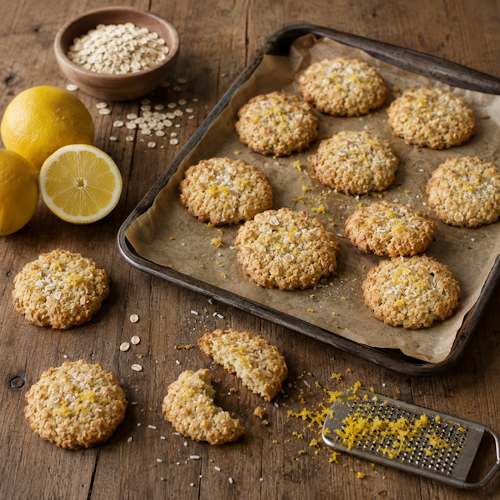
Zesty Lemon Coconut Cookies
Equipment
- Baking sheet
- Fine grater
- Large mixing bowl
- Measuring cups
- Measuring spoons
- medium mixing bowl
- Parchment paper
- Silicone spatula
- wire cooling rack
Ingredients
For the Wet Mixture
- 125 ml Olive Oil
- 4 tablespoons Unsweetened Soya Yogurt
- 1 medium Lemon juiced
- 2 medium Lemons zested
For the Dry Mixture
- 125 g Light Muscovado Sugar
- 165 g Gluten-Free All-Purpose Flour
- 75 g Gluten-Free Rolled Oats
- 40 g Millet Flakes
- 40 g Desiccated Coconut
For the Topping
- 1 tablespoon Desiccated Coconut
- 1 medium Lemon zested

Instructions
Prepare the Wet Mixture
- Pour the olive oil into a medium mixing bowl.
- Add the unsweetened soya yogurt.
- Add the lemon juice and the zest of two lemons.
- Whisk until evenly combined.
Prepare the Dry Mixture
- Place the light muscovado sugar in a large mixing bowl.
- Add the gluten-free all-purpose flour.
- Add the gluten-free rolled oats, millet flakes, and desiccated coconut.
- Stir until the dry ingredients are evenly combined.
Make the Cookie Dough
- Pour the wet mixture into the dry mixture.
- Stir with a silicone spatula until a soft dough forms.
- Divide the dough into 20 evenly sized portions.
- Roll each portion into a ball.
Shape and Bake the Cookies
- Preheat the oven to 350°F (180°C).
- Line a baking sheet with parchment paper.
- Arrange the dough balls on the prepared baking sheet with space between them.
- Press each ball down gently to form a thick cookie.
- Sprinkle the cookies with the remaining desiccated coconut.
- Finish with the zest of one lemon.
- Bake for 12 to 15 minutes until lightly golden.
Cool the Cookies
- Remove the baking sheet from the oven.
- Allow the cookies to cool on the baking sheet for 5 minutes.
- Transfer them to a wire cooling rack.
- Let the Zesty Lemon Coconut Cookies cool completely before serving.
Notes & Wine Advice
Serving Suggestions
Serve these cookies with tea, coffee, fresh fruit, or dairy-free yogurt. They also work well on a high-tea platter or packaged in a small airtight container as a homemade gift.Recipe Notes
Use certified gluten-free flour and rolled oats when preparing the cookies for someone with coeliac disease. Finely grate only the yellow part of the lemon peel because the white pith underneath has a bitter flavour.Variations
Add vanilla extract, ground ginger, poppy seeds, or finely chopped dried apricots. Orange can replace the lemon for a sweeter citrus flavour. Sunflower oil can replace the olive oil when a more neutral-tasting cookie is preferred.Storage
Store the completely cooled cookies in an airtight container at room temperature and consume them within three days. Place parchment paper between layers to prevent sticking. The cookies can also be frozen for up to one month.Wine Advice
A lightly sparkling Moscato d’Asti complements the lemon and coconut without overpowering their fresh flavours. A sweet Riesling is another suitable choice for dessert or high tea.Nutrition values
————————————————————————————————–
About Zesty Lemon Coconut Cookies
Lemon Coconut Cookies combine fresh lemon juice and zest with desiccated coconut, rolled oats, and millet flakes. Soya yogurt keeps the dough moist without dairy, while muscovado sugar provides a subtle caramel flavour. These fragrant cookies have crisp edges, a tender centre, and plenty of fresh citrus character.
The recipe contains no eggs, dairy products, or wheat-based flour. It is therefore suitable for several dietary requirements when every packaged ingredient is certified gluten-free. The cookies work well as an afternoon snack, a high-tea treat, or a homemade edible gift.
Using Fresh Lemon
Fresh lemon juice supplies acidity and a clean citrus flavour. Lemon zest contains aromatic oils that give the cookies a stronger fragrance without adding more liquid. Use a fine grater and remove only the yellow outer layer because the white pith underneath tastes bitter.
Wash and dry the lemons before grating them. Zest the fruit before squeezing because an intact lemon is easier to handle. The topping of lemon zest and coconut makes the flavour immediately recognisable and gives the baked cookies a lightly textured surface.
Oats, Millet and Coconut
Gluten-free rolled oats add structure and a slightly chewy texture. Millet flakes contribute a mild, nutty flavour and help prevent the cookies from becoming overly soft. Desiccated coconut absorbs moisture while supporting both the flavour and texture.
People with coeliac disease should use oats specifically labelled gluten-free. Standard oats may come into contact with wheat, barley, or rye during growing, transport, or processing. Check the flour, baking ingredients, yogurt, and millet flakes for suitable labelling as well.
Preparing the Cookie Dough
Mix the liquid and dry ingredients separately before combining them. This distributes the sugar, grains, coconut, and flour evenly. Stir only until a soft dough forms. If the dough feels very sticky, allow it to rest for five minutes so the oats and coconut can absorb some moisture.
Divide the dough into 20 evenly sized balls so the cookies bake at the same rate. Press each ball down gently because the dough may not spread considerably in the oven. Leave enough room between the portions for hot air to circulate.
Baking and Cooling
Bake the cookies until their edges and surfaces become lightly golden. They may still feel slightly soft when removed from the oven but will firm as they cool. Leave them on the baking sheet for several minutes before moving them to a wire rack.
Cooling on a rack prevents condensation from collecting underneath. Wait until the cookies have cooled completely before storing them. Warm cookies release steam inside a closed container, which can make their texture soft and sticky.
Serving Ideas and Variations
Serve Lemon Coconut Cookies with tea, coffee, fresh berries, or dairy-free yogurt. They also pair naturally with our Fresh Organic Carrot Juice at breakfast or brunch. For a larger selection of homemade treats, add our Spiced Carrot Lentil Muffins.
Add poppy seeds, vanilla, ground ginger, or chopped dried apricots for variation. Orange juice and zest can replace the lemon for a sweeter citrus cookie. Use sunflower oil instead of olive oil when you prefer a neutral background flavour.
Storage and Food Safety
Store the cooled cookies in an airtight container at room temperature and consume them within three days. Place parchment paper between layers if the surfaces feel slightly sticky. Freeze them in a sealed freezer-safe container for up to one month and thaw at room temperature.
Follow current FDA safe food-handling guidance when preparing ingredients and storing baked products. With fresh citrus, textured grains, and coconut, Lemon Coconut Cookies offer a bright alternative to traditional gluten-free biscuits.