
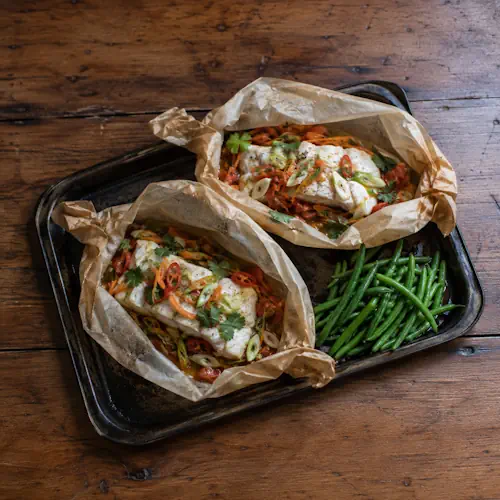
Lime Chilli Baked Halibut
Equipment
- Baking paper, nonstick
- Baking sheet
- Knife
- oven
Ingredients
- 2 carrots peeled and cut into julienne strips
- Few coriander sprigs
- 2 garlic cloves sliced
- 4 halibut fillets about 150 g each
- 2 limes juiced
- 1 red chilli deseeded and sliced
- Salt and pepper to taste
- 2 tablespoons soy sauce gluten-free
- 4 spring onions sliced
- 4 tomatoes chopped
- Steamed green beans to serve

Instructions
- Preheat the oven to 220°C (425°F), Gas Mark 7.
- Place each halibut fillet on a large piece of nonstick baking paper.
- Divide the chopped tomatoes and spring onions evenly over the four fillets.
- Divide the chilli, garlic, carrots, lime juice, gluten-free soy sauce and coriander between the fish and season with salt and pepper.
- Fold and seal the baking paper around each fillet to form four parcels.
- Transfer the parcels to a baking sheet.
- Bake for 15 minutes, or until the halibut is cooked through.
- Carefully open the parcels and serve immediately with steamed green beans.
Notes & Wine Advice
Serving Suggestions
Serve the halibut immediately after opening the parcels, spooning the tomato, lime and cooking juices over the fish. Steamed green beans make a simple accompaniment, while rice can be added for a more substantial Main Course.Recipe Notes
Seal the baking-paper parcels carefully so the steam remains trapped inside during cooking. This gentle method helps keep the Fish moist while allowing it to absorb the flavours of lime, chilli, garlic, coriander and soy sauce. The original ingredient list contains a typo reading “4 to matoes”; this has been interpreted as 4 tomatoes.Variation
For Thai-style halibut, fry 6 chopped spring onions briefly in ½ tablespoon olive oil, then add 2 tablespoons red Thai curry paste. Stir in 200 ml gluten-free fish stock and 400 ml coconut milk and simmer for 5 minutes. Add four 150 g halibut fillets, cover and cook for 6 to 8 minutes. Serve over 150 g wilted spinach and sprinkle with 2 tablespoons toasted sesame seeds. This variation contains approximately 427 calories per serving.Storage Advice
Halibut is best served immediately after cooking. Cool leftovers promptly, transfer them to an airtight container and refrigerate for up to 1 day. Reheat gently until thoroughly hot, as excessive reheating can dry out the fish.Wine Advice
A fresh Sauvignon Blanc pairs particularly well with the lime, coriander and chilli. A crisp Pinot Grigio is another suitable choice for the delicate halibut and fresh vegetables.Nutrition values
————————————————————————————————–
About Lime Chilli Baked Halibut
Lime Chilli Baked Halibut combines tender white fish with tomatoes, spring onions, carrots, garlic and chilli in individual baking-paper parcels. Lime juice and gluten-free soy sauce provide the seasoning, while fresh coriander adds an aromatic finish. Cooking everything together in the Oven traps steam around the fish and produces a light sauce from the vegetable and citrus juices.
Why Bake Halibut in Parcels?
Halibut is a lean, firm white fish that can become dry when exposed to intense heat for too long. Baking it inside a sealed parcel creates a moist cooking environment. Steam released by the vegetables and lime remains around the fillet rather than escaping into the oven.
This method also has the advantage of keeping each serving together. Every parcel contains one halibut fillet and its share of vegetables, herbs and seasoning.
Preparing the Vegetables
Tomatoes and spring onions are divided between the four halibut fillets. The carrots are cut into thin julienne strips so they can soften during the relatively short cooking time.
Sliced garlic and red chilli provide stronger flavours, while fresh coriander adds a lighter herbal character. Deseeding the chilli reduces some of its heat without removing its flavour completely.
Lime and Soy Sauce
Fresh lime juice provides acidity that works particularly well with Seafood. Gluten-free soy sauce contributes saltiness and savoury depth, so additional salt should be added carefully.
As the parcels cook, the lime juice, soy sauce and juices released by the tomatoes combine naturally around the halibut. There is therefore no need to prepare a separate sauce.
Sealing the Parcels
Use pieces of nonstick baking paper large enough to fold comfortably around the fish and vegetables. Bring the edges together and seal them securely so steam cannot escape too quickly.
Place the completed parcels on a baking sheet before transferring them to the oven. Be careful when opening them after cooking because hot steam will escape from inside.
Cooking the Halibut
The parcels bake at 220°C for approximately 15 minutes. The exact cooking time can vary according to the thickness of the halibut fillets.
The fish should be opaque and separate easily when tested. Avoid extending the cooking time unnecessarily, as halibut has relatively little fat and can lose moisture when overcooked.
Serving the Dish
Steamed green beans are suggested as the accompaniment and keep the meal light. Rice or additional Vegetables can be added when a larger meal is wanted.
The parcels can be opened at the table or just before plating. Spoon the aromatic liquid collected inside each parcel over the fish rather than discarding it.
Thai-Style Variation
The original recipe also includes a richer Thai-style variation. Halibut is gently cooked in a sauce made with red Thai curry paste, gluten-free fish stock and coconut milk, then served over wilted spinach.
Toasted sesame seeds finish that version and provide additional texture. Because sesame is included, the dietary and allergen classifications of the variation differ from those of the main recipe.
Storing Leftovers
Freshly cooked halibut has the best texture when eaten immediately. If leftovers remain, cool them promptly and store them covered in the refrigerator.
Reheat the fish gently and only until thoroughly hot. Repeated or prolonged heating can make the halibut noticeably firmer and drier.
Food Safety
Keep raw halibut refrigerated until preparation and prevent contact between raw fish and ingredients that will be eaten without further cooking. Wash hands, knives and preparation surfaces thoroughly after handling raw seafood.
For current guidance about selecting, storing and preparing seafood safely, consult the U.S. Food and Drug Administration food-safety information.
Lime Chilli Baked Halibut is a light Fish dinner that relies on a simple parcel-cooking technique for both flavour and moisture. Fresh vegetables, citrus, chilli and coriander give the mild halibut plenty of character without hiding the flavour of the fish itself.