
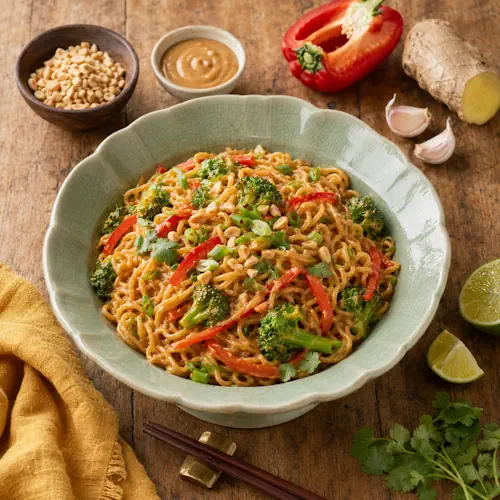
Spicy Thai Peanut Noodles
Equipment
- Large skillet
- Measuring cups
- Measuring spoons
- medium saucepan
- microwave-safe bowl
- Tongs
- Wooden spoon
Ingredients
- 9 ounces Ramen Noodles seasoning packets discarded
- 24 ounces Frozen Broccoli Florets
- 3 tablespoons Sesame Oil
- 3 cubes Garlic frozen and crushed
- 3 cubes Ginger frozen and crushed
- ¼ cup Soy Sauce
- ⅓ cup Creamy Peanut Butter
- ¼ cup Thai Sweet Chili Sauce
- 1 medium Lime juiced
- ¼ cup Water
- 1 medium Red Bell Pepper cored seeded and thinly sliced
- 4 medium Green Onions trimmed and chopped
- ¼ cup Fresh Cilantro chopped
- ½ cup Roasted Peanuts chopped
Instructions
- Bring 7 cups of water to a boil in a medium saucepan over high heat.
- Add the ramen noodles and cook for 3 minutes or according to the package directions.
- Drain the noodles thoroughly and set them aside.
- Cook the frozen broccoli in the microwave according to the package directions.
- Heat the sesame oil in a large skillet over medium-low heat.
- Add the garlic and ginger and sauté for 1 minute without allowing them to brown.
- Stir in the soy sauce, peanut butter, Thai sweet chili sauce, lime juice, and water.
- Cook the peanut sauce for approximately 2 minutes while stirring until smooth and heated through.
- Add the bell pepper, green onions, cilantro, broccoli, and drained noodles.
- Toss until the noodles and vegetables are evenly coated with the sauce.
- Divide the noodles among four bowls.
- Garnish with the chopped peanuts and serve immediately.
Notes & Wine Advice
Serving Suggestions
Serve these noodles immediately with lime wedges, extra cilantro, sliced green onions, and chopped peanuts. A crisp cucumber salad or lightly dressed cabbage salad provides a refreshing contrast. Browse our Vegetarian Recipes for more meat-free dinner ideas.Recipe Notes
Use ramen noodles without the seasoning packets because the homemade peanut sauce supplies all the seasoning. Keep the heat low when cooking the garlic and ginger to prevent them from burning. If the sauce becomes too thick, stir in warm water one tablespoon at a time.Variations
Add ¼ teaspoon red pepper flakes or extra Thai sweet chili sauce for more heat. Replace the broccoli with sugar snap peas, carrots, mushrooms, or green beans. Firm tofu can be added for extra protein. Browse our Spices and Seasoning Recipes for more ways to adjust the flavour.Wine Advice
An off-dry Riesling softens the chilli heat and complements the lime and peanut sauce. A fragrant Gewürztraminer is another suitable choice for the sweet, spicy, and savoury flavours.Nutrition values
————————————————————————————————–
About Spicy Thai Peanut Noodles
Spicy Thai Peanut Noodles combine tender ramen, colourful vegetables, fresh herbs, and a creamy sauce in one satisfying vegetarian meal. Peanut butter gives the sauce body, while soy sauce provides saltiness and savoury depth. Thai sweet chilli sauce adds gentle heat and sweetness, and fresh lime juice supplies the acidity needed for balance. Garlic, ginger, cilantro, and green onions complete these Thai peanut noodles without requiring complicated ingredients or lengthy preparation.
This recipe serves four and can be prepared in approximately 30 minutes. It is a practical choice for busy evenings when you want something more interesting than plain noodles. Frozen broccoli keeps preparation simple, while red bell pepper adds colour and a lightly crisp texture. For more convenient meat-free meals, explore our Vegetarian Recipes.
Why These Thai Peanut Noodles Work
Thai cooking is known for balancing sweet, sour, salty, and spicy flavours. This dish follows the same principle in an accessible way. Peanut butter supplies richness, soy sauce contributes salt and umami, sweet chilli sauce provides sweetness and mild heat, and lime juice adds a clean acidic finish. These elements make the Thai peanut noodles flavourful without allowing one ingredient to dominate.
Texture is equally important. The ramen becomes tender and absorbs the creamy sauce, while broccoli and bell pepper give each serving more substance. Chopped peanuts provide a crunchy finish, and fresh cilantro prevents the sauce from tasting too heavy. Keeping the vegetables slightly firm produces a more enjoyable contrast than cooking them until completely soft.
Building a Smooth Peanut Sauce
Begin the sauce over medium-low heat because garlic and ginger can burn quickly. Sauté them gently for approximately one minute. Once they become fragrant, add the soy sauce, peanut butter, sweet chilli sauce, lime juice, and water. Stir continuously until the peanut butter melts and the ingredients form a smooth coating for the spicy Thai peanut noodles.
The sauce should be creamy enough to cling to the ramen without becoming sticky or dry. If it becomes too thick, add warm water one tablespoon at a time. Taste the sauce before adding the noodles. Extra lime juice will make it brighter, while red pepper flakes or additional chilli sauce will increase the heat. Visit our Spices and Seasoning Recipes for more flavour ideas.
Vegetable and Protein Variations
Thai peanut noodles are flexible enough to accommodate many vegetables. Sugar snap peas, mushrooms, shredded carrots, baby corn, or green beans can replace part or all of the broccoli. Try to combine vegetables with different colours and textures while keeping the total quantity similar. This prevents the sauce-to-noodle ratio from changing too much.
Firm tofu is an excellent addition when you want more protein. Fry or air-fry the tofu separately before tossing it through the finished dish so it retains its texture. Rice noodles can replace the ramen for a lighter variation, while udon noodles create a thicker and chewier meal. Always check the package directions because cooking times vary between noodle types.
Serving, Storage and Reheating
Serve the vegetarian peanut noodles immediately with chopped peanuts, fresh cilantro, sliced green onions, and lime wedges. A simple cucumber or cabbage salad makes a refreshing side dish. Keep extra chilli sauce available so everyone can adjust the heat at the table without making the entire recipe excessively spicy.
Store leftovers in a covered container in the refrigerator for up to three days. The sauce will thicken as it cools because the noodles and peanut butter absorb moisture. Add a splash of water before reheating the noodles gently in a skillet or microwave. Stir several times to loosen the sauce and distribute the heat evenly.
For the best texture, store extra peanuts and fresh cilantro separately until serving. Spicy Thai Peanut Noodles taste best directly after preparation, but careful reheating makes leftovers suitable for lunch the following day. Follow current FDA safe food-handling guidance when cooling, refrigerating, and reheating prepared noodles and vegetables.