
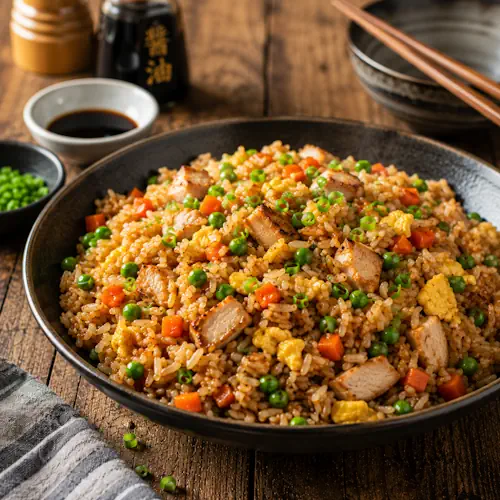
Teppanyaki Chicken Fried Rice
Equipment
- Large skillet or wok
- Small mixing bowl
- spatula
Ingredients
- ½ teaspoon black pepper
- 1 tablespoon butter
- ½ cup carrots diced
- 2 cups cooked and cooled white rice preferably day-old
- 2 eggs beaten
- ½ teaspoon garlic powder
- 2 green onions sliced
- ½ cup grilled chicken diced (optional)
- ½ cup onion finely chopped
- ½ cup peas
- ½ teaspoon salt
- 1 teaspoon sesame oil
- 2 tablespoons soy sauce
- 2 tablespoons vegetable oil

Instructions
- Heat 1 tablespoon of vegetable oil in a large skillet or wok over medium-high heat.
- Add the 2 beaten eggs and scramble until just cooked.
- Transfer the eggs to a plate.
- Add the remaining 1 tablespoon of vegetable oil and 1 tablespoon of butter to the pan.
- Cook the ½ cup finely chopped onion, ½ cup diced carrots, and ½ cup peas for about 3 minutes until slightly tender.
- Add the 2 cups cooked and cooled white rice, preferably day-old, and break up any clumps while stir-frying.
- Cook for 2 minutes.
- Stir in the ½ cup diced grilled chicken if using.
- Return the scrambled eggs to the pan.
- Add 2 tablespoons soy sauce, 1 teaspoon sesame oil, ½ teaspoon garlic powder, ½ teaspoon salt, and ½ teaspoon black pepper.
- Toss everything together until evenly coated.
- Cook for another 2 to 3 minutes until thoroughly heated.
- Sprinkle with the 2 sliced green onions.
- Serve immediately.
Notes & Wine Advice
Serving Advice
Serve Teppanyaki Chicken Fried Rice hot and fresh from the pan for the best texture and flavor. It pairs wonderfully with grilled or steamed vegetables, a crisp green salad, or a side of Japanese pickles. For a more substantial meal, add a protein like grilled shrimp or tofu. Complement the dish with dipping sauces such as yum yum sauce or Japanese ginger sauce to enhance the authentic teppanyaki experience. This versatile dish is perfect for busy weeknights or casual weekend dinners.Variations
To customize this fried rice, try adding different proteins such as shrimp, steak, or tofu instead of or in addition to the grilled chicken. You can also increase the vegetable variety by including bell peppers, bean sprouts, or mushrooms. For a vegetarian version, omit the chicken and use vegetable broth or tamari instead of soy sauce if gluten-free. Adjust the seasoning by adding a splash of Worcestershire sauce or a pinch of chili flakes for heat. Using jasmine or brown rice can also change the texture and flavor profile to suit your preference.Wine Advice
Sauvignon Blanc: A chilled Sauvignon Blanc pairs beautifully with the savory flavors of the fried rice without overpowering the dish. Its crisp acidity complements the soy sauce and sesame oil, refreshing the palate between bites. Serve with a chilled green tea or sparkling water with a slice of lemon to refresh the palate and complement the savory flavors without alcohol. Estimated ingredient cost: USD 3.50 per serving, excluding optional sides and drinks. Local prices vary. Missing nutrition values have been estimated per serving; existing values were retained. Assumptions: Nutrition estimates are based on four servings using the specified ingredient amounts, assuming standard commercial products and edible portions. The sodium value includes salt and soy sauce contributions. Cholesterol is calculated from eggs and butter. Fiber and sugar reflect the vegetable and rice content. Calcium is estimated from butter and eggs. Optional sides and drinks are excluded.Nutrition values
————————————————————————————————–
Ingredients and Flavor Profile
Teppanyaki Chicken Fried Rice combines simple, fresh ingredients to create a dish rich in texture and flavor. The use of day-old cooked white rice is essential because it has a drier texture that prevents clumping and allows each grain to be evenly coated with seasonings and oils. The diced carrots, peas, and onions add a subtle sweetness and crunch, balancing the savory notes from the soy sauce and garlic powder. Butter and sesame oil contribute a rich, nutty aroma and mouthfeel, while the scrambled eggs provide a fluffy, protein-rich component that enhances the dish's heartiness. Optional grilled chicken adds a smoky, meaty flavor, making the dish more substantial. The combination of these ingredients results in a harmonious blend typical of Japanese teppanyaki cuisine, known for its balance of umami, sweetness, and texture. The diced carrots and peas not only add color but also contribute a pleasant textural contrast to the soft rice and tender chicken. Carrots provide a slight natural sweetness and a firm bite, while peas offer a pop of juiciness that enlivens each mouthful. The finely chopped onions release their mild pungency when sautéed, creating a savory base that complements the soy sauce's saltiness. Butter enhances the overall richness, coating the ingredients with a smooth mouthfeel, while the sesame oil imparts a distinctive toasted aroma that is characteristic of many Asian dishes. Together, these ingredients create a layered flavor profile that is both comforting and satisfying. The scrambled eggs play a crucial role beyond protein content; their fluffy texture adds lightness and helps bind the rice and vegetables together. Incorporating the optional grilled chicken introduces a smoky depth and additional chewiness, making the dish more filling and suitable as a standalone meal. The balance of umami from soy sauce, the subtle heat from black pepper, and the aromatic garlic powder ensures that each bite is flavorful without overwhelming the palate. This careful combination of ingredients reflects the essence of teppanyaki cooking, which emphasizes harmony between taste, texture, and aroma. Using day-old rice is a fundamental technique that affects the dish's success. Freshly cooked rice contains excess moisture, which can cause clumping and a soggy texture when stir-fried. Allowing the rice to cool and dry overnight firms up the grains, making them easier to separate and toast evenly in the pan. This results in a light, fluffy fried rice with distinct grains that absorb the seasonings well. The choice of white rice provides a neutral base that highlights the other ingredients' flavors, while the cooking fats and sauces create a glossy finish that enhances visual appeal and taste.
Practical Preparation Tips
Preparing Teppanyaki Chicken Fried Rice is straightforward but benefits from a few key techniques to achieve authentic flavor and texture. Using day-old rice is crucial; freshly cooked rice tends to be too moist and sticky, which can result in a mushy dish. Cooking over medium-high to high heat ensures that the ingredients sear quickly, developing a slight toasted flavor characteristic of teppanyaki cooking. Stirring constantly prevents burning and helps evenly distribute heat and seasonings. Scrambling the eggs separately before adding them back to the pan keeps them light and fluffy rather than overcooked. Adding the soy sauce and sesame oil towards the end of cooking allows the flavors to coat the rice without becoming bitter or overpowering. Using a large skillet or wok provides enough surface area for even cooking and easy stirring. To maximize flavor and texture, it is important to prepare all ingredients before starting to cook, as stir-frying is a fast process. Dice the carrots and chicken uniformly to ensure even cooking, and finely chop the onions to release their sweetness quickly. Beat the eggs thoroughly to achieve a consistent scramble. Having all components ready allows for smooth transitions between steps and prevents overcooking or burning. Using a large skillet or wok with high sides helps contain the ingredients during vigorous stirring and provides ample surface area for heat distribution, which is essential for achieving the characteristic slight crispness on the rice. Maintaining medium-high to high heat throughout cooking is key to developing the signature teppanyaki flavor. The initial scramble of eggs should be done quickly to keep them tender and moist. When stir-frying the vegetables, a brief cooking time preserves their crunch and bright colors. Adding the rice in batches and breaking up clumps with a spatula ensures even heating and prevents steaming. Incorporating the grilled chicken towards the end allows it to warm through without drying out. Finally, seasoning with soy sauce, sesame oil, and spices at the end prevents bitterness and preserves the aromatic qualities of the oils. Constant stirring and tossing during cooking prevent ingredients from sticking and burning, while promoting even coating with sauces and oils. Using a spatula or wooden spoon, gently fold the rice and vegetables rather than mashing them to maintain texture. When returning the scrambled eggs to the pan, fold them in carefully to distribute them evenly without breaking them down too much. Adjust seasoning gradually, tasting as you go, to achieve a balanced flavor. This workflow ensures a well-integrated dish with distinct textures and harmonious seasoning.
Serving Suggestions and Variations
Teppanyaki Chicken Fried Rice is versatile and can be served as a main course or a side dish. It pairs well with a variety of proteins such as grilled shrimp, steak, or tofu, making it suitable for different dietary preferences. Serving it alongside a crisp green salad or steamed vegetables adds freshness and balance to the meal. For an authentic restaurant-style experience, offer dipping sauces like yum yum sauce or Japanese ginger sauce. Leftovers can be stored in an airtight container in the refrigerator for up to three days and reheated in a hot skillet with a splash of oil to restore texture. This dish also freezes well for up to three months, making it convenient for meal prep. Variations include adding different vegetables, adjusting seasonings, or substituting proteins to suit your taste and dietary needs. Teppanyaki Chicken Fried Rice can be customized to suit various meal occasions. For a quick weeknight dinner, serve it as a complete meal with a side of steamed broccoli or snap peas to add freshness and fiber. For a more elaborate spread, pair it with miso soup and pickled vegetables to create a balanced Japanese-inspired menu. Garnishing with additional sliced green onions or toasted sesame seeds adds visual appeal and a subtle crunch. Offering lime wedges on the side can introduce a bright, acidic contrast that enhances the dish's flavors. This fried rice recipe is highly adaptable to dietary preferences and ingredient availability. For a vegetarian version, omit the chicken and increase the quantity of vegetables or add tofu cubes for protein. To introduce more heat, sprinkle in chili flakes or a dash of sriracha sauce during the final seasoning step. Experimenting with different vegetables such as bell peppers, corn, or mushrooms can add variety and seasonal freshness. Adjusting the soy sauce quantity or substituting with tamari can accommodate low-sodium or gluten-free diets without compromising taste. For meal planning and leftovers, this dish reheats well in a hot skillet with a small amount of oil to revive the rice's texture and prevent clumping. It can be portioned into individual containers for convenient lunches or quick dinners. Adding a fresh garnish like chopped green onions or a drizzle of sesame oil after reheating restores aroma and flavor. Freezing is also an option; thaw thoroughly before reheating to ensure even warming. This flexibility makes Teppanyaki Chicken Fried Rice a practical and delicious choice for busy households. Browse our dinner recipes for more ideas. General kitchen guidance is available from the FDA.