
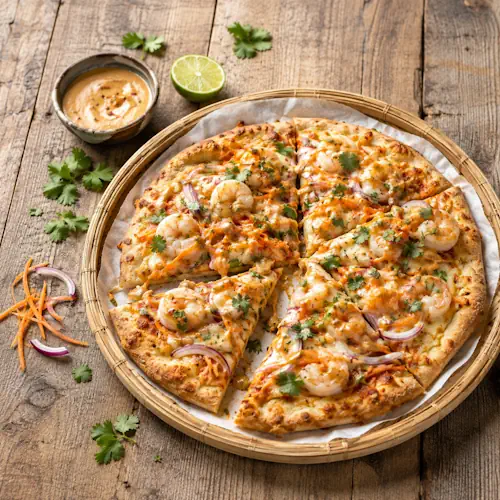
Thai Peanut Shrimp Pizza
Equipment
- Baking sheet
- Knife
- Mixing bowl
- Pastry brush
- Pizza Cutter
Ingredients
For the Pizza Base
- 1 Gluten-Free Pizza Crust
- 1 tablespoon Olive Oil
For the Toppings
- 200 g Cooked Shrimp peeled and deveined
- 100 g Mozzarella Cheese shredded
- 1/2 Red Onion thinly sliced
- 2 tablespoons Gluten-Free Thai Peanut Sauce
- 1 tablespoon Tamari
- 1 Carrot shredded
- 2 tablespoons Fresh Cilantro chopped
- 1/4 teaspoon Red Chilli Flakes

Instructions
For the Pizza Base
- Preheat the oven to 425°F (220°C).
- Place the gluten-free pizza crust on a baking sheet.
- Brush the surface of the crust evenly with olive oil.
For the Toppings
- Combine the shrimp, Thai peanut sauce, and tamari in a mixing bowl.
- Toss until the shrimp are evenly coated.
- Spread the shrimp mixture over the pizza crust.
- Top evenly with the mozzarella, red onion, and shredded carrot.
- Sprinkle with the red chilli flakes.
- Bake for 12 to 15 minutes, until the crust is golden and the cheese has melted.
- Remove the pizza from the oven and garnish with fresh cilantro.
- Slice into 4 equal portions and serve hot.
Notes & Wine Advice
Serving Suggestions
Serve the pizza with a Thai-style mango salad, cucumber salad, or lightly dressed shredded cabbage. Extra gluten-free peanut sauce can be offered on the side for dipping.Recipe Notes
Use cooked shrimp that have been thoroughly drained and patted dry. Excess moisture can make the pizza crust soggy. Check that the crust, peanut sauce, and tamari are all certified gluten-free when preparing the pizza for someone with coeliac disease.Variations
Add sliced bell pepper, bean sprouts, spring onion, or chopped peanuts. Reduce the chilli flakes for a milder pizza or add fresh chilli for more heat. Cooked chicken can replace the shrimp when a seafood-free version is preferred.Storage
Store cooled leftover pizza in an airtight container in the refrigerator for up to two days. Reheat in the oven until thoroughly hot and the crust is crisp. Avoid reheating the pizza more than once.Wine Advice
A crisp Riesling balances the chilli heat and complements the sweet, nutty sauce. A fresh Sauvignon Blanc is another suitable choice with the shrimp and cilantro.Nutrition values
————————————————————————————————–
Thai peanut shrimp pizza combines the comfort of homemade pizza with the sweet, savoury and gently spicy flavours associated with Thai cooking. Juicy shrimp, creamy peanut sauce, melted mozzarella, crisp red onion and colourful carrot create a topping that is rich without feeling too heavy. Fresh cilantro and chilli flakes provide a bright finishing touch, making every slice aromatic, colourful and full of contrast.
A Colourful Fusion Pizza
This recipe is an easy way to turn a familiar family favourite into something more adventurous. The peanut sauce replaces traditional tomato sauce and gives the pizza a creamy, nutty foundation. Tamari seasons the shrimp with extra savoury depth, while mozzarella softens the stronger flavours and helps bind the toppings together.
Red onion brings a mild sharpness, and shredded carrot adds freshness, sweetness and a little texture. The cilantro should be added after baking so that its flavour stays bright. Chilli flakes are optional, but even a small amount provides a pleasant warmth that balances the sweet peanut sauce.
For more inspiration, explore the collection of pizza recipes, discover other satisfying main courses, or browse easy dishes prepared with the help of the oven.
How to Prevent a Soggy Pizza
Cooked shrimp can retain a surprising amount of moisture, so pat them dry thoroughly before mixing them with the tamari and peanut sauce. Use only enough sauce to coat the shrimp lightly. Too much liquid may prevent the crust from becoming crisp, particularly when using a thin gluten-free pizza base.
Preheating the oven fully is equally important. A pizza stone can produce a firmer base, but a sturdy baking sheet also works well. If the gluten-free crust is especially soft, bake it for three to five minutes before adding the toppings. This brief pre-bake gives the base more structure and helps it carry the shrimp, cheese and vegetables.
Because the shrimp are already cooked, avoid baking the pizza longer than necessary. Remove it once the cheese has melted and the crust is golden. Overcooking can make the shrimp dry or rubbery. Follow safe storage and handling practices for seafood as described in the FDA safe food handling guidance.
Serving and Variation Ideas
This Thai-inspired seafood pizza works well for a relaxed family dinner, weekend lunch or colourful party table. Serve it with a fresh cucumber salad, crunchy cabbage slaw or Thai-style mango salad. A squeeze of lime over the finished pizza adds acidity and makes the peanut flavour feel lighter.
For extra vegetables, add thinly sliced bell pepper, courgette or mushrooms. Bean sprouts can be scattered over the pizza after baking for crunch. To increase the heat, add sliced fresh chilli or a drizzle of sriracha. Chopped roasted peanuts also make an excellent garnish, although they should be omitted when serving anyone with a nut allergy.
Dietary Notes and Storage
To keep this recipe gluten-free, check the labels on the pizza crust, peanut sauce and tamari. Ordinary soy sauce commonly contains wheat and should not be substituted unless it is specifically labelled gluten-free. The recipe is naturally suitable for pescatarians and provides plenty of protein from the shrimp and cheese.
Store leftover Thai peanut shrimp pizza in an airtight container in the refrigerator for up to two days. Reheat individual slices in a hot oven or dry frying pan to restore the crisp base. Microwave reheating is convenient, but it will create a softer crust. For the best flavour and texture, add fresh cilantro only after reheating.