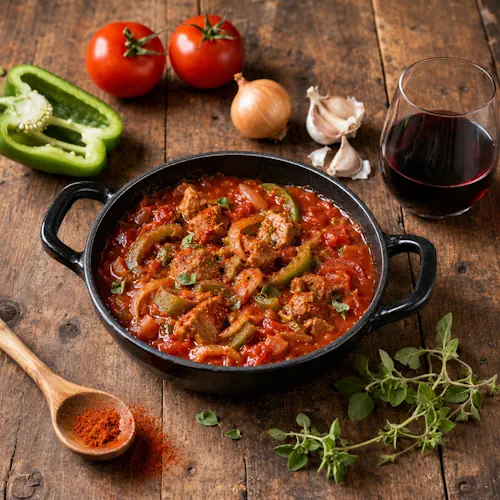
Heat the vegetable oil in a 10-inch skillet over medium heat.
Cook the beef in the hot oil for about 10 minutes, stirring occasionally until evenly browned.
Drain and set aside.
Spray a 6-quart slow cooker with cooking spray.
Place the sliced onion and cooked beef into the slow cooker.
In a medium bowl, mix together the pepper, caraway seed, salt, paprika, Worcestershire sauce, chopped garlic, tomato paste, and beef broth.
Pour this mixture over the onions and beef in the slow cooker.
Stir to combine.
Cover the slow cooker and cook on low for 8 to 10 hours or on high for 4 to 5 hours, until the beef is tender.
In a small bowl, whisk together the flour and cold water until smooth.
Gradually stir this mixture into the beef mixture in the slow cooker.
Add the bell pepper strips.
Increase the heat to high and cook for an additional 30 minutes, stirring occasionally, until the sauce thickens.
Serve the creamy beef goulash over hot noodles.
Notes & Wine Advice
Wine Advice:
This rich and creamy beef goulash pairs well with a full-bodied red wine such as a Cabernet Sauvignon or a Malbec. The bold flavors of the beef and the spices are complemented by the robust characteristics of these wines. For a non-alcoholic option, consider serving with a sparkling water infused with a splash of cranberry juice.
In the slow cooker, combine the chopped onion and round steak cubes.
In a bowl, mix together the black pepper, garlic salt, paprika, and all-purpose flour.
Pour this mixture over the onions and steak in the slow cooker, and toss to coat the meat evenly.
Add the bay leaf and diced tomatoes.
Cover the slow cooker and cook on low for 8 to 10 hours, or until the steak is tender.
Remove the bay leaf from the goulash and stir in the sour cream.
Switch the slow cooker to high and cook for an additional 15 minutes.
While the goulash is finishing, cook the elbow macaroni according to the package instructions.
Serve the slow cooker round steak goulash hot over the cooked elbow macaroni.
Notes & Wine Advice
Wine Advice:
This hearty goulash pairs well with a medium-bodied red wine such as a Zinfandel or a Shiraz. The bold flavors of the meat and spices are complemented by the fruity and peppery characteristics of these wines. For a non-alcoholic option, consider serving with a sparkling water infused with a splash of lemon or lime juice.
Place the cubed beef roast in the slow cooker and cover it with diced onion.
In a medium bowl, mix together the dry mustard, sweet paprika, salt, brown sugar, Worcestershire sauce, and ketchup.
Add 1 cup of water to the mustard mixture and pour it over the onions and beef in the slow cooker.
Cover the slow cooker and cook on low for 9 to 10 hours or until the meat is tender.
About 30 minutes before serving, mix approximately ¼ cup of water with the all-purpose flour to make a paste.
Stir this paste into the goulash in the slow cooker.
Increase the heat to high and cook for an additional 10 to 15 minutes, or until the sauce thickens.
Serve the slow cooker Hungarian beef goulash hot over rice or spaetzle.
Notes & Wine Advice
Wine Advice:
This hearty dish pairs well with a full-bodied red wine such as a Cabernet Sauvignon or a Merlot. The rich flavors of the beef and the savory sauce are complemented by the bold and robust characteristics of these wines. If you prefer a white wine, opt for a dry Riesling or a Chardonnay with some oak aging to stand up to the richness of the goulash.
In a bowl, mix together the dashi stock, soy sauce, mirin, and white sugar until well combined.
Bring a pot of water to a boil and cook the shirataki noodles for 2 minutes.
Drain and rinse with cold water, then toss with a bit of oil to prevent sticking.
In a pan, heat 1 tablespoon of canola oil over medium heat.
Add the sliced chicken and cook for about 10 minutes or until tender and cooked through.
Once the chicken is cooked, add the remaining tablespoon of canola oil to the pan.
Add the sliced onion, celery, carrots, green onions, and mushrooms.
Stir-fry for about 5 minutes until the vegetables are slightly softened.
Add the tofu cubes to the pan, followed by the cooked shirataki noodles and the dashi mixture.
Stir well to combine all ingredients.
Allow the mixture to simmer for a few minutes until heated through.
Serve the Japanese-style chicken and vegetable goulash in a big bowl and enjoy with your family!
Notes & Wine Advice
Wine Advice:
This dish pairs well with a light-bodied and slightly sweet white wine such as a Riesling or a Gewürztraminer. These wines complement the umami flavors of the dashi stock and soy sauce while balancing the slight sweetness from the mirin. Alternatively, for a non-alcoholic option, consider serving with a chilled green tea or jasmine tea.
In a large skillet, heat olive oil over medium heat.
Add onions, garlic, and pork cubes.
Sauté for about 5 minutes until pork is lightly browned.
Stir in ground ginger, paprika, dill, salt, and black pepper.
Pour in 1 ½ cups of beef broth, reserving the remaining ½ cup for later.
Reduce heat to low, cover, and simmer for 20 minutes.
In a small bowl, whisk together the cornstarch and the remaining ½ cup of beef broth until smooth.
Stir the cornstarch mixture into the skillet, mixing well to thicken the sauce.
Add sliced carrots, bell peppers, and mushrooms to the skillet.
Cover and continue to simmer for another 10 minutes until vegetables are tender.
Slowly stir in coconut cream and cook until warmed through.
Serve the ginger pork and vegetable goulash over cooked noodles or rice.
Notes & Wine Advice
Wine Advice:
This dish pairs well with a medium-bodied red wine such as Merlot or Syrah. The fruity and spicy notes of these wines complement the ginger and paprika flavors in the dish. If you prefer white wine, a slightly sweet Riesling or Gewürztraminer would also work nicely to balance the richness of the coconut cream.
Reserve 2 tablespoons of beef broth and pour the remaining broth into the pork mixture.
Reduce heat, cover, and simmer for 20 minutes over low heat.
In a small bowl, whisk together cornstarch and the reserved beef broth.
Pour this mixture into the skillet and stir well to thicken the sauce.
Slowly add heavy cream and cook until warmed through.
Serve the creamy pork goulash over cooked noodles.
Notes & Wine Advice
Wine Advice:
Pair this Creamy Pork and Vegetable Goulash with a crisp and refreshing white wine such as Chardonnay or Pinot Grigio. The acidity of these wines will balance the richness of the creamy sauce, creating a harmonious pairing. If you prefer a non-alcoholic option, consider serving with sparkling water infused with a splash of lemon for a refreshing contrast.
In a large pot or Dutch oven, heat vegetable oil over medium heat.
Brown the chopped onion and seasoned beef in the oil, ensuring all sides are browned.
Cover the beef with water and simmer over low heat for almost 4 hours or until the meat is tender.
Make sure to keep adding water as needed if it reduces below the level of the ingredients.
About one hour before serving, add the chili and chopped potatoes to the pot.
Continue to simmer until the potatoes are cooked through.
Serve the hot goulash over noodles or enjoy it with bread.
Notes & Wine Advice
Wine Advice:
Pair this Hearty Beef and Potato Goulash with a robust red wine such as Cabernet Sauvignon or Malbec. The bold flavors of the wine will complement the richness of the stew and enhance the overall dining experience. If you prefer a non-alcoholic option, consider serving with a hearty vegetable broth or sparkling apple cider for a comforting accompaniment.
In a large skillet, cook the ground beef over medium heat until browned.
Use a slotted spoon to remove any excess fat and discard it.
Set aside the browned beef.
In the same skillet, heat olive oil over medium heat.
Add paprika, garlic salt, dried basil, sliced onion, sliced squash, red and green bell peppers, and mushrooms.
Cook for about 5 minutes, stirring occasionally.
Reduce the heat to medium-low and add the tomatoes with their liquid and the browned beef to the skillet.
Simmer for approximately 20 minutes, stirring occasionally.
Notes & Wine Advice
Wine Advice:
Pair this Mushroom and Beef Goulash with a medium-bodied red wine such as Cabernet Sauvignon or Syrah. The bold flavors of the wine will complement the richness of the goulash, creating a satisfying dining experience. For a non-alcoholic option, consider serving with sparkling water infused with a slice of lime for a refreshing contrast.
Vegetable Mycoprotein Goulash combines meat-free mycoprotein pieces with tomatoes, green pepper, onion, paprika, oregano, garlic, and red wine. This warming one-pan meal provides a lighter vegetarian variation on Hungarian goulash.
Heat the olive oil in a large skillet over medium heat.
Add the sliced onion.
Cook for 5 minutes, stirring occasionally, until softened.
Add the mycoprotein pieces and sliced green peppers.
Cook for another 5 minutes until the peppers begin to soften.
Add the chopped garlic and paprika.
Stir for 1 minute until fragrant.
For the Goulash Sauce
Add the chopped tomatoes and their reserved juice to the skillet.
Stir in the tomato purée and dried oregano.
Pour in the dry red wine.
Stir until all the ingredients are evenly combined.
Increase the heat and bring the mixture to a boil.
For Simmering and Finishing
Reduce the heat to low.
Simmer uncovered for 25 minutes, stirring occasionally, until the sauce thickens.
Stir in the granulated sugar.
Season with kosher salt and black pepper.
Taste and adjust the seasoning if necessary.
Divide the goulash among four bowls.
Serve hot.
Notes & Wine Advice
Serving Suggestions
Serve the goulash with brown rice, mashed potatoes, noodles, or crusty bread. A spoonful of sour cream or plant-based yogurt adds creaminess, while chopped parsley provides a fresh finish.
Recipe Notes
Check the mycoprotein packaging carefully because some products contain wheat, gluten, egg, or milk. Use a specifically labelled gluten-free product when required. Simmer the goulash uncovered so the tomato and wine sauce can reduce and thicken.
Variations
Add mushrooms, carrots, courgette, potatoes, or smoked paprika. Replace the mycoprotein with cooked lentils, chickpeas, tofu, or another meat substitute. Vegetable stock can replace the red wine when preparing an alcohol-free version.
Storage
Refrigerate cooled goulash in an airtight container for up to three days. Reheat it gently in a skillet or saucepan until thoroughly hot. The goulash can also be frozen for up to two months when the chosen mycoprotein product is suitable for freezing.
Wine Advice
A medium-bodied Merlot complements the tomato, paprika, and red wine sauce. A light Pinot Noir is another suitable choice when you prefer a fresher red wine.
Vegetable Mycoprotein Goulash combines meat-free pieces with green peppers, onions, tomatoes, paprika, oregano, garlic, and red wine. The ingredients simmer together in one skillet until the vegetables are tender and the tomato sauce becomes rich and thick. It provides a lighter vegetarian interpretation of traditional Hungarian comfort food.
This version makes four portions and is suitable for a family dinner or simple weekend meal. Mycoprotein gives the goulash a meat-like texture without using beef or pork. The tomatoes provide the body of the sauce, while paprika adds colour and the warm flavour associated with Hungarian-style dishes.
Cooking the Vegetables
Slice the onion and green peppers thinly so they soften during the relatively short cooking time. Cook the onion first because it needs slightly longer to become tender and sweet. Add the peppers and mycoprotein after five minutes, allowing them to cook before introducing the liquid ingredients.
Garlic and paprika should be stirred in briefly before the tomatoes are added. This releases their aroma without exposing them to enough heat to burn. Burnt garlic or paprika can give the entire sauce a bitter flavour, so keep the ingredients moving in the skillet.
Meat-Free Goulash
This meat-free goulash uses mycoprotein, a fermented protein commonly formed into pieces that resemble chicken or meat. Brands and products vary considerably. Some contain egg, milk, wheat, barley, or other allergens, while others are vegan or gluten-free. Always check the complete ingredient list rather than relying only on the product name.
The quantity used here gives the vegetables and tomato sauce a prominent role. If you want a more protein-rich meal, increase the mycoprotein or add cooked lentils or beans. For another filling vegetable dinner, try our Curried Parsnip Coconut Stew.
Building the Tomato Sauce
Whole peeled tomatoes provide both pieces of tomato and enough juice for simmering. Chop the tomatoes before adding them, but retain all their liquid. Tomato purée intensifies the flavour and helps the sauce develop a deeper colour.
Red wine adds acidity and complexity. Bring the sauce to a boil before reducing the heat so the simmer begins evenly. Leaving the skillet uncovered allows moisture to evaporate and creates a thicker sauce. Vegetable stock can replace the wine when preparing an alcohol-free version.
Balancing the Seasoning
Paprika is the principal seasoning, so choose a fresh product with a strong colour and aroma. Sweet paprika produces a mild goulash, while smoked paprika gives the sauce a deeper flavour. Hot paprika can be used when you prefer additional heat.
A small amount of sugar balances the natural acidity of the tomatoes and wine. Add it near the end and taste before using more. Salt requirements depend on the tomatoes and mycoprotein, which may already contain sodium. Season only after the sauce has reduced.
Serving Ideas and Variations
Serve the goulash with brown rice, mashed potatoes, pasta, noodles, or crusty bread. A spoonful of sour cream or plant-based yogurt adds creaminess. Chopped parsley or fresh oregano can be scattered over the top immediately before serving.
Mushrooms, carrots, courgette, potatoes, or red peppers can be added. Chickpeas, lentils, tofu, or another meat substitute can replace the mycoprotein. Serve it alongside our Potato-Stuffed Cabbage Rolls for a larger Eastern European-style meal.
Storage and Food Safety
Cool leftovers before placing them in an airtight container. Refrigerate for up to three days and reheat in a skillet or saucepan until thoroughly hot. Add a small amount of water if the sauce has thickened considerably during storage.
Check whether the selected mycoprotein product is suitable for freezing and reheating. Follow current FDA safe food-handling guidance when cooling, storing, and reheating prepared meals.
With its rich tomato sauce, tender vegetables, paprika, and convenient meat substitute, this goulash provides an approachable vegetarian dinner prepared entirely in one skillet.
Fill a large pot with salted water and bring it to a rolling boil over high heat.
Once boiling, add the raw elbow macaroni to the pot and return to a boil.
Cook the pasta uncovered, stirring occasionally, for approximately 8 minutes or until al dente.
Drain the cooked macaroni in a colander and set aside.
In a large skillet or pot, heat the olive oil over medium heat.
Add the minced garlic and chopped onion to the skillet and cook for about 5 minutes, or until softened.
Stir in the chopped green bell pepper and continue to cook for another 8 minutes, or until tender.
Mash the corned beef in the skillet and simmer for a few minutes until heated through.
Stir in the ketchup, tomato soup, cooked macaroni, salt, and ground black pepper.
Mix well to combine all the ingredients.
Simmer the goulash mixture over medium heat until heated through.
Sprinkle the shredded Parmesan cheese over the hot goulash and serve immediately.
Notes & Wine Advice
Wine Advice:
Pair this unique and flavorful Gourmet Beef and Parmesan Goulash with a medium-bodied red wine such as Merlot or Pinot Noir. The wine’s acidity and fruitiness will complement the richness of the dish. Alternatively, you can enjoy it with a glass of Chardonnay if you prefer white wine. Remember to drink responsibly and in moderation.
To provide the best experiences, we use technologies like cookies to store and/or access device information. Consenting to these technologies will allow us to process data such as browsing behavior or unique IDs on this site. Not consenting or withdrawing consent, may adversely affect certain features and functions.
Functional
Always active
The technical storage or access is strictly necessary for the legitimate purpose of enabling the use of a specific service explicitly requested by the subscriber or user, or for the sole purpose of carrying out the transmission of a communication over an electronic communications network.
Preferences
The technical storage or access is necessary for the legitimate purpose of storing preferences that are not requested by the subscriber or user.
Statistics
The technical storage or access that is used exclusively for statistical purposes.The technical storage or access that is used exclusively for anonymous statistical purposes. Without a subpoena, voluntary compliance on the part of your Internet Service Provider, or additional records from a third party, information stored or retrieved for this purpose alone cannot usually be used to identify you.
Marketing
The technical storage or access is required to create user profiles to send advertising, or to track the user on a website or across several websites for similar marketing purposes.