
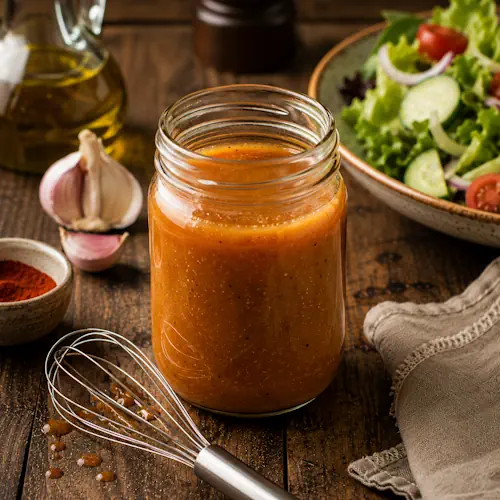
Classic French Dressing
Equipment
- Jar with lid
- Measuring cups
- Mixing bowl
- Whisk
Ingredients
- ¼ cup apple cider vinegar
- ¼ teaspoon black pepper
- ½ teaspoon dry mustard
- 1 clove garlic minced
- ½ cup ketchup
- 1 teaspoon paprika
- ¼ teaspoon salt
- 2 tablespoons sugar
- ¼ cup vegetable oil
- 1 tablespoon Worcestershire sauce

Instructions
- Add the ½ cup ketchup, ¼ cup apple cider vinegar, ¼ cup vegetable oil, 1 tablespoon Worcestershire sauce, 2 tablespoons sugar, 1 teaspoon paprika, ½ teaspoon dry mustard, ¼ teaspoon salt, ¼ teaspoon black pepper, and 1 minced garlic clove to a mixing bowl.
- Whisk until the dressing is smooth and fully emulsified.
- Pour the dressing into a clean jar with a tight-fitting lid.
- Refrigerate for at least 30 minutes to allow the flavors to develop.
- Shake well before serving.
Notes & Wine Advice
Serving Advice
Serve this Classic French Dressing chilled over fresh green salads, Cobb salads, or pasta salads for a bright and flavorful touch. It also makes a delicious sandwich spread or a dipping sauce for crisp vegetables like carrots, celery, and bell peppers. For a casual meal, drizzle it over grilled chicken or roasted vegetables to add a tangy, slightly sweet flavor. Always shake or whisk the dressing well before serving to recombine the ingredients and enjoy its smooth texture.Variations
To vary this Classic French Dressing, try substituting apple cider vinegar with white wine vinegar or red wine vinegar for a different acidity profile. You can also experiment with oils such as olive oil or avocado oil instead of vegetable oil for a richer flavor. For a spicier version, add a pinch of cayenne pepper or a dash of hot sauce. If you prefer a less sweet dressing, reduce the sugar amount or replace it with honey or maple syrup. Adding fresh herbs like chopped parsley or chives can also enhance the dressing's freshness and complexity.Wine Advice
Rose: A chilled dry Rosé complements the tangy and slightly sweet flavors of the dressing beautifully, enhancing the overall freshness of salads and light dishes. Sauvignon Blanc: A crisp Sauvignon Blanc pairs excellently with salads served with this classic dressing, as its acidity balances the dressing's sweet and tangy notes. For an alcohol-free pairing, try a sparkling water with a splash of lemon or lime to complement the dressing's tangy and sweet flavors without overpowering them. Estimated ingredient cost: USD 0.50 per serving, excluding optional sides and drinks. Local prices vary. Missing nutrition values have been estimated per serving; existing values were retained. Assumptions: Nutrition estimates are based on one serving size of 2 tablespoons of the prepared dressing. Ingredient weights are average values for the listed amounts, assuming typical commercial products for ketchup, vegetable oil, and Worcestershire sauce. Sodium content reflects added salt and naturally occurring sodium in Worcestershire sauce. Calcium is minimal and estimated from trace amounts in ingredients. Optional sides and drinks are excluded.Nutrition values
————————————————————————————————–
Ingredients and Flavor Profile
Classic French Dressing is a well-loved homemade condiment that balances sweet, tangy, and savory flavors. The base of this dressing is ketchup, which provides a rich body and a hint of sweetness. Apple cider vinegar adds a bright acidity that cuts through the richness, while Worcestershire sauce contributes depth and umami notes. Paprika lends a subtle smoky warmth, and dry mustard adds a mild pungency that enhances the overall complexity. Garlic brings a fresh, aromatic element, and sugar balances the acidity with sweetness. The vegetable oil emulsifies the dressing, creating a smooth texture that clings well to salads and other dishes. This combination of ingredients results in a versatile dressing that can elevate a variety of meals, from simple green salads to sandwiches and vegetable platters. The ketchup in this dressing not only provides sweetness but also a thick, smooth texture that helps the dressing cling to salad leaves and other foods. The apple cider vinegar’s acidity brightens the overall flavor, balancing the richness of the vegetable oil and the sweetness of the sugar. Worcestershire sauce adds complexity with its fermented tang and subtle anchovy undertones, enhancing the umami character. Paprika contributes a gentle smoky note that complements the garlic’s pungency, while the dry mustard acts as a natural emulsifier, helping to stabilize the mixture and prevent separation. Salt and black pepper round out the seasoning, ensuring the dressing has a well-rounded, savory finish. The vegetable oil is crucial for the dressing’s mouthfeel, providing a silky, smooth texture that coats ingredients evenly. Using a neutral oil like vegetable oil allows the other flavors to shine without overpowering them. The sugar not only balances the acidity but also helps to mellow the sharpness of the vinegar and mustard, creating a harmonious sweet-tart profile. Garlic, when minced finely, disperses evenly throughout the dressing, imparting a fresh aromatic quality that enlivens the palate. Each ingredient plays a specific role in achieving the classic French dressing’s signature balance of flavors and textures. The interplay between the sweet ketchup and the tangy vinegar is what defines the dressing’s character. The dry mustard’s slight heat and the Worcestershire sauce’s depth prevent the dressing from tasting one-dimensional. Paprika’s subtle warmth adds a comforting layer of flavor that complements the overall profile. The salt and pepper are essential for enhancing all the other flavors, making sure the dressing is neither bland nor overly sharp. Together, these ingredients create a dressing that is both flavorful and versatile, suitable for a wide range of culinary applications.
Practical Preparation Tips
Making Classic French Dressing at home is straightforward and requires only basic kitchen equipment such as a mixing bowl, whisk, and a jar with a lid for storage. The key to a smooth and well-emulsified dressing is thorough whisking of all ingredients until fully combined. Refrigerating the dressing for at least 30 minutes before serving allows the flavors to meld and develop a more balanced taste. During storage, natural separation may occur, so it is important to shake or whisk the dressing well before each use to restore its creamy consistency. This dressing can be stored in a sealed jar in the refrigerator for up to one week, making it convenient for meal prep and quick use throughout the week. To achieve the best emulsification, it’s helpful to add the oil slowly while whisking vigorously, which encourages the oil and vinegar to combine into a smooth, stable mixture. Using a balloon whisk can increase the amount of air incorporated, resulting in a lighter texture. If a whisk is not available, shaking the ingredients vigorously in a tightly sealed jar can also produce a well-emulsified dressing. Mince the garlic very finely or use a garlic press to ensure it blends seamlessly into the dressing without leaving large chunks, which can affect the texture and distribution of flavor. When refrigerating the dressing, allow it to rest for at least 30 minutes but ideally up to a few hours to let the flavors meld fully. This resting period allows the sugar to dissolve completely and the spices to infuse throughout the mixture, resulting in a more balanced and harmonious taste. Before each use, always shake or stir the dressing well, as natural separation of oil and vinegar is normal. If the dressing thickens too much in the fridge, a small splash of water or additional vinegar can be whisked in to restore the desired consistency. For ease of use, prepare the dressing in a jar with a tight-fitting lid so it can be shaken directly before serving. This reduces cleanup and makes it convenient to store and transport. The dressing can be made in advance and kept refrigerated for up to one week, making it a practical option for meal prepping. If you prefer a smoother texture, you can briefly blend the dressing with an immersion blender after whisking to ensure all ingredients are fully incorporated and the garlic is finely dispersed.
Serving Suggestions and Variations
Classic French Dressing is incredibly versatile and can be used in many ways beyond just a salad dressing. It works wonderfully as a sandwich spread, adding a tangy and slightly sweet flavor that complements deli meats and cheeses. It also serves as a tasty dipping sauce for fresh vegetables such as carrots, celery, and bell peppers, making it a great option for snacks or appetizers. For main dishes, drizzle it over grilled chicken or roasted vegetables to add brightness and depth. Variations of this dressing can be made by adjusting the vinegar type, oil, or sweetness level to suit personal preferences. Adding fresh herbs or a touch of heat can further customize the flavor profile, making this classic recipe adaptable to many culinary styles and occasions. This dressing pairs beautifully with crisp green salads, especially those featuring sturdy lettuces like romaine or iceberg, which hold up well to the slightly thick and tangy dressing. It also complements heartier vegetables such as cucumbers, tomatoes, and bell peppers, adding a flavorful punch without overpowering their natural freshness. For a quick snack, use it as a dip for raw vegetable sticks or even as a sauce for baked potato wedges, enhancing their flavor with its sweet and tangy notes. To customize the dressing, consider swapping apple cider vinegar for red wine vinegar or white wine vinegar to adjust the acidity and flavor profile. You can also experiment with different oils, such as light olive oil or avocado oil, to introduce subtle variations in texture and taste. For a spicier version, add a pinch of cayenne pepper or a dash of hot sauce. Fresh herbs like chopped parsley or chives can be stirred in just before serving to add a burst of color and freshness. Classic French Dressing is also excellent as a marinade for grilled chicken or pork, where its balance of sweetness, acidity, and umami helps tenderize the meat while imparting flavor. It can be drizzled over roasted vegetables to add brightness and moisture, or used as a flavorful spread on sandwiches and burgers. Its versatility makes it a handy condiment to keep on hand for enhancing a variety of dishes throughout the week. Browse our dressing recipes for more ideas. General kitchen guidance is available from the FDA.