Cerdo al Horno con Pipian Rojo de AjonjoliPork tenderloin is perfectly complemented with Red Sesame Seed Sauce. A good starter is Cabbage and Cheese Salad with Tortillas.
Chamorro PibilChef Joaquim Ocampo Castillo shared this very special recipe. He's a native of Yucatán, and is now with Casa Vieja restaurant in Tlaquepaque, a suburb of Guadalahara. Fresh pork shank is seasoned with Yucatán spices, wrapped in banana leaves and steam-baked until very tender. Fresh pork shank, also called fresh pork hock (but not ham hock, which is smoked, not fresh), may need to be special ordered. If unavailable, use lamb shank instead.Banana leaves, usually frozen in one-pound packages, can be found in Mexican and Asian markets. The leaves are about 30 to 40 inches long, and are cut to the size needed to wrap the meat. Achiote seasoning paste is found in Mexican markets. Serve with black beans and fresh salsa.
Cerdo con Mole de CacahuateMoles are sauced-based dishes usually made for celebrations in Mexico. The sauces contain a long list of ingredients and are time-consuming to make but the resulting flavors are spectacular. Mole de Cacahuate, from central Mexico, a thick orange-colored sauce thickened and flavored with roasted peanuts, chiles, herbs, and spices goes very well with pork.The sauce can be made 3 to 4 days in advance and tastes even better when reheated. A mole tends to thicken as it stands, so it may be necessary to thin it with some chicken broth when it's reheated. If you can't find boneless roast, ask the butcher to bone the roast, or, cook with the bone, but a longer cooking time will be needed.
Cerdo al Horno con Plátanos y TangerinasBoneless pork loin is my favorite meat to roast, and citrus is often teamed with pork in Mexican dishes. In this recipe, tangerines and plantains flavor the dish. Black beans are my first choice to accompany the roast.
In a small bowl, mix the salt, pepper, sugar, and garlic.
Rub all over the meat.
Put the meat on a rack in a roasting pan and roast in the oven 30 minutes.
In a cup, mix the broth and wine.
After 30 minutes, open the oven and pour ½ cup of the liquid over the roast.
Reduce the oven temperature to 325° and continue roasting 45 minutes, basting the meat every 15 minutes with the remaining ½ cup broth-wine mixture and the pan juices.
Cook the meat until lightly browned, about 1 hour, and an instant-read thermometer registers 155° to 160°.
Remove the roast to a warmed platter.
Meanwhile, squeeze the juice from 2 tangerines to make ½ cup juice.
Remove the peel from the remaining 2 tangerines, separate the segments, and gently remove any seeds.
Reserve the juice and fruit.
When the roast is done, remove it to a warmed platter.
Put the roasting pan on a stove burner.
(If the pan is dry, add ½ cup chicken broth.)
Mix the cornstarch with the tangerine juice, and stir it into the pan juices.
Add the plantains.
Bring to a boil, stirring.
Reduce the heat to low, and simmer 5 to 6 minutes, or until the plantains are tender and the sauce thickens.
Add the tangerines.
Heat through, about 2 minutes.
Stir in the cilantro.
Slice the roast and serve with the sauce spooned on top.
Garnish with plantains slices and tangerine segments.
Lomo de Cerdo con Salsa de Cebollas RojasA cooked tangy red onion sauce spooned over roasted pork is a modern adaptation for this Mexican-style dish that's been a favorite among my cooking students.
Season all over with the oregano, garlic, salt, and pepper.
Place the roast in a roasting pan on a rack and roast, uncovered, until browned and no longer pink inside, about 1 hour 10 minutes, or until a meat thermometer reads 160°.
Meanwhile, prepare the onion sauce.
When the roast is done, remove it from the oven and let it rest about 5 minutes.
Reheat the sauce.
Slice the meat and arrange on a platter or individual serving plates with a portion of the onion sauce spooned on top.
Cerdo en Salsa de Chile Guajillo con AguacatePatricia Quintana prepared this excellent dish in her Mexico City cooking school some years ago. Fresh avocado leaves covered the pork to add a mild anise flavor to the meat as it cooked. Fresh avocado leaves are hard to find, so I substitute anise seeds in the sauce for a similar flavor. Roasted potatoes and sliced avocados are presented with the saucy pork.
2largeavocadosHass variety preferred, peeled and sliced crosswise
Get Recipe Ingredients
Instructions
Prepare the guajillo sauce, adding the anise seeds when blending the sauce.
Reserve sauce.
Preheat the oven to 450°.
Put the potatoes in an ovenproof casserole dish.
Drizzle with about 1 tablespoon olive oil and toss the potatoes to coat with oil.
Cover with foil and have the potatoes ready to go in the oven 25 minutes before the meat.
Meanwhile, trim the pork tenderloins of all silver skin.
Rub the meat all over with olive oil.
Season with salt and pepper.
Line a heavy baking sheet with foil.
Arrange the meat on the pan.
Crimp the foil into a rim around the outside of the tenderloins.
Let stand at room temperature 25 minutes.
Put the potatoes in the oven.
Put the pork in the oven, and remove the foil from the potatoes.
Continue to roast the potatoes 20 to 25 more minutes, and roast the pork 20 to 25 minutes or until no longer pink inside (155° to 160° on a meat thermometer).
To serve, reheat the sauce.
Slice the pork thinly and arrange on a serving platter.
Stir any meat juices from the pan into the chile sauce.
Spoon the sauce over the meat.
Surround with the roasted potatoes and sliced avocados.
Cerdo Al PastorIn small restaurants all over Mexico, vertical spits slowly roast marinated pork to perfection. A small peeled pineapple is often positioned on top of the spit, to allow the juices to drip down and flavor the meat as it cooks. Thin bits of cooked pineapple are later served with the meat.Since most home kitchens lack a vertical spit, here's a way to season and cook pork at home for tacos, burritos, and tortas, that's truly mouth-watering. Start the recipe one day ahead, as the meat needs to marinate overnight. The dried red chiles called for in the recipe are quite common and can be found in Mexican markets and sometimes in the Mexican section of supermarkets. Each kind of chile adds its own flavor and spiciness to the marinade. The small chile de arbol is the hottest of the listed chiles
Cut the pork into slices about ⅓ inch thick and put into a glass baking dish or in a glass pie plate.
In a medium pan, over medium heat, cook the chiles, oregano, cloves, cumin, salt, pepper, vinegar, and water, until the chiles are soft, about 10 minutes.
Cool about 5 minutes, then pour the mixture into a blender.
Add the garlic and purée to a paste.
In the same pan, heat the oil and cook the mixture, over medium-low heat, about 5 minutes.
Cool completely and spread over the meat.
Cover the meat and refrigerate overnight.
Remove the meat from the marinade, and scrape off the excess.
Cook the meat, on a hot grill pan or in a nonstick skillet until no longer pink inside, 2 to 3 minutes on each side.
Pan grill the pineapple on the edge of the pan.
Chop and serve with the meat.
Chop the meat into small pieces, and use to fill burritos, tacos, or tortas.
CarnitasSmall bits of crisp browned pork are served all over Mexico. Most of the typical carnitas (little meats) are still prepared in huge pots of boiling lard, but excellent carnitas can be made at home in a simpler way using much less fat. (Although for crisp carnitas, it's important for the pork to have some fat.) Serve with tortillas and some trimmings to make tacos or burritos, such as guacamole, red or green salsa, and shredded lettuce or cabbage
Costillitas de CerdoSmall slabs of browned baby back pork ribs with crispy edges and the flavor of tamarind are so succulent, they're irresistible. Slow roasting at a low temperature until the ribs are tender, then raising the oven temperature and basting with the sauce during the last minutes of cooking works best. I developed this recipe after eating the ribs at the spectacular contemporary restaurant Santa Coyote in Guadalajara. Serve the ribs with Cactus Salad or Corn, Potato, and Poblano Chile Salad
Prepare the tamarind paste, then measure out 3 tablespoons and put in a blender.
Reserve.
(Store the remaining paste for another use.
It keeps indefinitely.
) Put the roasted chile in a small bowl of hot water and soak 20 minutes.
Add the chile and 1 tablespoon of the soaking water to the blender.
Add the sugar and black pepper.
Blend to a thick smooth purée with the consistency of ketchup.
If too thick, add just enough soaking water to achieve the right consistency.
Transfer the sauce to a bowl and reserve.
Discard remaining soaking water.
Preheat the oven to 300°.
Season the pork ribs with salt.
Arrange in a single layer in a baking pan.
Roast slowly, uncovered, 45 minutes.
Pour off fat.
Turn the ribs and roast 30 minutes.
Raise the heat to 400° and baste the ribs with the reserved tamarind sauce and turn over every 15 minutes, basting each time, about 1 hour or until the ribs are dark brown and tender.
If darker brown, crispier ribs are preferred, finish under the broiler a few minutes, watching carefully to prevent burning.
Serve each slab whole, or cut in 2-rib portions, if desired.
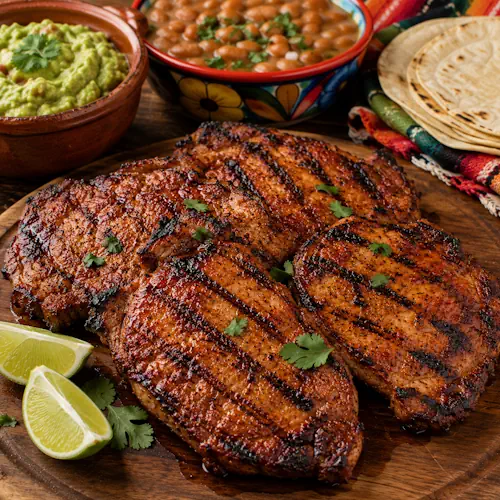
This recipe features juicy pork shoulder steaks marinated in a smoky red chile paste and grilled to perfection. The marinade infuses the pork with rich Mexican adobo flavors while the grill adds a caramelized crust and smoky aroma.
Remove 4 tablespoons from the container and reserve the rest for later use.
Spread a thin layer of chile paste over both sides of the 4 pork shoulder steaks.
Place the steaks into a resealable bag.
Refrigerate for at least 6 hours or overnight to marinate.
Preheat the barbecue grill.
Lightly oil the grill rack.
Remove excess chile paste from the pork steaks before grilling.
Place the pork steaks onto the grill about 6 inches above the heat.
Cook for 8 to 10 minutes total while turning frequently to ensure even cooking.
Cook until the pork is fully cooked but still juicy.
Serve immediately.
Notes & Wine Advice
Serving Advice
Serve these barbecued pork steaks with traditional Mexican sides such as guacamole, warm tortillas, and Mexican rice for a complete meal. Grilled vegetables or Mexican beans also complement the smoky flavors well. Fresh lime wedges add a bright contrast to the rich chile marinade. This dish pairs nicely with a fresh salad or a light slaw to balance the smoky, spicy pork. Enjoy immediately while the pork is juicy and tender.
Variations
To deepen the smoky adobo flavor, consider adding lime juice, smoked paprika, garlic, or chipotle powder to the red chile paste before marinating. For a milder version, reduce the amount of chile paste or substitute with a milder chili sauce. You can also experiment with different cuts of pork such as pork loin steaks, but adjust cooking times accordingly to avoid drying out the meat. For a quicker marinade, allow the pork to rest for at least 2 hours, though overnight marinating yields the best flavor and tenderness. Serve with different sides like grilled corn or a fresh tomato salsa for variety.
Wine Advice
Tempranillo: A fruity Tempranillo pairs beautifully with the smoky chile marinade and grilled pork, complementing the rich, spicy flavors while balancing the meat's natural sweetness.For an alcohol-free pairing, try a sparkling water with a splash of lime or a lightly sweetened hibiscus iced tea to refresh the palate and complement the smoky, spicy pork flavors.Estimated ingredient cost: USD 3.75 per serving, excluding optional sides and drinks. Local prices vary.Missing nutrition values have been estimated per serving; existing values were retained. Assumptions: Nutrition estimates are based on four servings using 4 pork shoulder steaks and 4 tablespoons of red chile paste. Assumptions include edible portions with no bones and standard fat content for pork shoulder. Sodium and cholesterol values reflect typical content in pork and chile paste without added salt. Fiber and calcium are minimal due to the nature of ingredients. Optional sides and drinks are excluded.
This recipe centers on pork shoulder steaks coated in a vibrant red chile paste that delivers smoky, earthy, and mildly spicy flavors characteristic of Mexican adobo. The red chile paste is the key ingredient, providing depth and complexity with its blend of dried chiles and spices. Pork shoulder is chosen for its balance of tenderness and fat content, which helps keep the meat juicy during grilling. The marinade not only seasons the meat but also tenderizes it, allowing the flavors to penetrate deeply. The smoky notes from the chile paste are enhanced by the caramelization that occurs on the grill, creating a flavorful crust. This combination of ingredients results in a rich, bold dish that highlights traditional Mexican barbecue flavors while remaining simple to prepare. The red chile paste not only imparts heat but also contributes a thick, sticky texture that clings well to the pork shoulder steaks, ensuring an even coating that caramelizes beautifully on the grill. The fat marbling in the pork shoulder melts during cooking, blending with the chile paste to create a luscious, flavorful crust. This interaction between fat and spice is crucial for achieving a moist interior with a slightly charred exterior. Additionally, the natural sugars in the paste help develop a subtle sweetness as they caramelize, balancing the smoky and spicy notes. The paste’s blend of dried chiles also adds a complex umami depth that enhances the meat’s savory profile. Using pork shoulder steaks is advantageous because their connective tissue breaks down during cooking, contributing to tenderness without drying out. The marinating process allows the chile paste’s acids and spices to penetrate the meat fibers, softening them and infusing flavor throughout. This results in a more harmonious taste experience rather than just a surface seasoning. The choice of red chile paste over fresh chiles also ensures a consistent flavor and heat level, as dried chiles have a concentrated and stable profile. This makes the dish reliably spicy and aromatic every time. The smoky, earthy character of the red chile paste is complemented by the grilling method, which imparts additional char and smoky notes from the open flame. The caramelization of sugars and spices in the paste forms a flavorful crust that contrasts with the tender interior of the pork. This textural interplay is a hallmark of well-executed barbecue. The marinade’s balance of heat, smokiness, and slight sweetness creates a multi-dimensional flavor profile that is both bold and approachable, making it appealing to a wide range of palates.
Practical Preparation and Cooking Tips
Marinating the pork steaks for at least 6 hours or overnight is essential to develop the full flavor and tenderness of the meat. The red chile paste should be spread thinly and evenly on both sides to ensure balanced seasoning without overpowering the pork. When grilling, preheat the barbecue and lightly oil the grill rack to prevent sticking. Removing excess chile paste before placing the pork on the grill helps avoid flare-ups and burning. Cooking the pork about 6 inches above the heat and turning frequently ensures even cooking and prevents drying out. Pork should be cooked fully but remain juicy; overcooking can lead to dryness, especially with lean cuts. Using tongs to turn the steaks gently preserves the marinade crust. This recipe is ideal for outdoor cooking and quick grilling sessions, making it perfect for summer barbecues. When applying the red chile paste, it’s helpful to use a silicone brush or your hands (wearing gloves if preferred) to spread a thin, even layer. This ensures that the paste adheres well without clumping, which can cause uneven cooking or burning. After marinating, patting the steaks lightly with paper towels to remove excess paste helps prevent flare-ups on the grill and promotes better caramelization. Avoid rinsing the marinade off, as this would wash away the flavor and tenderizing effects. During grilling, maintaining a medium heat level is important to cook the pork evenly without charring the exterior prematurely. Positioning the steaks about 6 inches above the heat source allows for controlled cooking, while frequent turning every couple of minutes ensures all sides develop a uniform crust. Using tongs rather than a fork preserves the integrity of the meat and the marinade crust. Monitoring the internal temperature with a meat thermometer can help achieve the ideal doneness, around 145°F, to keep the pork juicy and safe to eat. To streamline the cooking process, prepare the red chile paste in advance and store it refrigerated, so it’s ready when needed. Marinate the pork in a resealable bag to maximize contact with the paste and minimize cleanup. Before grilling, preheat the barbecue thoroughly and oil the grill rack with a high smoke point oil to prevent sticking. These workflow tips help ensure a smooth cooking experience and consistent results, especially when preparing multiple steaks for a group.
Serving Suggestions and Variations
Barbecued pork steaks marinated in red chile paste pair wonderfully with classic Mexican sides such as guacamole, warm tortillas, Mexican rice, and grilled vegetables. Fresh lime wedges served alongside add a bright, acidic contrast that balances the smoky richness of the pork. For a heartier meal, Mexican beans or a fresh salad can be included. Variations of the marinade can incorporate additional ingredients like lime juice, smoked paprika, garlic, or chipotle powder to enhance the smoky adobo flavor. Adjusting the spice level by modifying the amount or type of chile paste allows customization to personal taste. This recipe also lends itself well to different pork cuts, though cooking times should be adjusted accordingly. The dish is best served immediately after grilling to enjoy the juicy texture and vibrant flavors at their peak. For serving, consider slicing the pork steaks thinly against the grain to enhance tenderness and make the dish easier to share. Arrange the slices on a platter with garnishes such as chopped cilantro, diced onions, and fresh lime wedges to add freshness and brightness. Offering warm corn or flour tortillas on the side allows guests to assemble tacos, turning the meal into an interactive and casual dining experience. To vary the flavor profile, incorporate additional marinade ingredients like minced garlic or a splash of orange juice to introduce subtle sweetness and aromatic complexity. For those who prefer a milder heat, mixing the red chile paste with a bit of tomato paste or honey can soften the spice while maintaining depth. Alternatively, adding smoked paprika or chipotle powder intensifies the smoky character for a more robust flavor. This recipe pairs well with a variety of side dishes beyond traditional Mexican accompaniments. Grilled vegetables such as zucchini, bell peppers, and onions complement the smoky pork, while a fresh cabbage slaw with a tangy vinaigrette provides a crisp contrast. For a complete meal, serve alongside Mexican-style rice or refried beans. Leftover pork can be repurposed into sandwiches, salads, or quesadillas, making this dish versatile for meal planning and reducing food waste. Browse our dinner recipes for more ideas. General kitchen guidance is available from the FDA.
Manage Consent
To provide the best experiences, we use technologies like cookies to store and/or access device information. Consenting to these technologies will allow us to process data such as browsing behavior or unique IDs on this site. Not consenting or withdrawing consent, may adversely affect certain features and functions.
Functional
Always active
The technical storage or access is strictly necessary for the legitimate purpose of enabling the use of a specific service explicitly requested by the subscriber or user, or for the sole purpose of carrying out the transmission of a communication over an electronic communications network.
Preferences
The technical storage or access is necessary for the legitimate purpose of storing preferences that are not requested by the subscriber or user.
Statistics
The technical storage or access that is used exclusively for statistical purposes.The technical storage or access that is used exclusively for anonymous statistical purposes. Without a subpoena, voluntary compliance on the part of your Internet Service Provider, or additional records from a third party, information stored or retrieved for this purpose alone cannot usually be used to identify you.
Marketing
The technical storage or access is required to create user profiles to send advertising, or to track the user on a website or across several websites for similar marketing purposes.