6 to 8rainbow troutcleaned and skin-on with pin bones removed (you can clean it yourself and I’ll give you directions for how to do that—also see this page—or you can go to your fishmonger and buy about 4 pounds of fillets that are already cleaned and boned—just make sure they still have their skins on)
Here’s a little delicacy for you to try out at home. A lot of folks think that prawns are just big shrimp, but even though they look like it, that’s not really true. Their bodies are a little different—prawns are long and straight and not curved like shrimp, and they only live in fresh water (while shrimp live in salt water). The difference doesn’t matter too much when it comes to cooking: You want to be sure not to overcook either one. I go for prawns when I get the chance because they’re a little meatier and a little sweeter than shrimp—more like miniature lobster tails, if you ask me, and because of their size and sweetness, they take really well to smoking. This is a killer way to enjoy them.
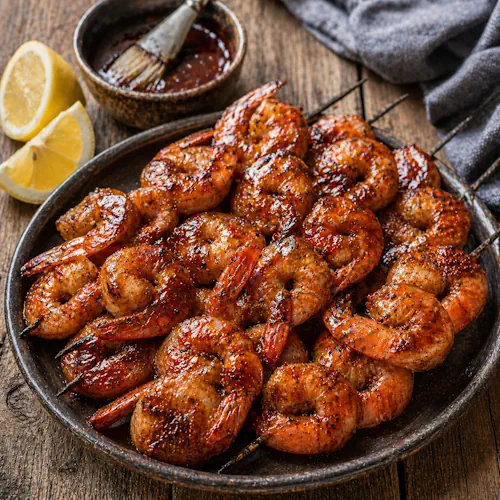
Barbecue shrimp is a bold and flavorful dish that delivers smoky, juicy seafood straight from the grill. This barbecue shrimp recipe combines tender shrimp with a rich marinade of oil, spices, and barbecue sauce, creating a perfect balance of savory and slightly sweet flavors.
If you enjoy outdoor grilling recipes, you can also try Air Fryer Chicken Wings for another easy option. For safe handling of seafood and proper cooking temperatures, it’s always recommended to follow guidelines from the FDA.
Why barbecue shrimp is a must-try dish
One of the biggest advantages of this dish is how quickly it cooks. Shrimp only need a few minutes on the grill, making it an ideal option for fast and flavorful meals. The high heat creates a light char on the outside while keeping the inside tender and juicy.
Flavor is another highlight. The combination of barbecue sauce, spices, and seasoning creates a rich coating that enhances the natural sweetness of the shrimp. Basting the shrimp during cooking helps build layers of flavor and keeps them moist.
Another benefit of barbecue shrimp is its versatility. It can be served as an appetizer, main dish, or part of a larger barbecue spread. Pair it with rice, grilled vegetables, or fresh salads for a complete meal.
Preparation is simple but effective. Butterflying the shrimp allows the marinade to penetrate deeper, resulting in more flavor in every bite. Threading them onto skewers makes them easy to handle on the grill and ensures even cooking.
This recipe is also great for entertaining. The presentation of skewered shrimp looks appealing, and the quick cooking time allows you to serve guests without long waits. It’s a practical and impressive addition to any barbecue gathering.
Customization is easy as well. You can adjust the seasoning, use different barbecue sauces, or add a bit of heat with chili flakes. Small changes can create a new flavor profile while keeping the base recipe simple.
Barbecue shrimp is a perfect example of how simple ingredients can deliver bold results. With its smoky flavor, juicy texture, and quick preparation, it’s a dish that fits perfectly into any grilling occasion.
prevents your screen from turning off”
Barbecue Shrimp from Myron Mixon
Juicy shrimp skewers grilled with a rich barbecue marinade.
You don’t need a special grill basket or rack to grill shrimp, but it is easier if you grill them on skewers, so that’s what I’m recommending here. If you have wooden skewers, make sure you’ve soaked them in water at least one hour and preferably 3. If you love this recipe you might want to invest in some good metal ones.
Cut each shrimp in half lengthwise, starting at the underside and making a shallow cut (don’t cut all the way through) to the top shell.
Unfold the shrimp (open them like a book) and de-vein them, then rinse them under cold running water.
Pat the shrimp dry with paper towels or a clean kitchen towel.
Transfer the shrimp to an aluminum baking pan, drizzle them with the olive oil and lemon juice, and season them with salt and pepper.
Cover with plastic wrap and marinate in the refrigerator for 30 minutes, flipping them over at the 15-minute mark.
Preheat your grill to high heat.
When you’re ready to cook, remove the shrimp from the refrigerator and thread them onto skewers.
Because these are jumbo, you may need to use 2 skewers per shrimp: To do that, lay each shrimp flat and pin open crosswise with 2 skewers, one each, top and bottom.
Arrange the shrimp cut side down on the grill, turning with tongs, until browned on the outside and firm and pink inside, about 2 minutes per side.
Remove the skewers from the grill, transfer the shrimp onto plates or a platter, and serve immediately
Prepare the shrimp: Put the shrimp in a shallow pan.
Sprinkle with the salt and rub it all over each shrimp.
Cover with plastic wrap and transfer to the fridge to rest for 2 hours.
Prepare the smoker and heat it to 225°F.
When you are ready to cook the shrimp, remove them from the refrigerator and carefully rinse the salt from each shrimp under cold water; use paper towels or a clean kitchen towel to dry them well.
Transfer the shrimp to an aluminum baking pan.
Transfer the pan to the smoker, cover, and smoke the shrimp for 15 to 30 minutes, until their shells turn coral or, if unpeeled, the shrimp is totally white and opaque.
Remove the pan from the smoker and let the shrimp rest uncovered in the fridge for at least 30 minutes before serving.
1tablespoonJack’s Old South Original Rub or make your ownsee this page
FOR SERVING:
4tablespoons½ stick unsalted butter, melted
Instructions
Prepare your smoker and heat it to 325°F.
Prepare the lobster tails: Use kitchen shears to make shallow cuts right down the middle of the tough tail shells.
Next, use your fingers to gently loosen the meat from the shell, making sure to just loosen it and not remove it entirely—you want to keep the tail meat attached at the base of the tail.
Lift the meat so it is resting on top of the split shell (again, keeping it attached at the base of the tail).
Use a sharp paring knife to make a shallow slit down the middle of the meat so that you can butterfly the tails and open them up like a book.
Drizzle the tail meat with the olive oil and season with salt and pepper.
Place the butterflied lobster tails in an aluminum baking pan.
Place the pan in the smoker, cover, and smoke for about 25 to 30 minutes, or until the lobster meat turns completely bright white and opaque and the tails begin to curl.
Meanwhile, prepare the salad: In a medium bowl, stir together the mayonnaise, lemon juice, celery, lettuce, and rub.
Set aside.
Timing is key here: When you’re ready to remove the lobster from the smoker, you don’t want to let it cool completely, or the meat will begin to toughen up.
So remove the lobster from the smoker, transfer to serving plates immediately, and for a dramatic presentation serve the tails in their shells next to the salad, drizzling the butter over the tail meat.
Alternatively, you can remove the tails from their shells and serve them directly on top of the salad with the melted butter drizzled over the top of the tails.
To make this recipe, you’re going to need to either ask a fishmonger to clean your catfish for you—the path of least resistance—or else figure out how to do it yourself. The leathery skin of catfish makes the process a little more complicated than it is for other fish. Some fishermen where I live hang the catfish from trees before they strip them, or else nail the fish heads to boards. Those techniques work great, but this page has another way for novices:
This is one of the easiest methods of cooking fish for a little backyard dinner party with family or friends—it’s simple, delicious, and smoked, my three favorite attributes for food.
Rub the salmon fillets all over with the vinegar, then pat dry thoroughly with paper towels or a clean kitchen towel.
Brush them all over with the oil, then season with the rub, salt, and pepper.
Transfer the fish to an aluminum baking pan.
Place the pan in the smoker, cover, and cook until the salmon flakes easily, about 2 hours.
Serve with Classic Creamy Coleslaw, if you like.
Notes & Wine Advice
Variation 1:You can substitute 2 pounds of other fish fillets and use this same method. For example, where I live we love mullet, a fish found in coastal and tropical waters all over the world, but especially beloved down here in South Georgia and parts of Florida. It’s a bony and oily fish that takes very well to smoking. You can also substitute trout fillets, pike fillets, roughy fillets, or other kinds of fish you like and use this method. Variation 2:
You can substitute the ½ cup of olive oil I call for here with ½ cup of cubed unsalted butter. Just cover the fish with the butter cubes and put it in the smoker.
Rub the salmon steaks all over with the vinegar, then pat the steaks dry thoroughly with paper towels or a clean kitchen towel.
Brush both sides of the steaks with the olive oil, then season with the salt, pepper, and rub.
Transfer the steaks into an aluminum baking pan.
Place the pan in the smoker, cover, and smoke until the steaks are firm to the touch and flake when touched with a fork, 45 to 60 minutes.
While the fish is cooking, make the glaze: Combine the barbecue sauce, apricot preserves, and chopped onion in a blender.
Puree to combine thoroughly, about 3 minutes.
Pour the mixture into a medium saucepan.
Over medium heat, bring the glaze almost to a boil, removing it from the heat just as small bubbles begin to appear at the surface.
Set the glaze aside to cool.
When the fish is done, remove the pan from the smoker and use a kitchen brush to glaze the salmon steaks with the sauce.
Serve warm or at room temperature.
Note: You can easily make these salmon steaks without applying the glaze; just skip that step entirely and serve the salmon steaks with some barbecue sauce on the side for dipping if you like.
You can also substitute tuna, swordfish, or halibut steaks for the salmon and this recipe will work just as well.
Finally, I like the way that the sweetness of the apricot preserves pairs with the barbecue sauce, but you are welcome to try other favorite flavors of preserves in its place if you prefer.
To provide the best experiences, we use technologies like cookies to store and/or access device information. Consenting to these technologies will allow us to process data such as browsing behavior or unique IDs on this site. Not consenting or withdrawing consent, may adversely affect certain features and functions.
Functional
Always active
The technical storage or access is strictly necessary for the legitimate purpose of enabling the use of a specific service explicitly requested by the subscriber or user, or for the sole purpose of carrying out the transmission of a communication over an electronic communications network.
Preferences
The technical storage or access is necessary for the legitimate purpose of storing preferences that are not requested by the subscriber or user.
Statistics
The technical storage or access that is used exclusively for statistical purposes.The technical storage or access that is used exclusively for anonymous statistical purposes. Without a subpoena, voluntary compliance on the part of your Internet Service Provider, or additional records from a third party, information stored or retrieved for this purpose alone cannot usually be used to identify you.
Marketing
The technical storage or access is required to create user profiles to send advertising, or to track the user on a website or across several websites for similar marketing purposes.
To provide the best experiences, we use technologies like cookies to store and/or access device information. Consenting to these technologies will allow us to process data such as browsing behavior or unique IDs on this site. Not consenting or withdrawing consent, may adversely affect certain features and functions.
Functional
Always active
The technical storage or access is strictly necessary for the legitimate purpose of enabling the use of a specific service explicitly requested by the subscriber or user, or for the sole purpose of carrying out the transmission of a communication over an electronic communications network.
Preferences
The technical storage or access is necessary for the legitimate purpose of storing preferences that are not requested by the subscriber or user.
Statistics
The technical storage or access that is used exclusively for statistical purposes.The technical storage or access that is used exclusively for anonymous statistical purposes. Without a subpoena, voluntary compliance on the part of your Internet Service Provider, or additional records from a third party, information stored or retrieved for this purpose alone cannot usually be used to identify you.
Marketing
The technical storage or access is required to create user profiles to send advertising, or to track the user on a website or across several websites for similar marketing purposes.