3cupsJack’s Old South Original Rubor make your own
1recipeTangy Sweet Sauce
Instructions
The day before you plan to serve your roast, submerge the pork roast in the marinade and allow it to marinate in the refrigerator overnight, or for at least 12 hours.
When you are ready to cook the pork, heat a smoker to 350°F.
Remove the pan from the refrigerator and pat the roast dry all over with paper towels or a clean kitchen towel.
Coat the roast all over the outside with the rub and transfer it to a clean aluminum pan.
Place the pan in the smoker and smoke for 3 hours, or until the internal temperature reaches 155°F.
Remove the pan from the smoker and brush the Tangy Sweet Sauce all over the pork.
Return the pan to the smoker and smoke the roast for 15 additional minutes.
Remove the roast from the smoker and let it rest at least 20 minutes before carving.
The roast will carve easily into individual chops by cutting between the bones along the angle of the bone.
Sprinkle the chops with the rub all over the sides, front, and back, and pat gently to make sure the rub adheres to the meat.
Transfer the chops to an aluminum baking pan and let sit with the rub for 30 minutes.
Prepare your smoker and heat it to 300°F.
Transfer the pan with the chops to the smoker when it is ready and smoke the pork chops for 1 hour.
After an hour, remove the pan from the smoker and brush the pork glaze all over the chops on the front, back, and sides.
Place the pan back in the smoker and smoke the chops for an additional hour, or until the internal temperature reaches 145°F on an instant-read thermometer.
Remove the pork chops from the smoker and transfer them to a wooden cutting board.
Cover them loosely with foil and let them rest for 30 minutes before serving.
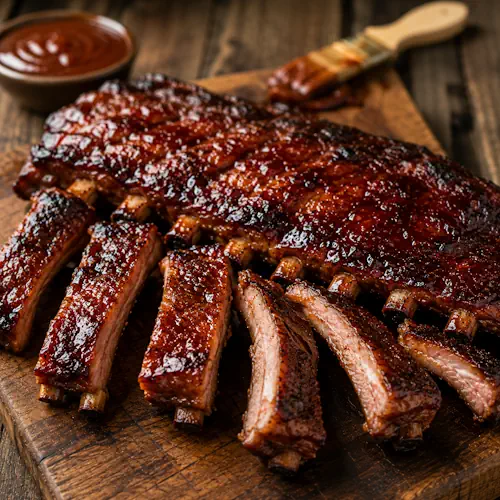
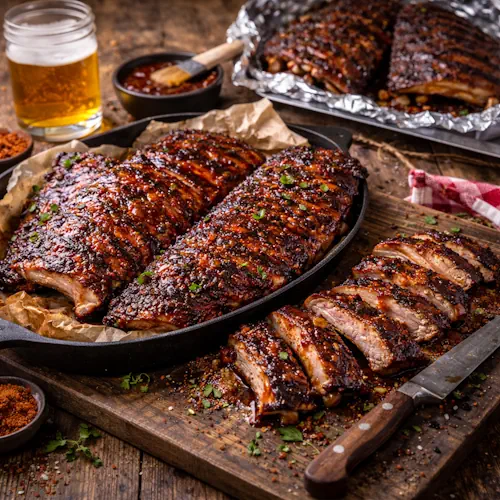
backyard spareribs combine tender pork ribs, smoky barbecue flavor, rich dry rub seasoning, and slow smoker cooking into a classic barbecue recipe packed with juicy Southern-style flavor. Slow smoking allows the ribs to become tender while building deep smoky bark and rich caramelized barbecue sauce flavor.
This smoked rib recipe remains popular because it creates authentic barbecue flavor using low and slow cooking methods that transform pork ribs into tender smoky perfection. The marinade, dry rub, smoke, and barbecue sauce all work together to create rich layered flavor throughout the ribs.
Low and slow cooking creates tender smoky ribs
The popularity of backyard spareribs continues to grow because slow smoking gives the connective tissue time to break down while preserving moisture inside the meat. Cooking the ribs in stages also helps create tenderness without drying the pork.
Another reason this rib recipe works so well is the balance between smoky bark, juicy meat, savory seasoning, and sweet barbecue sauce. Smoking the ribs uncovered first also helps develop rich barbecue crust around the outside.
Dry rub and smoke create deep barbecue flavor
The dry rub gives these backyard spareribs their signature smoky savory flavor while the smoker slowly builds rich barbecue character throughout the meat. Wrapping the ribs later with water also helps steam the pork gently while keeping the ribs moist and tender.
If you enjoy smoked barbecue pork recipes, you may also like our Barbecued Spareribs, another flavorful pork barbecue recipe packed with rich smoky flavor.
Texture plays an important role in this recipe. Properly cooked spareribs should feel tender with juicy meat that pulls cleanly from the bone while still holding their structure when sliced.
Allowing the ribs to rest inside the smoker after saucing helps the barbecue glaze settle onto the ribs while the heat slowly finishes the cooking process. Resting the ribs before slicing also helps preserve moisture.
Perfect smoked rib recipe for backyard barbecue gatherings
These backyard spareribs work perfectly for summer cookouts, game days, family gatherings, and outdoor barbecue parties because the ribs develop rich smoky flavor while remaining juicy and tender throughout.
The ribs pair beautifully with coleslaw, baked beans, cornbread, potato salad, grilled vegetables, or extra barbecue sauce on the side. Pickles and cold drinks also complement the rich smoky pork flavor wonderfully.
Proper food handling remains important whenever preparing pork and barbecue marinades. Pork should always stay refrigerated during marinating and should be cooked thoroughly before serving. For additional meat preparation and barbecue safety guidance, visit the FDA.
Ultimately, backyard spareribs deliver smoky barbecue richness, tender pork texture, flavorful bark, and classic Southern barbecue character in a satisfying recipe perfect for smokers and outdoor grilling.
prevents your screen from turning off”
Easy Backyard Spareribs
Tender smoked spareribs with rich barbecue flavor and smoky Southern-style seasoning.
Trim excess fat from the spareribs and remove the silver membrane if needed.
Place the ribs into an aluminum baking pan.
Cover completely with the rib marinade.
Cover tightly with foil and refrigerate for at least 4 hours or overnight.
Remove the ribs from the marinade and pat dry with paper towels.
Apply the dry rub evenly over all sides of the ribs.
Allow the ribs to sit uncovered at room temperature for 30 minutes to 1 hour.
Preheat the smoker to 275°F.
Place the ribs into a clean aluminum baking pan.
Smoke the ribs for 3 hours.
Remove the ribs from the smoker.
Pour water into a clean aluminum pan.
Place the ribs bone side down into the pan and cover tightly with foil.
Return the ribs to the smoker and cook for 2 more hours.
Remove the ribs from the smoker.
Brush barbecue sauce over both sides of the ribs.
Cover loosely with foil and return to the smoker for 1 additional hour while the heat slowly dies down.
Transfer the ribs to a cutting board.
Rest uncovered for 10 minutes before slicing and serving.
Notes & Wine Advice
<h2>Notes</h2> <p>Removing the silver membrane helps the ribs become more tender while allowing the seasoning to penetrate better.</p><h2>Serve Tip</h2> <p>Serve these spareribs with coleslaw, baked beans, cornbread, potato salad, or extra barbecue sauce.</p><h2>Variations</h2> <p>Add honey, apple juice, smoked paprika, bourbon, or cayenne pepper for deeper smoky sweetness and heat.</p><h2>Wine Advice</h2> <p>A bold <a href=”https://www.reneswijnbeleving.nl/webshop/zinfandel”>Zinfandel</a> pairs beautifully with the smoky barbecue sauce and tender pork ribs.</p>
Place the racks on a cutting board, bone side up, and remove the membrane (or “silver”) from the back of the ribs.
As with pork ribs, you need to remove this because it prevents rubs and sauces from adhering to the rib meat, and you want those flavors on your ribs.
Once you have penetrated the silver with a knife, work your fingers underneath it until you have 2 to 3 inches cleared.
Use your Myron Mixon Rib Skinner (or a kitchen towel) to grab the membrane and then gently yet firmly pull the membrane all the way off the rack of ribs.
Discard the membrane.
Pulling off the membrane will expose loose fat on the ribs that you can trim off with your paring knife.
In a medium bowl, combine the salt, pepper, brown sugar, chili powder, turmeric, coriander, garlic powder, and onion powder to form a rub.
Coat both sides of each rib with the spice mixture.
Place the ribs in a large aluminum baking pan, cover with foil, and refrigerate overnight.
When you are ready to smoke the ribs, heat a smoker to 275°F.
Place the ribs in the smoker and smoke, uncovered, for 2 hours.
Remove the pan from the smoker and pour 2 cups of water into the pan.
Cover the pan with aluminum foil, return it to the smoker, and smoke for 2 more hours.
After 2 hours, remove the ribs from the smoker.
Glaze the tops (front side) of the ribs only with the Tangy Sweet Sauce.
Don’t overdo it with too much sauce: Use just enough to coat the ribs.
Put the pan back in the smoker and smoke the ribs, uncovered, for 15 minutes.
Remove the pan from the smoker.
Transfer the ribs to a cutting board and let them rest, loosely covered with aluminum foil, for 10 minutes.
Cut the ribs to separate them and eat them immediately.
Myron Mixon baby back ribs are a competition-style barbecue classic known for their tenderness, deep flavor, and perfectly balanced glaze. These Myron Mixon baby back ribs follow a structured cooking method that delivers juicy meat with a rich bark and a glossy finish.
The secret behind this recipe lies in the layering of flavor. First, the ribs are marinated to infuse moisture and depth. Then a generous dry rub builds a flavorful crust during smoking. Regular spritzing keeps the ribs hydrated while enhancing the smoke absorption, resulting in a perfectly textured exterior.
For a complete barbecue experience, serve these ribs with Maryland Smoked Home Fries for a hearty side. For safe meat preparation and cooking temperatures, follow the official recommendations from the FDA.
How to prepare Myron Mixon baby back ribs
Preparing these ribs starts with removing the membrane from the back. This step is essential because it allows the seasoning and smoke to penetrate the meat more effectively.
After trimming, the ribs are marinated for several hours. This process helps tenderize the meat while building a base layer of flavor. Once removed from the marinade, the ribs are dried and coated evenly with a dry rub.
Smoking at a controlled temperature allows the ribs to cook slowly while developing a deep, smoky flavor. Spritzing during cooking keeps the ribs moist and enhances the bark formation.
Wrapping the ribs with apple juice creates a steaming effect that further tenderizes the meat. Finally, glazing and resting in the smoker allows the flavors to settle and gives the ribs their signature finish.
A true competition-style barbecue recipe
One of the biggest advantages of this method is consistency. By following structured steps, you achieve ribs that are tender, juicy, and packed with flavor every time.
This recipe is ideal for barbecue enthusiasts who want to recreate professional-level ribs at home. The combination of marinade, rub, smoke, and glaze results in a well-balanced and satisfying dish.
Because of the layered cooking process, these ribs offer both texture and depth, making them a standout centerpiece for any barbecue gathering.
With their rich flavor and perfect tenderness, Myron Mixon baby back ribs are a must-try for anyone serious about barbecue.
prevents your screen from turning off”
Myron Mixon Baby Back Ribs
Competition-style smoked ribs with rich flavor and glaze.
Makes About 5 CupsThis is what I use on pork ribs. It’s an added step that will improve the look and taste of your ribs. Make it the day before if you need to or do it right after you put your ribs on the smoker, and then start spritzing after your ribs have been on the smoker for 45 minutes.
n a large spray bottle (one that will hold at least 5 cups of liquid), combine all the ingredients.
Shake well to blend.
Now it can be told: My favorite ribs to cook and eat are baby backs.
They’re the rib of choice for MBN contests, which I’ve done so well at over the years—so they’re kind of a sentimental favorite, too.
Over the years I’ve developed a real love for them because I had to work hard to perfect my baby back technique, and they’ve won me a hell of a lot of money.
And here it is, for free, for you.
Well, almost for free.
But this recipe alone is worth the price of this book, I promise you.
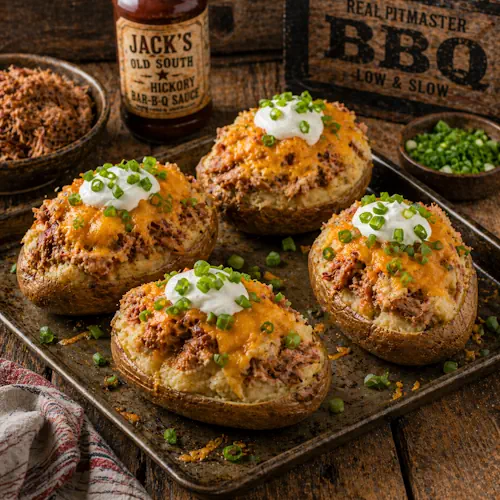
Crispy baked potato skins are filled with creamy mashed potato, smoky pulled pork, sour cream, butter, and cheddar cheese for a hearty barbecue-inspired meal.
Wash and scrub the potatoes, then dry them thoroughly.
Pierce each potato several times with a fork.
Rub the potatoes with olive oil and sprinkle them with salt.
Place the potatoes directly on the oven rack with a baking sheet underneath.
Bake for 50–60 minutes until the potatoes are tender.
Let the potatoes cool slightly.
Cut each potato in half lengthwise.
Scoop out the flesh, leaving a thin layer inside each potato skin.
Mash the potato flesh with the sour cream, butter, salt, and black pepper.
Fold in the pulled pork and half of the cheddar cheese.
Increase the oven temperature to 450°F (230°C).
Divide the filling evenly among the potato skins.
Place the stuffed potatoes on the baking sheet.
Bake for 20 minutes until heated through and lightly browned.
Top with the remaining cheddar cheese.
Return to the oven briefly until the cheese melts.
Garnish with chopped green onions and serve immediately.
Notes & Wine Advice
Serving Suggestions
Serve these stuffed potatoes with creamy coleslaw, grilled corn, steamed green beans, or a fresh garden salad. One whole potato makes a substantial main course, while half a potato can be served alongside grilled meat.
Recipe Notes
Use large starchy potatoes such as Idaho or Russet potatoes for the fluffiest filling and crispiest skins. Leave a thin layer of potato inside each skin to prevent it from tearing. Check that refrigerated pulled pork is thoroughly reheated before serving.
Variations
Replace the pulled pork with chopped brisket, shredded chicken, or a vegetarian barbecue filling. Add crispy bacon, jalapeños, smoked paprika, or extra barbecue sauce for a stronger flavor. Use certified gluten-free pulled pork and seasonings when necessary.
Wine Advice
A bold Zinfandel complements the smoky pork and slightly sweet barbecue flavors. A smooth Merlot is a softer alternative that pairs well with the creamy potato and melted cheddar.
Barbecue stuffed baked potatoes combine crisp potato skins, fluffy potato filling, smoky pulled pork, sour cream, butter, and melted cheddar in one satisfying meal. Chopped green onions provide freshness and a mild savory bite. This recipe is especially useful when you have leftover pulled pork but want to transform it into something that feels completely different. Each potato becomes an individual meal that is easy to portion, customize, and serve.
The recipe has a relatively long cooking time, but most of it is hands-off while the potatoes bake. Once they are tender, preparing the filling and completing the second bake is straightforward. If you enjoy smoky meals, browse our barbecue recipes for more dishes suitable for relaxed dinners, summer parties, and outdoor gatherings.
Choosing and Baking the Best Potatoes
Large, starchy potatoes such as Russet or Idaho varieties produce the best texture. Their skins become firm and crisp in the oven, while their interiors turn light and fluffy. Waxy potatoes can be used, but their denser texture does not absorb the butter and sour cream as effectively.
Scrub the potatoes carefully, dry them completely, and pierce each one several times with a fork. Rubbing the skins with olive oil and salt helps them develop a crisp, seasoned exterior. Bake the potatoes directly on the oven rack so hot air can circulate around them. Place a baking sheet underneath to catch any oil or moisture.
The potatoes are ready when a knife or fork slides easily into the center. Let them cool just enough to handle safely, but remove the flesh while it is still warm. Warm potato is easier to mash and produces a smoother filling.
Preparing Pulled Pork Loaded Potatoes
The filling should remain creamy without becoming loose or watery. Mash the warm potato with butter and sour cream, then season it before adding the meat and cheese. Fold in the pulled pork gently so its texture remains noticeable throughout the filling.
Use pulled pork that is moist but not covered in excessive sauce. Too much barbecue sauce can make the filling wet and soften the potato skins. If the meat seems dry, stir in one or two tablespoons of sauce before combining it with the potato. Visit our pork recipes for more practical ways to serve pulled pork and other flavorful cuts.
Use half of the cheddar inside the filling and reserve the remainder for the top. This creates a golden melted finish and makes it easier to see when the potatoes are thoroughly heated.
Serving Barbecue Stuffed Baked Potatoes
Fresh and crunchy side dishes provide a useful contrast to the creamy filling. Classic coleslaw is a natural partner because its acidity cuts through the richness of the cheese and pork. A garden salad, steamed green beans, grilled vegetables, or corn on the cob also works well.
For a casual gathering, place additional toppings in small bowls and let everyone finish their own potato. Suitable options include sliced jalapeños, chopped cilantro, green onions, crispy bacon, diced tomatoes, extra cheddar, and barbecue sauce. Browse our family dinner recipes for more dishes that can be served alongside them.
The filling is also flexible. Replace the pork with shredded barbecue chicken, chopped brisket, or seasoned black beans. A combination of black beans, corn, smoked paprika, and cheese creates a satisfying meat-free variation.
Storage, Reheating and Food Safety
Refrigerate leftover potatoes in an airtight container within two hours of serving. Store them for up to three days. Reheat them in a 375°F (190°C) oven until the filling is steaming hot. The oven restores the crisp texture of the skins more effectively than a microwave.
When using leftover pulled pork, consider how long the meat was refrigerated before preparing the potatoes. Turning it into a new dish does not restart its safe storage period. Consult the FDA safe food-handling guidance for more information about cooling, storing, and reheating cooked meat.
With their crisp skins, smoky filling, and creamy texture, barbecue stuffed baked potatoes provide a reliable and crowd-pleasing way to turn cooked pork into a complete meal.
To provide the best experiences, we use technologies like cookies to store and/or access device information. Consenting to these technologies will allow us to process data such as browsing behavior or unique IDs on this site. Not consenting or withdrawing consent, may adversely affect certain features and functions.
Functional
Always active
The technical storage or access is strictly necessary for the legitimate purpose of enabling the use of a specific service explicitly requested by the subscriber or user, or for the sole purpose of carrying out the transmission of a communication over an electronic communications network.
Preferences
The technical storage or access is necessary for the legitimate purpose of storing preferences that are not requested by the subscriber or user.
Statistics
The technical storage or access that is used exclusively for statistical purposes.The technical storage or access that is used exclusively for anonymous statistical purposes. Without a subpoena, voluntary compliance on the part of your Internet Service Provider, or additional records from a third party, information stored or retrieved for this purpose alone cannot usually be used to identify you.
Marketing
The technical storage or access is required to create user profiles to send advertising, or to track the user on a website or across several websites for similar marketing purposes.
To provide the best experiences, we use technologies like cookies to store and/or access device information. Consenting to these technologies will allow us to process data such as browsing behavior or unique IDs on this site. Not consenting or withdrawing consent, may adversely affect certain features and functions.
Functional
Always active
The technical storage or access is strictly necessary for the legitimate purpose of enabling the use of a specific service explicitly requested by the subscriber or user, or for the sole purpose of carrying out the transmission of a communication over an electronic communications network.
Preferences
The technical storage or access is necessary for the legitimate purpose of storing preferences that are not requested by the subscriber or user.
Statistics
The technical storage or access that is used exclusively for statistical purposes.The technical storage or access that is used exclusively for anonymous statistical purposes. Without a subpoena, voluntary compliance on the part of your Internet Service Provider, or additional records from a third party, information stored or retrieved for this purpose alone cannot usually be used to identify you.
Marketing
The technical storage or access is required to create user profiles to send advertising, or to track the user on a website or across several websites for similar marketing purposes.