Use a sharp paring knife to trim away any bone slivers from the exposed meat, and any excess fat.
Your goal is to “square up” the long sides of the shoulder to make it as uniform and as easy to handle as you can get it.
Place the shoulder in a large deep aluminum pan.
Prepare your pork marinade and load it into your injector.
Inject the shoulder with 2 to 3 quarts of the injection, using the larger amount for bigger shoulders.
You want to make your injections all over the shoulder, about 1 square inch away from one another.
Let the injected shoulder “marinate” while injected, loosely covered, in the refrigerator for 2 hours.
After 2 hours, remove the shoulder from the refrigerator.
Turn it upside down in the pan so that any excess injection can infuse the meat.
Let it sit upside down for 15 to 20 minutes.
Meanwhile, prepare your smoker and heat it to 250°F.
Take the shoulder out of the pan and sprinkle the rub all over it, making sure to get the area by the shank (you can see two round shank bones that are exposed on both ends; it will be the wider, less narrow end).
Place the shoulder in its pan again, and put it in the smoker.
Smoke it uncovered for 3 hours without opening the smoker if possible.
After 3 hours, remove the shoulder from the smoker.
Pour the apple juice into a clean aluminum pan and transfer the shoulder into the new pan.
Discard the old pan.
Cover the shoulder in its new pan with foil and place it in the smoker.
Cook for 6 hours, or until the internal temperature of the thickest part of the shoulder reads 205°F.
Remove the pan from the smoker.
Discard the foil covering.
Brush the pork glaze all over both sides of the shoulder.
Return the shoulder to the pan, put the pan back in the smoker and smoke uncovered for 1 hour while adding no more heat to the smoker and allowing the internal temperature of the smoker to drop.
The shoulder will effectively be resting in the smoker this way.
After 1 hour, remove the pan from the smoker and serve your shoulder in your favorite way.
Here in South Georgia, we don’t slice our shoulders—we pull them apart in chunks (hence the name “pulled pork”).
But if you like slices, feel free.
Otherwise, you can use butcher knives or tongs or put some heavy gloves on your hands and pull that meat apart.
You can pile it on platters and let guests make pulled pork sandwiches, or you can further chop up the meat (for “chopped pulled pork”) after you’ve pulled it, if you like.
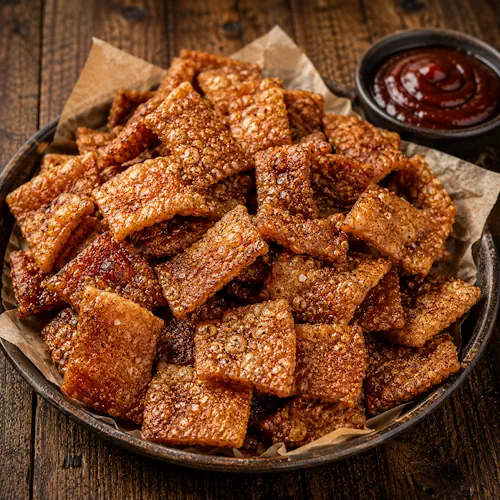
cracklin pigskins combine crispy roasted pork skin, rich savory flavor, and crunchy barbecue seasoning into a classic Southern-style snack packed with smoky comfort food character. Slow roasting the pork skin renders the fat gradually while creating golden crispy cracklins with deep pork flavor and satisfying crunch.
This pork cracklin recipe remains popular because it transforms simple pork skin into an intensely crispy snack with very little preparation. The slow oven roasting method helps develop rich texture while preserving the savory flavor of the pork.
Why cracklin pigskins become crispy and crunchy
The popularity of cracklin pigskins continues to grow because slow cooking allows the fat to render gradually while crisping the skin evenly. Cutting the pork skin into small pieces also helps create the perfect crunchy texture during roasting.
Another reason this pork snack recipe works so well is the simplicity of the ingredients. Salt enhances the natural savory richness of the pork while optional barbecue seasoning and dipping sauces add smoky flavor and spice.
Slow roasting creates rich crispy pork cracklins
The slow roasting process gives these cracklin pigskins their signature crispy texture and deep savory flavor. As the fat slowly renders away, the pork skin becomes golden brown and crunchy throughout.
If you enjoy Southern barbecue snacks and pork recipes, you may also like our Barbecued Spareribs, another flavorful pork barbecue recipe packed with rich smoky flavor.
Texture plays the most important role in this recipe. Properly cooked cracklins should feel crispy, airy, and crunchy while still delivering rich pork flavor in every bite. Draining the cracklins on paper towels also helps preserve their crisp texture.
Adding barbecue rub after roasting allows the seasoning to coat the cracklins evenly without burning during cooking. Dipping sauces also add extra flavor contrast against the crispy pork skin.
Perfect Southern snack for parties and game days
These cracklin pigskins work perfectly as crunchy snacks for game days, barbecue gatherings, parties, and casual entertaining because they stay flavorful and crispy after cooling.
The cracklins pair wonderfully with barbecue sauces, spicy dips, cold drinks, pickles, or smoky seasoning blends. They also work well alongside smoked meats and Southern barbecue meals.
Proper food handling remains important whenever preparing pork products. Pork skin should always be handled carefully and cooked thoroughly before serving. For additional meat preparation and food safety guidance, visit the FDA.
Ultimately, cracklin pigskins deliver crispy texture, rich pork flavor, and classic Southern barbecue snack character in a crunchy recipe perfect for parties and barbecue gatherings.
prevents your screen from turning off”
Cracklin’ Pigskins
Crispy roasted pork cracklins with crunchy texture and rich savory flavor.
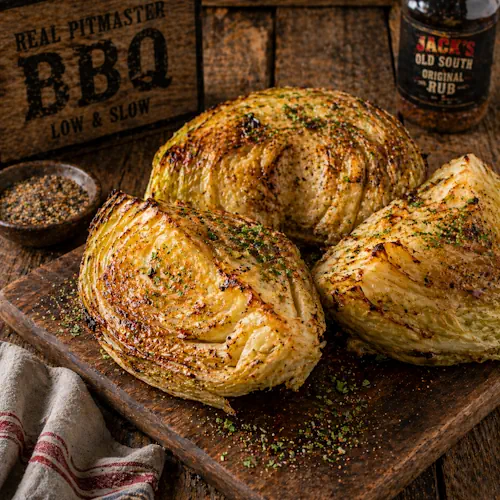
Barbecued cabbage is a surprisingly flavorful and simple side dish that fits perfectly into any barbecue menu. This barbecued cabbage recipe transforms ordinary cabbage into a smoky, buttery, and tender dish that pairs beautifully with grilled meats and rich barbecue flavors. Slow cooking in the smoker allows the cabbage to absorb deep aromas while becoming soft and juicy.
What makes this dish special is the balance between richness and freshness. The butter melts into the cabbage during smoking, creating a silky texture, while the seasoning enhances the natural flavor without overpowering it. The result is a dish that feels both hearty and refreshing at the same time.
If you are putting together a complete barbecue meal, this dish pairs perfectly with BBQ kip recepten. The smoky cabbage adds a slightly tangy contrast that balances heavier meat dishes and brings variety to your plate.
When preparing vegetables on the smoker, it is important to maintain consistent temperatures and handle ingredients safely. Always ensure proper cooking and storage. For more guidance, visit the Voedingscentrum for reliable food safety advice.
Why barbecued cabbage deserves a place on your BBQ
Barbecued cabbage stands out because of its simplicity and bold transformation. A basic vegetable becomes a rich and smoky side dish with minimal effort. The slow cooking process softens the cabbage while allowing it to soak up the flavors of butter and spices.
Removing the core and filling the center with seasoning and butter ensures that the flavor spreads evenly throughout the cabbage. Wrapping it in foil helps retain moisture and prevents it from drying out during the long cooking time.
Another advantage of barbecued cabbage is its versatility. It works as a side dish for meats like chicken, pork, or beef, but it can also be served as a vegetarian option on its own. The mild flavor makes it easy to pair with different sauces and seasonings.
The long smoking time may seem extensive, but it requires very little hands-on work. Once placed in the smoker, the cabbage cooks slowly while you focus on other dishes.
Because it serves a large group, this recipe is ideal for gatherings, holidays, or weekend barbecues. It adds something unique to the table while still being easy to prepare.
With its buttery texture, smoky aroma, and simple preparation, barbecued cabbage is a hidden gem that deserves more attention in every barbecue setup.
prevents your screen from turning off”
Barbecued Cabbage
Smoky and buttery cabbage cooked slowly on the barbecue, perfect as a flavorful side dish.
If you’re making this as part of the whole menu, your smoker should be set at 250°F with your Thanksgiving turkey in it.
If not, preheat a smoker to 250°F.
Wash the sweet potatoes thoroughly, scrubbing any dirt from their skins, and dry them with paper towels or a clean kitchen towel.
Prick each sweet potato with a fork so that steam can escape during baking.
Brush the sweet potatoes all over with the melted butter and season them all over with the rub.
Place the sweet potatoes in a large deep aluminum baking pan and cover with aluminum foil.
Smoke the potatoes until they are cooked through, about 2 hours; the skins will be crisp and the potatoes will yield to the touch and feel soft in the center.
Wrap the potatoes individually in aluminum foil to keep them warm until ready to serve.
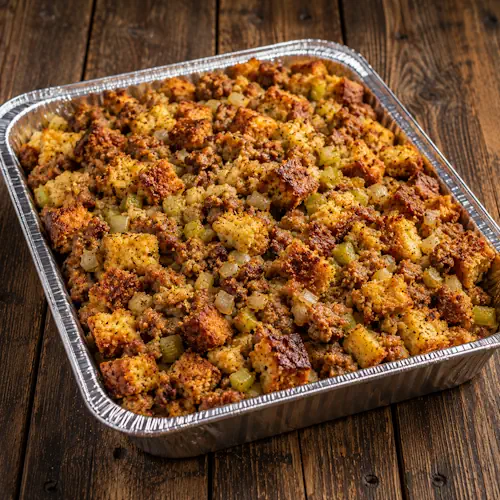
Smoked sausage stuffing combines buttery cornbread, savory pork sausage, herbs, and rich smoky flavor into a comforting Southern-inspired side dish perfect for barbecue dinners and holiday gatherings. Slow smoking gives the stuffing deep savory character while keeping the inside moist and tender.
This comforting stuffing recipe remains popular because the smoker transforms traditional stuffing into something richer and more flavorful. Cornbread absorbs smoky stock beautifully while sausage adds hearty depth that pairs perfectly with smoked turkey, chicken, pork, and barbecue meals.
Slow smoking builds rich savory flavor
The popularity of smoked sausage stuffing continues to grow because cooking inside the smoker allows the bread cubes and sausage to absorb gentle smoky flavor throughout the dish. The result feels heartier and more flavorful than classic oven-baked stuffing.
Another reason this recipe works so well is the balance between buttery cornbread, savory sausage, fresh vegetables, and herbs. Onion, celery, garlic, and sage create classic comfort food flavor in every bite.
Cornbread keeps the stuffing soft and hearty
Cornbread gives this barbecue stuffing its signature texture and subtle sweetness. Toasting the bread beforehand helps it absorb the smoked stock without becoming soggy while still remaining soft inside after smoking.
If you enjoy comforting barbecue side dishes, you may also like our Cracklin’ Pigskins, another flavorful Southern-inspired barbecue recipe with rich savory flavor.
Texture plays an important role in this dish. The top develops slightly crisp edges while the inside remains moist and fluffy. Cooking the sausage separately first also helps distribute the flavor evenly throughout the stuffing mixture.
Covering the stuffing during smoking helps preserve moisture while allowing gentle smoke flavor to develop slowly. The smoked stock also deepens the savory richness of the entire dish.
Perfect side dish for holiday meals and barbecue dinners
This cornbread stuffing recipe works perfectly for Thanksgiving dinners, family gatherings, smoked turkey feasts, and outdoor barbecue meals because it combines classic comfort food flavor with rich smoky barbecue character.
The stuffing pairs beautifully with smoked turkey, roasted chicken, barbecue pork, gravy, cranberry sauce, roasted vegetables, or grilled meats. Fresh herbs sprinkled on top also add brightness before serving.
Proper food handling remains important whenever preparing sausage stuffing and smoked meats. Sausage should always be cooked thoroughly and stuffing should be handled carefully during preparation and serving. For additional food preparation and safety guidance, visit the FDA.
Ultimately, smoked sausage stuffing delivers smoky barbecue richness, buttery cornbread texture, savory sausage flavor, and comforting Southern character in a satisfying side dish perfect for holiday meals and backyard gatherings.
prevents your screen from turning off”
Smoked Cornbread & Sausage Stuffing
Smoky cornbread stuffing with savory sausage, herbs, and rich Southern barbecue flavor.
Serves 10 To 12This is the main event right here, the big bird you want to serve for the big day. I’m going to tell you how to do it up so that you’ll never want to cook it in the oven again.
Divide the chicken pieces into two gallon-size zip-top plastic bags.
Pour 2 cups of buttermilk into each bag.
Seal the bags well and refrigerate for at least 3 hours, or preferably overnight.
When you’re ready to cook the chicken: In a large bowl, combine the flour, salt, pepper, garlic, onion, and chili powder, sugar, and paprika.
Use your fingers or a fork to combine all of the ingredients.
Set aside.
In another large bowl, beat the eggs.
Transfer chicken pieces from the buttermilk mixture to a platter, taking care to pat them dry with paper towels or a clean kitchen towel.
Dredge the chicken pieces in the egg, and then coat them in the seasoned flour.
Repeat the process with each piece, dredging it first in the egg and then coating in the seasoned flour, so that each piece has been dipped and coated twice and has a double layer of batter on it.
Set the pieces on the platter.
Heat a large deep cast-iron skillet over medium heat.
Melt the lard in the pan, making sure it’s at least 1 inch deep.
Allow the lard to reach 350°F on a deep-fry thermometer and be completely melted.
The pan should be hot but not smoking—don’t let the oil smoke.
When the pan is hot enough, add the chicken pieces to the skillet in batches, cooking each batch for about 18 minutes, turning the pieces halfway through the cooking time (except the wings, which will need only about 5 minutes on each side).
Drain the chicken pieces thoroughly on paper towels.
Serve warm or at room temperature, depending on your taste.
2tablespoonsJack’s Old South Huney Muney Cluck Rubor make your own
1cupJack’s Old South Tangy Sweet Sauceor make your own
Get Recipe Ingredients
Instructions
Cure the legs overnight: In a large bowl, combine the water, salt, sugar, allspice, coriander, and mustard; stir to dissolve the seasonings.
Pour the curing solution into a large zip-top plastic bag and add the turkey legs.
Place the bag in a large aluminum baking pan and refrigerate for 24 hours.
When ready to cook the turkey legs, preheat a smoker to 250°F.
Remove the turkey legs from the curing liquid and rinse off in cold water.
Discard the curing liquid.
Pat the legs dry with paper towels.
Coat the legs with the olive oil, then, using your fingers, lightly coat them with the rub.
Place the legs back into the aluminum baking pan, cover the pan with foil, and place the plan in the smoker, close the smoker, and cook the legs for 3 hours, or until the temperature of the legs reads 180°F on an instant-read thermometer.
To crisp the skin of the legs, uncover the pan and leave the drumsticks on the smoker for 15 additional minutes after the internal temperature has reached 180°F.
(Alternately, you can transfer the legs to an oven that’s been preheated to 400°F and cook them, watching carefully to make sure the skin does not burn, for about 10 additional minutes.
)
Pull the pan out of the smoker.
Wrap each leg in foil and let rest for 10 minutes.
Remove the foil and serve, with barbecue sauce on the side for dipping, if you like.
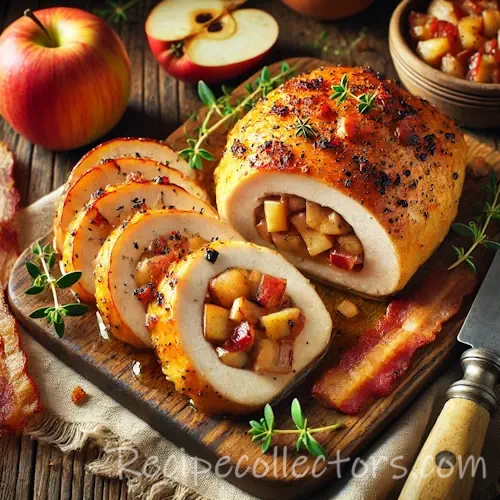
In a small bowl, combine the apples, bacon, bread crumbs, and broth to form a loose stuffing.
Season with salt and pepper.
Set aside.
Season the breasts all over with salt and pepper.
Using a sharp paring knife, cut a pocket about 3 inches deep in the thickest side of each chicken breast.
Spoon the apple mixture in the pockets and secure the openings with toothpicks.
Apply the rub to the outside of the chicken breasts, taking care to get it all over on both sides.
Transfer the breasts to a large aluminum pan, and place the pan in the smoker.
Pour the apple juice into a spray bottle.
Cook the chicken breasts for 1 hour, opening the smoker to spritz them all over with the apple juice every 15 minutes, or until the internal temperature of each breast reaches 165°F.
Remove the pan from the smoker and allow the chicken to rest, loosely tented with aluminum foil, for 10 minutes.
To provide the best experiences, we use technologies like cookies to store and/or access device information. Consenting to these technologies will allow us to process data such as browsing behavior or unique IDs on this site. Not consenting or withdrawing consent, may adversely affect certain features and functions.
Functional
Always active
The technical storage or access is strictly necessary for the legitimate purpose of enabling the use of a specific service explicitly requested by the subscriber or user, or for the sole purpose of carrying out the transmission of a communication over an electronic communications network.
Preferences
The technical storage or access is necessary for the legitimate purpose of storing preferences that are not requested by the subscriber or user.
Statistics
The technical storage or access that is used exclusively for statistical purposes.The technical storage or access that is used exclusively for anonymous statistical purposes. Without a subpoena, voluntary compliance on the part of your Internet Service Provider, or additional records from a third party, information stored or retrieved for this purpose alone cannot usually be used to identify you.
Marketing
The technical storage or access is required to create user profiles to send advertising, or to track the user on a website or across several websites for similar marketing purposes.